English
 Español

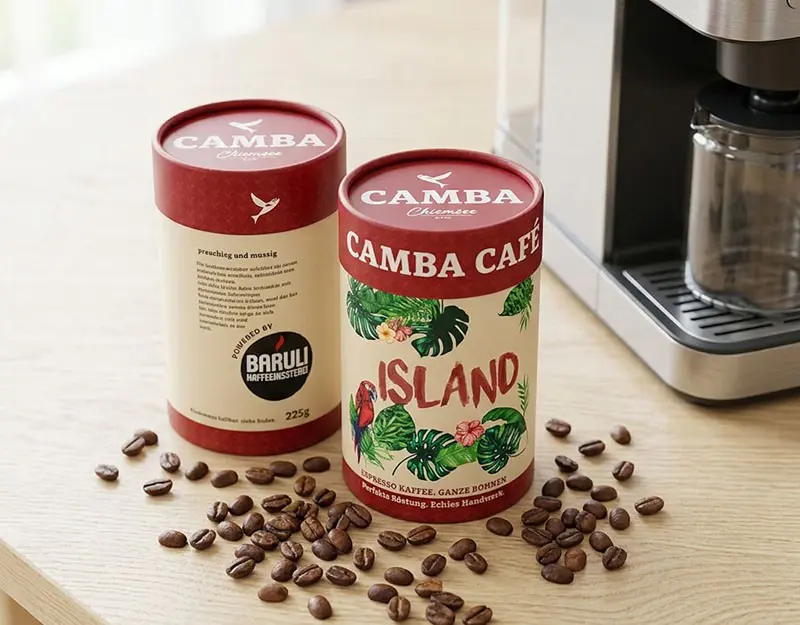

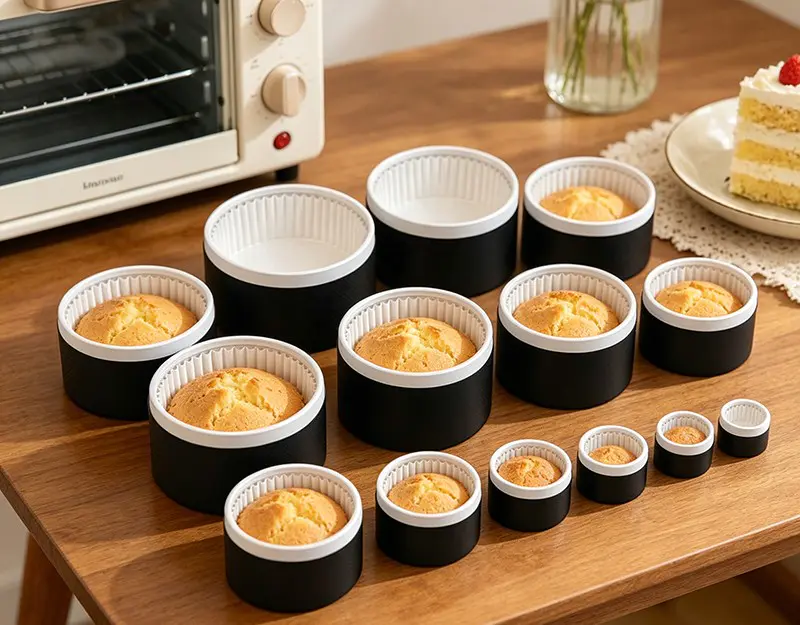

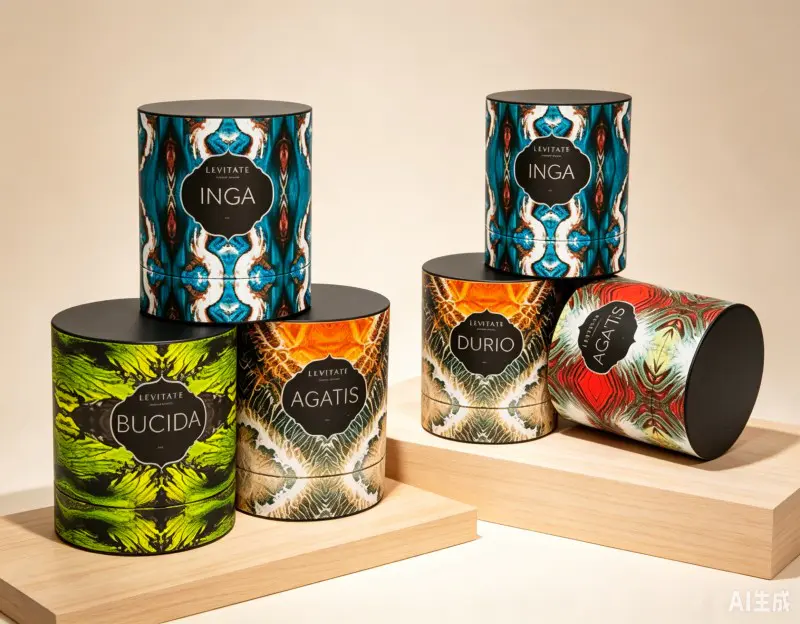
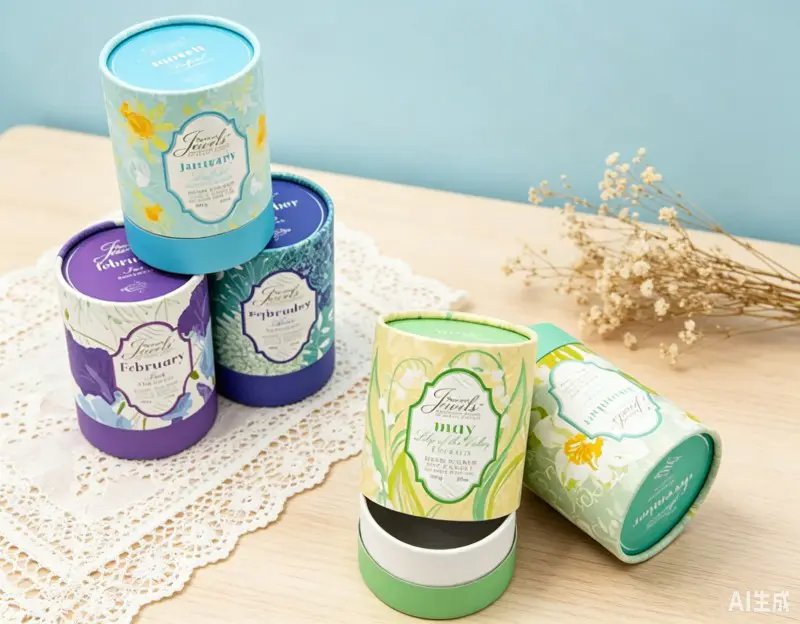
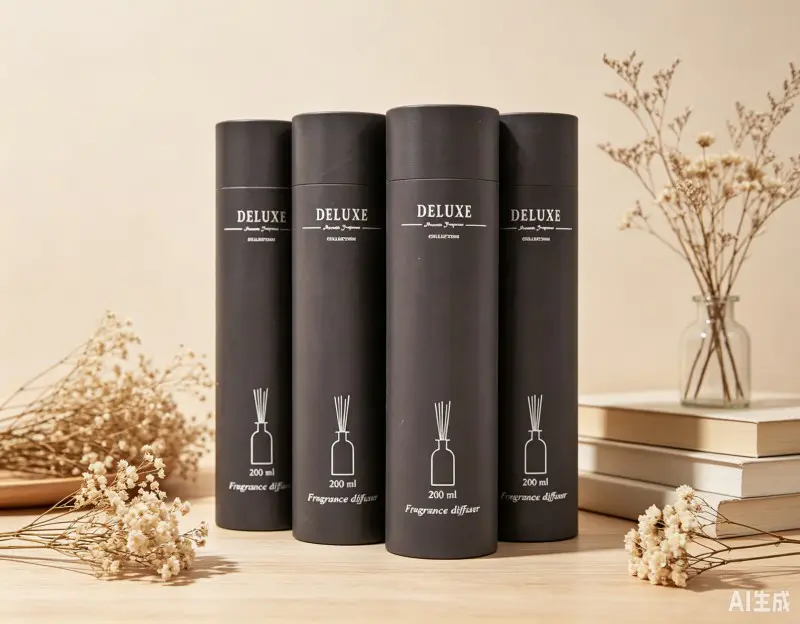
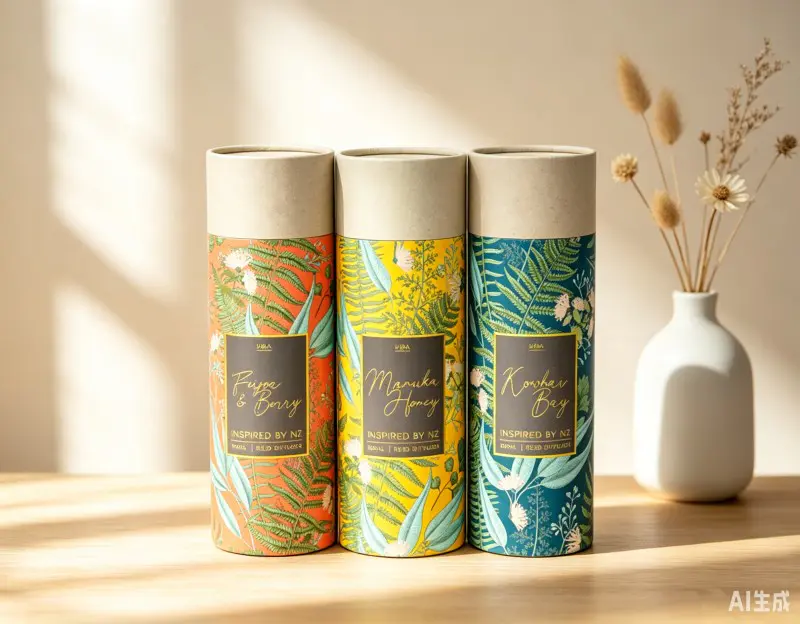
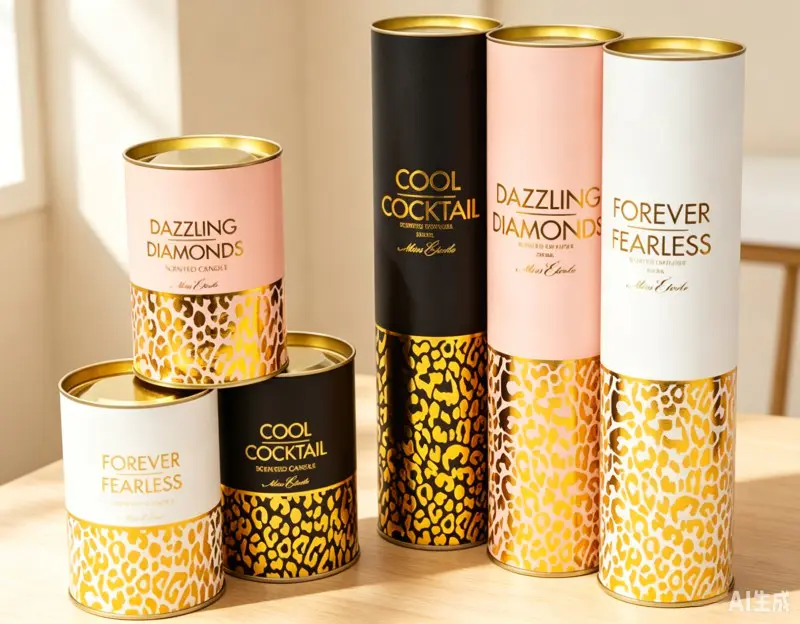
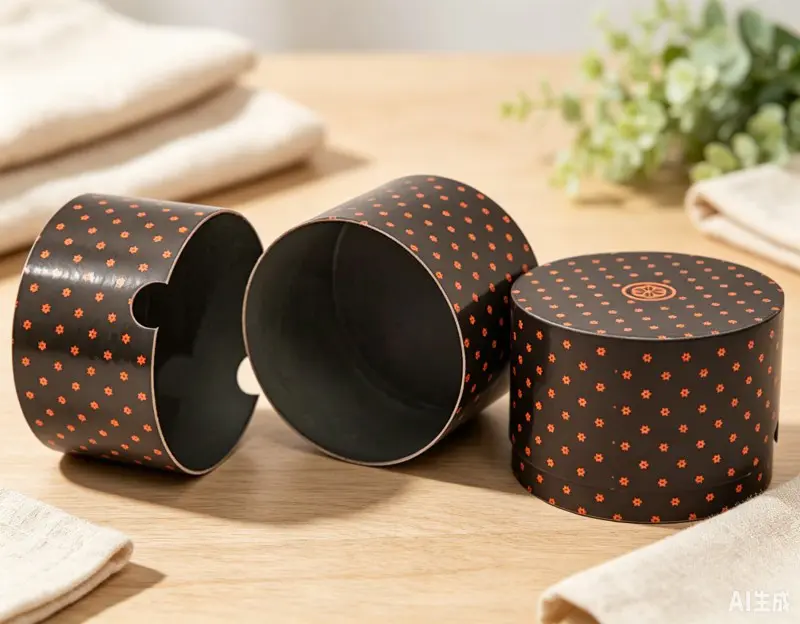
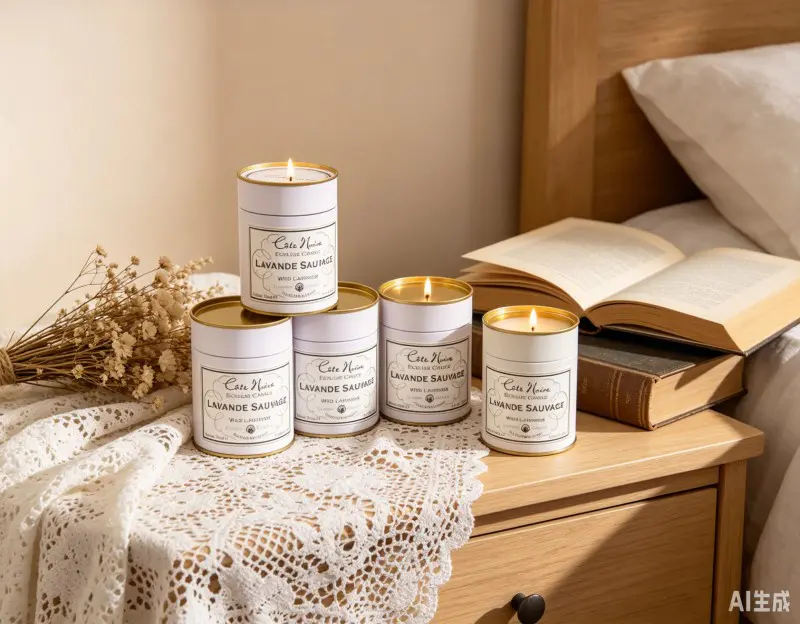

As one of the top China cardboard tube packaging manufacturers and paper tube packaging suppliers, we devote all of our efforts to research and launch more high quality packaging products to global market.
Seasonings and spices require packaging that does far more than hold a product. A successful spice container must protect delicate aromas, preserve color and flavor, withstand transportation, communicate quality on the shelf, and provide a convenient way for consumers to dispense the contents. The 47×75 mm matte finish seasonings and spices paper can is designed to address these requirements through a combination of kraft paper construction, a coated printed exterior, an aluminum foil liner, and a practical plastic shaker top.
This compact paper canister is developed for spice and seasoning applications where freshness, usability, visual impact, and responsible material selection are all important. Its internal diameter of 47 mm and height of 75 mm create a space-efficient format suitable for retail spice racks, kitchen drawers, pantry organizers, foodservice storage, and gift-oriented culinary product collections. Despite its compact proportions, the container provides a rigid and carefully engineered structure that helps protect the contents during filling, shipping, handling, and everyday household use.
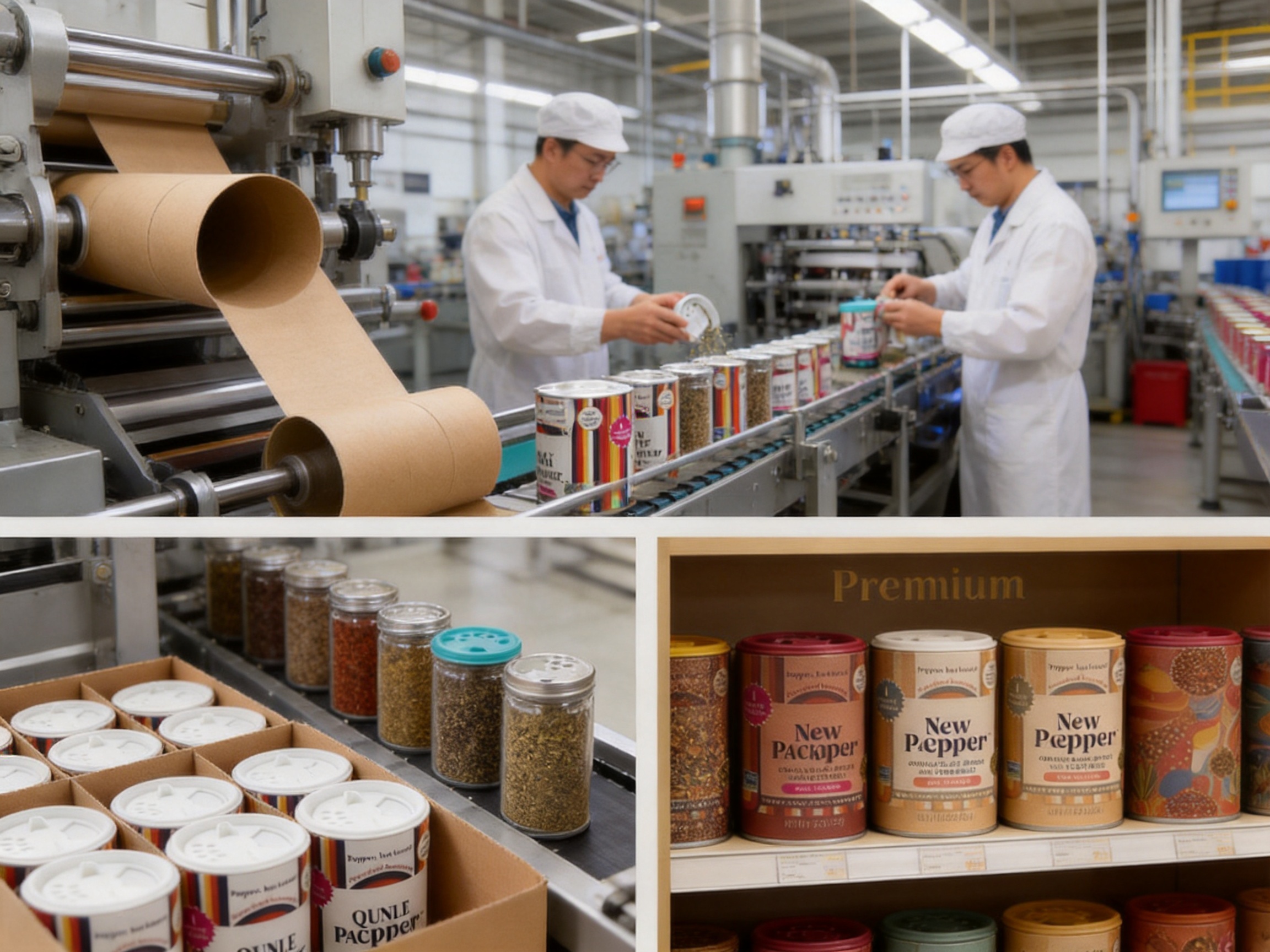
Manufactured by Hangzhou Qunle Packaging Co., Ltd., a Chinese packaging producer with more than 20 years of experience in composite cans and paper cans, this format reflects the company’s specialization in paper-based rigid packaging. Qunle Packaging serves food, daily chemical, and fast-moving consumer goods markets and has developed long-term relationships with recognized companies and brands. Its experience in food packaging, investment in high-speed European composite can production equipment, participation in the international Composite Can and Tube Institute, and portfolio of patented technologies support the production of consistent and application-focused packaging.
The following article examines the structure, protective performance, user benefits, printing possibilities, manufacturing strengths, quality considerations, and commercial advantages of this spice paper can.
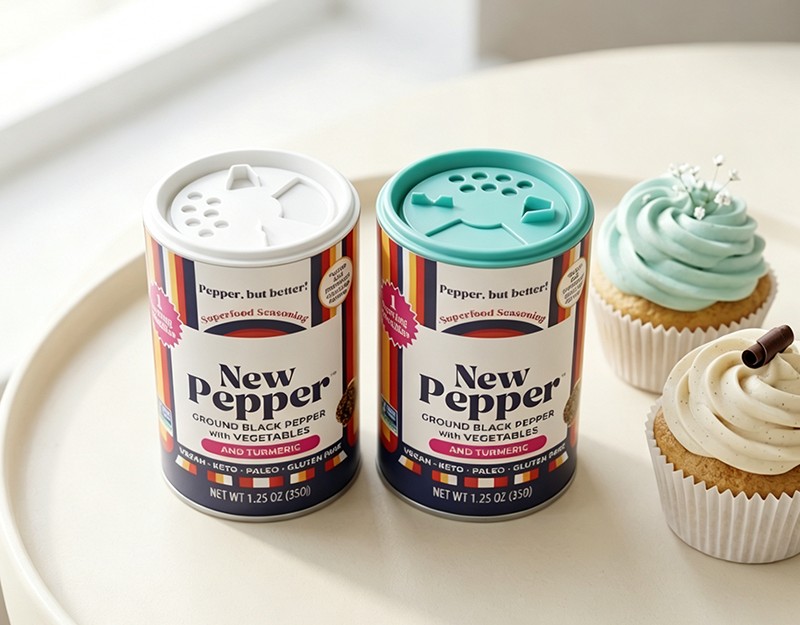
47*75MM Matte Finish Seasonings and Spices Paper Can
Content
- 1 1. Product Overview and Intended Application
- 2 2. Aluminum Foil Barrier Protection for Spice Freshness
- 3 3. Matte Finish and High-Resolution CMYK Printing
- 4 4. Plastic Shaker Top and Controlled Dispensing
- 5 5. Rigid Kraft Paper Construction
- 6 6. Advantages Compared with Common Alternative Formats
- 7 7. Manufacturing Strengths of Hangzhou Qunle Packaging
- 8 8. Manufacturing Process and Quality Control Considerations
- 9 9. Customization Possibilities for Spice Brands
- 10 10. Sustainability and Responsible Packaging Considerations
- 11 11. Commercial Value for Retailers and Consumers
- 12 12. Product Development and Ordering Recommendations
- 13 13. Frequently Asked Questions
- 13.1 Q1: What product is the 47×75 mm paper can designed for?
- 13.2 Q2: What do the dimensions 47×75 mm mean?
- 13.3 Q3: Does the can include an aluminum foil liner?
- 13.4 Q4: Why is an aluminum foil barrier useful for spices?
- 13.5 Q5: Does the package have a shaker top?
- 13.6 Q6: Can the shaker top dispense both fine powders and larger particles?
- 13.7 Q7: What type of printing is used?
- 13.8 Q8: What is the advantage of the matte finish?
- 13.9 Q9: Is the paper can stronger than a flexible pouch?
- 13.10 Q10: Is the paper can lighter than a glass jar?
- 13.11 Q11: Can the outside be customized for different spice flavors?
- 13.12 Q12: Is the package suitable for private-label products?
- 13.13 Q13: What should be tested before production?
- 13.14 Q14: What manufacturing experience does the supplier have?
- 13.15 Q15: Is the complete package recyclable everywhere?
- 14 14. Conclusion
- 15 References
- 16 Product: 47*75MM Matte Finish Seasonings and Spices Paper Can
1. Product Overview and Intended Application
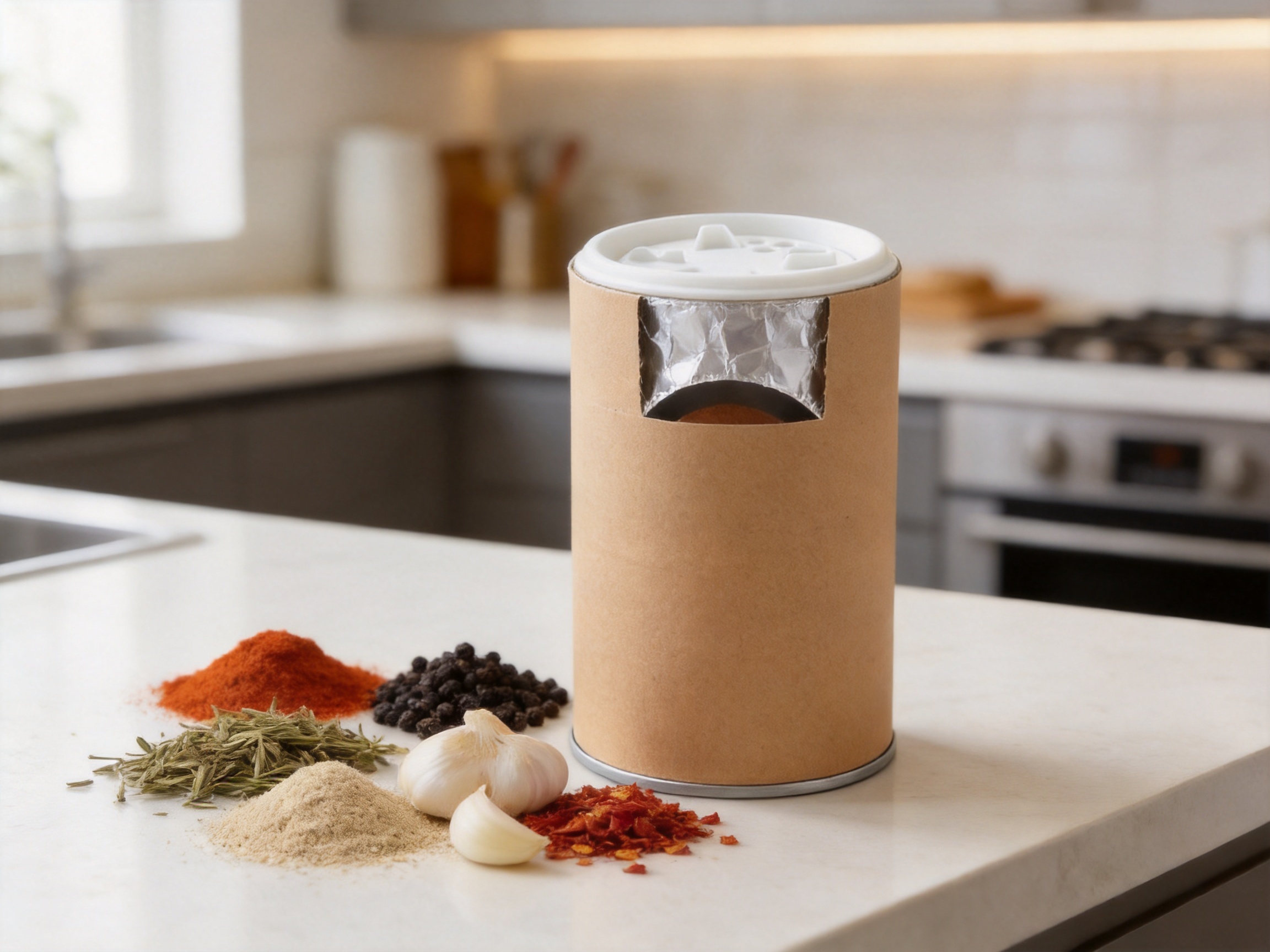
The product is a 47×75 mm matte finish paper can intended for seasonings and spices. The listed construction includes a kraft paper tube, coated paper with printed graphics, an aluminum foil liner, and a plastic shaker component. The exterior is finished with a matte coating and printed using CMYK color technology. Together, these components form a rigid canister with a premium appearance and a functional dispensing system.
The format is especially suitable for powdered and granular products such as salt blends, pepper, paprika, chili powder, curry mixes, garlic powder, onion powder, herb blends, barbecue seasonings, baking spices, soup seasonings, and other dry culinary ingredients. The exact filling suitability should be confirmed through product testing, because spice products vary in particle size, oil content, moisture sensitivity, density, and aroma intensity. Nevertheless, the barrier-oriented construction is specifically designed to support the packaging needs of products that can lose quality when exposed to air, humidity, light, or surrounding odors.
The container’s compact dimensions provide several commercial advantages. A narrow footprint allows multiple varieties to be arranged neatly in a store display or kitchen cabinet. A 75 mm height gives the package a visible vertical presence without requiring excessive shelf space. For brands offering a broad range of seasonings, the format can help create a consistent product family in which different flavors are identified through color, photography, typography, or flavor-specific illustrations.
The can is also appropriate for private-label and custom-branded products. The printed outer layer can carry brand identity, product naming, ingredient information, preparation instructions, nutritional information, barcode graphics, regulatory statements, recycling guidance, and visual serving suggestions. Since CMYK printing supports full-color artwork, the package can be adapted for both restrained premium designs and vivid mass-market graphics.
Core Product Specifications
| Item | Specification | Packaging Benefit |
|---|---|---|
| Primary application | Seasonings and spices | Designed around the protection and dispensing needs of dry culinary products |
| Dimensions | 47 mm internal diameter × 75 mm height | Compact storage and efficient shelf organization |
| Tube structure | Kraft paper tube | Provides a rigid, paper-based structural core |
| Exterior | Coated paper with CMYK printing | Supports vivid graphics, branding, and product information |
| Surface finish | Matte coating | Creates a subdued premium appearance and helps reduce visible fingerprints |
| Internal barrier | Aluminum foil liner | Helps limit exposure to moisture, oxygen, light, and external odors |
| Dispenser | Plastic shaker top | Enables controlled and convenient sprinkling |
| Printing method | CMYK print | Allows full-color product artwork and detailed visual communication |
The specifications show that the container is not simply a paper tube with decorative printing. It is a composite packaging solution in which the structural paper body, protective liner, coated exterior, and dispensing closure work together. This integrated approach is particularly valuable for spice brands that want a package with a more refined appearance and stronger functional performance than a basic unlined paper carton or simple plastic bag.
2. Aluminum Foil Barrier Protection for Spice Freshness
Spices are sensitive to environmental conditions. Moisture can cause powders to clump, reduce flowability, and encourage quality deterioration. Oxygen can contribute to the oxidation of volatile compounds and natural pigments. Light can gradually affect color and certain flavor components. External odors may also be absorbed by aromatic ingredients, especially when packaging is stored near strongly scented foods or household products.
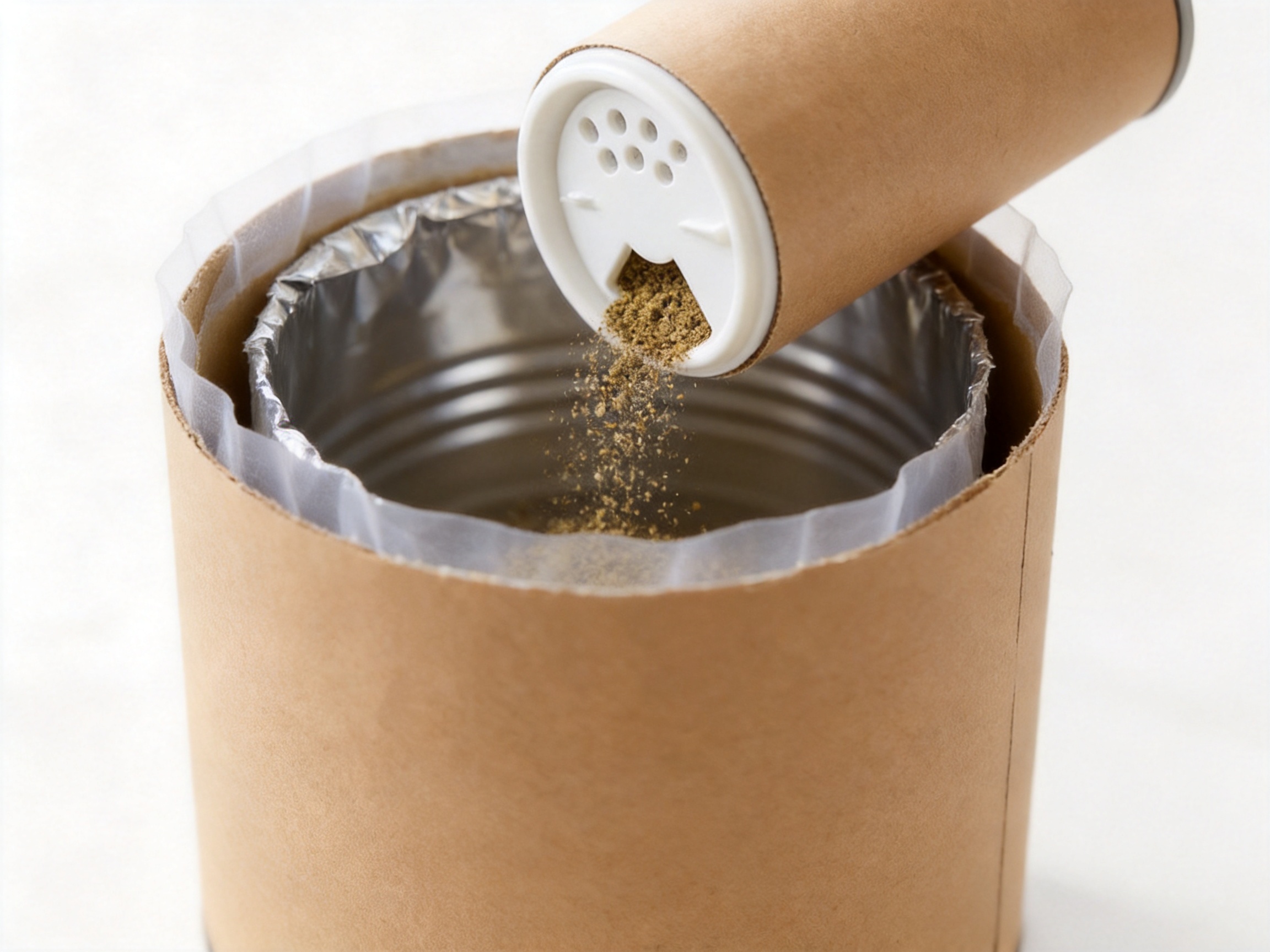
The aluminum foil liner in this paper can acts as a high-performance internal barrier. It creates an additional protective layer between the seasoning and the outside environment, helping to reduce the movement of moisture, oxygen, light, and odors through the package structure. This is important for products whose commercial value depends on aroma intensity, clean flavor, attractive color, and reliable performance in cooking.
By helping maintain a more stable internal environment, the liner supports the preservation of essential oils and aromatic compounds. It also helps reduce the risk that the powder will be affected by humid storage conditions before the package is opened. While the final shelf life depends on the recipe, filling process, closure performance, storage conditions, and applicable testing, the foil-lined design provides a strong foundation for a longer-lasting dry food package.
Many low-cost spice formats focus primarily on reducing the initial packaging price. However, a package that offers limited barrier protection may lead to faster aroma loss, discoloration, clumping, or a weaker consumer experience. The 47×75 mm paper can is differentiated by placing barrier performance at the center of the package design. This makes it suitable for brands that need to protect product quality while also presenting a premium retail appearance.
The liner is particularly useful when packaging fine powders and aromatic blends. A fine seasoning can be vulnerable to moisture migration, while an aromatic herb or spice mixture can lose its characteristic scent if volatile components gradually escape. The foil layer helps address both concerns as part of a multilayer structure. It does not eliminate the need for appropriate filling, sealing, and storage controls, but it strengthens the packaging system compared with an unlined paper-only structure.
Protection Against Moisture and Oxygen
Moisture control is essential for maintaining free-flowing performance. Consumers expect a spice shaker to dispense evenly rather than release a damp mass or a hardened block. A foil barrier can help limit the movement of water vapor into the container, supporting better texture and flowability during the product’s intended use period. The package should still be stored in a dry environment and closed properly after each use, but the material structure gives the product a stronger defense against humidity.
Oxygen protection is also valuable for blends containing sensitive herbs, natural colorants, oils, or other oxidation-prone components. Reducing oxygen exposure can help preserve a more consistent flavor profile and appearance. For brands using premium ingredients, this protection can help ensure that the product experience more closely matches the flavor and aroma promised on the label.
Protection Against Light and Odor Transfer
Light exposure can be especially damaging to products whose appearance is part of their perceived quality. Brightly colored spice blends and dried herbs may gradually lose visual intensity when exposed to light over time. The foil liner acts as an internal shield that helps reduce light transmission toward the contents.
External odor protection is another useful feature. Spice products are naturally aromatic, and some can absorb unwanted smells from nearby goods. A barrier-oriented package helps keep the product’s original aroma more isolated from its surroundings. This supports cleaner storage and a more predictable opening experience for the consumer.
3. Matte Finish and High-Resolution CMYK Printing
The exterior appearance of a spice container strongly influences how consumers judge the product. Before opening the package, shoppers often evaluate the quality of the label, the clarity of the information, the color scheme, the photography, and the overall feel of the container. The matte finish on this paper can provides a smooth, low-reflective surface that supports a modern and premium visual identity.
Unlike a highly glossy surface, matte coating produces less glare under store lighting and can make printed information easier to view from different angles. It also creates a softer visual impression that may be especially appropriate for natural herbs, artisan spice blends, organic-inspired products, gourmet cooking lines, and minimalist private-label collections.
The coating helps the exterior resist visible fingerprints and smudges during handling. This is useful in retail environments where products may be moved repeatedly by warehouse staff, sales personnel, or consumers. A package that remains clean-looking can contribute to stronger shelf presentation and a more consistent brand image.
CMYK printing allows the exterior to carry detailed, full-color artwork. Brands can use appetizing recipe photography, illustrations of herbs and spices, ingredient imagery, regional cooking themes, serving suggestions, and color-coded product families. High-resolution printing can also reproduce small text, fine lines, icons, and layered graphics with a clear and professional appearance, subject to artwork preparation and production specifications.
The printable exterior offers a large communication area compared with a small adhesive label. This creates more room for storytelling and product education. A package may show how the seasoning can be used, which cuisines it complements, the recommended serving size, or the source and character of the ingredients. The expanded graphics area can reduce the need for additional packaging components while helping the product communicate directly with shoppers.
Brand Differentiation on the Shelf
Spice aisles often contain numerous products with similar shapes and closely related names. A distinctive matte paper canister can help a product stand apart from conventional glass jars, plastic bottles, flexible pouches, and basic paperboard boxes. The cylindrical format creates a recognizable silhouette, while the matte surface offers a tactile and visual difference.
Brands can develop a coordinated collection by maintaining the same dimensions and structural style across multiple flavors. Each variety can then use its own dominant color, ingredient image, or graphic pattern. This improves navigation for consumers and creates a stronger block display when several products are merchandised together.
Because the package can display both attractive graphics and practical information, it supports a balance between emotional appeal and purchasing confidence. The front panel can focus on brand identity and flavor recognition, while the surrounding panels can present ingredients, preparation ideas, storage guidance, nutritional content, and required product information.
4. Plastic Shaker Top and Controlled Dispensing
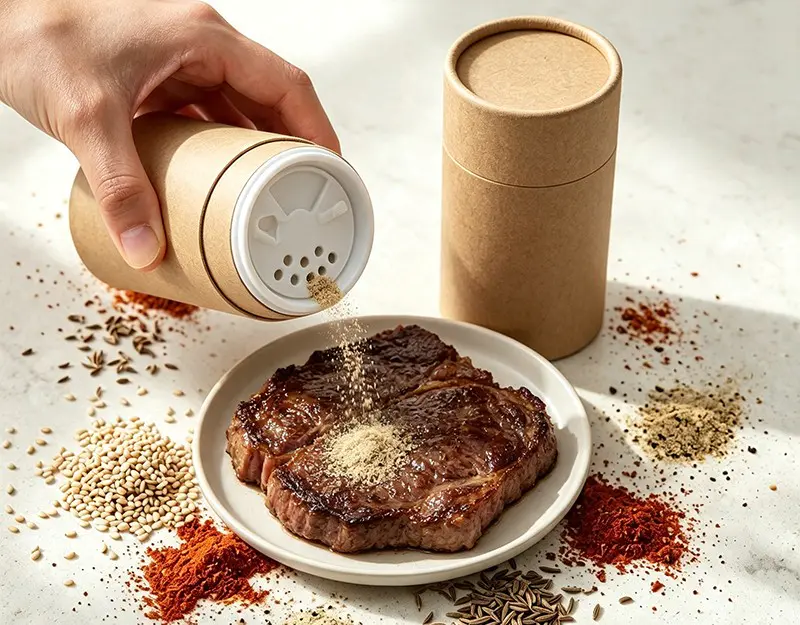
A spice package must be easy to use after purchase. The plastic shaker top included with this format is designed to provide controlled dispensing, allowing users to sprinkle the contents directly onto food or into a cooking vessel. This is more convenient than opening a wide-mouth container and using a separate spoon for every serving.
The shaker design supports different levels of dispensing. A light shake can provide a small dusting for finishing a dish, while repeated shaking can release a larger amount during cooking. This gives home cooks greater control over portioning and helps reduce unnecessary product loss. The opening pattern and final shaker design should be selected according to the particle size and flow characteristics of the specific seasoning.
Controlled dispensing is also valuable for professional kitchens, meal preparation businesses, catering operations, and foodservice applications. Staff can apply a consistent amount more quickly, which may support recipe repeatability and workflow efficiency. For consumers, the familiar shaker format makes the product intuitive to use without requiring complicated instructions.
The top also helps create a more practical transition between the protected package and daily use. When the package is closed correctly, the contents remain inside the canister between uses. When the lid is opened, the shaker holes provide a measured route for dispensing rather than exposing the entire product surface to the surrounding environment.
Design Considerations for Different Spice Products
Not all seasonings behave in the same way. Fine salt, coarse pepper, dried herbs, granulated garlic, chili flakes, and blended powders each have different flow properties. The shaker opening configuration should therefore be evaluated with the intended filling material. Compatibility testing can confirm whether the product flows freely, whether the openings provide the desired dose, and whether the lid closes securely after repeated use.
For products that contain oil-rich ingredients or particles of varying sizes, the brand may need to select an appropriate shaker-hole pattern and conduct storage testing. These technical checks do not diminish the value of the package; instead, they ensure that the functional components are matched to the product formulation. The combination of a rigid canister and plastic shaker gives brands a flexible platform for a wide range of dry seasonings.
5. Rigid Kraft Paper Construction
The kraft paper tube provides the structural core of the canister. Its cylindrical geometry distributes pressure around the circumference and helps the package resist crushing and deformation. This is an important benefit during transportation, warehousing, shelf stocking, and consumer handling.
Compared with a thin flexible pouch, a rigid paper can is easier to stand upright and arrange in a stable retail display. It can maintain its shape when placed in a pantry or spice rack, and its solid body gives the consumer a more substantial hand feel. The structure also supports clean application of the printed outer layer, helping the graphics maintain a consistent cylindrical presentation.
The paper-based body provides an alternative to packaging formats that rely entirely on plastic or glass. Its relatively lightweight construction can support more efficient handling and shipping compared with heavier rigid containers. At the same time, the tube offers more structural strength than a simple paper sleeve or unreinforced carton.
The coated paper exterior and internal foil layer create a composite structure. This combination allows each material to perform a specific role: kraft paper contributes rigidity, the printed coated paper delivers appearance and communication, the aluminum foil provides barrier support, and the plastic shaker top offers controlled use. Such material specialization is one of the main reasons composite can packaging is effective for food applications.
Compact Storage and Transportation
The 47×75 mm format is designed to use shelf and storage space efficiently. Its narrow diameter allows several products to fit within a standard spice area, while its height gives sufficient vertical visibility. Retailers can position the cans in rows, trays, shelves, or display cartons according to the merchandising concept.
For consumers with limited kitchen storage, the compact canister fits conveniently into common spice racks, drawers, and pantry organizers. A stable cylindrical body is easy to grasp and return to its storage position. The efficient footprint may also help brands build assortments without requiring an oversized shelf allocation.
During shipping, the rigid structure helps protect the package from ordinary compression and handling stresses. Appropriate secondary packaging remains necessary, particularly for long-distance distribution, automated fulfillment, and mixed-carton transport. Even so, a sturdy primary container can reduce the likelihood of visible deformation and help products arrive in a presentation-ready condition.
6. Advantages Compared with Common Alternative Formats
Packaging decisions are often made by comparing paper cans with glass jars, plastic bottles, flexible pouches, metal containers, and basic paperboard boxes. Each format has strengths, but the 47×75 mm matte finish paper can combines several benefits that are not always available in a single alternative.
Compared with glass, the paper can is lighter and less vulnerable to breakage during transportation and everyday use. This can simplify handling and reduce concerns associated with shattered containers. The paper can also provide a broad printable surface with a warm, tactile appearance, whereas glass formats may require a separate label or sleeve to achieve comparable graphic coverage.
Compared with a flexible pouch, the paper can provides stronger shape retention and more convenient shelf presentation. A pouch may offer excellent material efficiency, but it can be less stable after opening and may require a separate clip or resealable feature. The paper can remains upright and is easier to use with a shaker top.
Compared with a basic plastic bottle, the composite paper structure offers a different visual and tactile experience and can support sustainability-oriented brand positioning. It also provides a strong cylindrical body and a large printable surface. The final environmental profile depends on the complete material combination, local collection systems, and disposal practices, so brands should communicate environmental claims carefully and accurately.
Compared with an unlined paper container, the foil-lined structure provides substantially stronger barrier support. A simple paper body may not adequately protect a moisture-sensitive or aromatic seasoning. The internal foil layer is therefore a key differentiating element for brands that prioritize shelf stability and product freshness.
Compared with a basic paperboard carton, the cylindrical can provides greater structural rigidity and a more premium hand feel. A carton may be efficient for certain dry products, but it generally requires a separate inner bag or liner when strong barrier performance is needed. The composite can integrates the structural and barrier functions into one primary package format.
| Alternative format | Potential strength | Advantages of the paper can |
|---|---|---|
| Glass jar | High rigidity and familiar food packaging appearance | Lower breakage risk, lighter handling, cylindrical printed surface, and convenient shaker integration |
| Flexible pouch | Low material weight and flexible storage | Better shape retention, upright display, stronger hand feel, and easier shaker use |
| Plastic bottle | Durability and established supply chains | Paper-based body, matte premium appearance, and broad CMYK graphics area |
| Unlined paper tube | Simple paper construction | Aluminum foil barrier for improved protection against moisture, oxygen, light, and odors |
| Paperboard carton | Flat-panel printing and easy packing | Rigid cylindrical form and integrated composite structure for spice applications |
The paper can should not be viewed as a universal replacement for every other package. The best format depends on the product, market, distribution conditions, regulations, filling equipment, and consumer expectations. Its advantage is that it brings together barrier protection, structural performance, premium printing, and convenient dispensing in a compact package created specifically for dry seasoning applications.
7. Manufacturing Strengths of Hangzhou Qunle Packaging
The performance of a composite package depends not only on its design but also on the manufacturer’s ability to control materials, forming, printing, lining, assembly, and finishing. Hangzhou Qunle Packaging Co., Ltd. has been engaged in the composite can and paper can industry for more than two decades. This long-term specialization provides relevant experience for developing and manufacturing food-oriented paper packaging.
Qunle Packaging is identified as the only member of the international Composite Can and Tube Institute in China’s packaging container industry. Participation in an international industry organization reflects a close connection with the composite can sector and supports awareness of technical developments, production practices, and market requirements.
The company was the first enterprise in China to pass the QS certificate for producing food packaging containers, according to the supplied company information. This history is particularly relevant to spice and seasoning packaging because food-contact applications require disciplined attention to materials, hygiene, manufacturing control, and traceability.
In 2015, the company introduced a high-speed composite can production line from Europe. Investment in advanced production equipment can improve manufacturing efficiency, dimensional consistency, throughput, and process stability. High-speed lines are especially valuable when serving large-volume orders, multiple product variations, and customers that require dependable delivery schedules.
The company has also obtained more than 10 patented technologies. Patents alone do not define packaging quality, but they indicate ongoing investment in research and development. In practical terms, an experienced technical team can help customers evaluate construction options, select appropriate dimensions, refine closure systems, and adapt artwork and materials to commercial objectives.
Experience Across Multiple Markets
Qunle Packaging’s business covers food, daily chemical products, fast-moving consumer goods, and related applications. This range can be beneficial because manufacturing knowledge developed in one market may support problem-solving in another. Food packaging requires barrier and hygiene awareness, daily chemical packaging may require resistance and closure expertise, and fast-moving consumer goods require efficient production and strong shelf impact.
The company has built long-term partnerships with organizations and brands including COFCO, STANDERS, DAVIDsTEA, Avalanche Coffee, Whittaker’s, McSteven’s, Nongfu Spring, and Beingmate, as stated in the provided company information. These relationships demonstrate experience working with established customers and varied product requirements.
For spice brands, supplier experience matters because the package must be considered as part of the product system. The manufacturer needs to understand how a liner interacts with dry ingredients, how printed surfaces behave during handling, how a shaker top functions after filling, and how the final canister performs through distribution. A supplier focused on composite cans is better positioned to coordinate these elements than a vendor that only supplies a single packaging component.
8. Manufacturing Process and Quality Control Considerations
A composite spice can is produced through a sequence of coordinated operations. The kraft paper tube is formed to create the rigid body. The internal barrier layer is incorporated to protect the contents. The outer coated paper is printed and applied to provide branding and surface protection. The can is then finished with the appropriate top and shaker component. Although exact production parameters may vary by order, each stage contributes to final package performance.
Material Preparation
Material preparation begins with the selection of paper, coating, foil, adhesive systems, and plastic components appropriate for the intended application. For food packaging, material suitability and production hygiene are essential. The chosen paper and liner must support the desired barrier performance, while the outer coated paper must accept CMYK ink and maintain a smooth, even appearance after forming.
Material consistency is important because variation in paper thickness, surface quality, foil integrity, or adhesive application can affect the finished can. Experienced manufacturing systems use defined specifications and inspection procedures to reduce variation and ensure that production remains aligned with approved samples.
Tube Forming and Structural Assembly
The kraft paper tube must be formed with accurate dimensions and reliable bonding. A consistent cylindrical shape helps the can stand properly, supports smooth application of the outer printed layer, and ensures compatibility with the shaker top and other components. Dimensional accuracy is particularly important for a compact container because small deviations can affect closure fit and visual alignment.
The tube structure is designed to resist ordinary crushing forces. Its rigidity protects the product and helps maintain an orderly retail appearance. The paper body also provides a stable foundation for the liner and printed exterior, allowing the complete package to function as a unified container rather than a collection of loosely connected parts.
Barrier Lining and Sealing
The aluminum foil layer must be integrated carefully to preserve continuity and reduce the possibility of weak points. The quality of the liner, bonding system, and sealing operations all influence the package’s ability to protect the seasoning. Production inspection may include visual checks, dimensional checks, closure checks, and performance testing appropriate to the product and order requirements.
Because barrier performance depends on the entire package, the liner should be evaluated together with the top, seams, and any opening features. A strong internal material cannot compensate for an improperly fitted closure or damaged package body. This is why composite can manufacturing requires coordinated control across multiple stages.
Printing and Surface Finishing
CMYK printing requires accurate color preparation and stable production conditions. Artwork should be supplied in a format suitable for cylindrical packaging, with correct dimensions, bleed, panel positioning, text size, and barcode placement. The manufacturer can then produce the coated printed layer and apply the matte finish according to the approved design.
Matte coating must be applied evenly to achieve a consistent visual and tactile result. An even coating improves the package’s resistance to visible handling marks and supports a clean appearance. Color approval samples are recommended before mass production so that brands can confirm the balance of background colors, ingredient photography, logos, and small information panels.
Final Assembly and Inspection
After the body, liner, and printed exterior are combined, the shaker top is assembled and the finished can is inspected. Quality checks may address dimensions, surface appearance, print registration, color consistency, liner condition, closure fit, shaker-hole performance, and overall structural integrity.
For seasoning products, functional testing is especially valuable. The filled container should be evaluated for powder flow, dispensing consistency, closure security, resistance to ordinary handling, and storage performance. These tests help confirm that the selected shaker configuration is suitable for the actual product rather than only for an empty package sample.
9. Customization Possibilities for Spice Brands
The standard 47×75 mm format provides a practical starting point, but branding requirements can vary widely. Customers may customize the printed artwork, color palette, typography, ingredient illustrations, cooking imagery, and information hierarchy. A natural spice company may choose earthy tones and botanical graphics, while a modern culinary brand may use bold colors and high-contrast typography.
Customization can also support product segmentation. For example, a brand may assign green to dried herbs, red to chili-based seasonings, yellow to curry blends, black to pepper products, and blue to seafood seasoning. Maintaining the same can dimensions across the range creates consistency, while color and imagery make individual products easy to identify.
The exterior can carry multiple languages for export markets, provided that the design accommodates the required text and regulatory information. Ingredient declarations, allergen statements, nutrition panels, preparation directions, net weight, batch coding areas, storage instructions, and barcode elements should be planned early in the artwork process.
Brands may also use the surface to communicate sourcing stories, recipe inspiration, usage occasions, or sustainability messages. Any environmental claims should be based on verifiable product information and the requirements of the target market. The paper-based body can support sustainability-oriented positioning, but the presence of foil, coating, adhesive, and plastic components means that the complete package should be assessed before making precise disposal or recyclability statements.
Private-Label and Contract-Filled Products
Retailers, restaurant groups, food manufacturers, and specialty seasoning companies can use the can for private-label programs. The consistent format allows several flavors to be produced under one packaging architecture. This can simplify brand management and create a unified appearance across an entire seasoning assortment.
For contract fillers, the main technical considerations include filling weight, powder density, product flow, shaker-hole size, closure fit, and compatibility with filling equipment. These details should be reviewed during the sampling stage. The manufacturer and filler can then confirm whether the selected can dimensions and top configuration meet the required output and consumer-use standards.
10. Sustainability and Responsible Packaging Considerations
Paper-based packaging is increasingly considered by brands seeking alternatives to packaging formats dominated by rigid plastic or glass. The kraft paper tube gives this can a substantial paper component and a natural material story. Its lightweight structure may also support efficient transport compared with heavier containers.
However, responsible packaging communication requires attention to the entire composite structure. The can includes kraft paper, coated printed paper, an aluminum foil liner, adhesives, and a plastic shaker top. The most appropriate end-of-life pathway depends on local recycling infrastructure, material separation capabilities, municipal guidance, and the specific construction used in production.
Brands should therefore avoid broad or absolute environmental claims unless they have supporting evidence. Instead, they can focus on accurate attributes such as the paper-based body, compact format, lightweight construction, durable reuse during the product’s life, or reduced reliance on a single material. If a customer requires a specific certification, recycling claim, or regulatory declaration, that requirement should be discussed and verified during product development.
The package’s durability can also contribute to responsible use. A canister that protects the seasoning from moisture and oxygen may help reduce premature quality loss and unnecessary product waste. Preventing product waste is an important part of packaging performance because the environmental impact of the food or seasoning itself can exceed that of the container. Proper barrier protection and portion control therefore support both product quality and efficient consumption.
11. Commercial Value for Retailers and Consumers
Retailers benefit from a package that is easy to display, visually coherent, and resistant to ordinary handling. The compact cylindrical body can be arranged efficiently, while the matte printed surface gives the product a refined appearance. A well-designed canister can create a stronger shelf block than a collection of mismatched pouches or labels.
Consumers benefit from a package that is easy to identify, hold, open, dispense, and store. The shaker top provides a familiar interaction, while the rigid body feels stable during use. The printed exterior can explain the flavor and application of the product without requiring consumers to search for information elsewhere.
For premium spice products, packaging is part of the perceived value. A seasoning may contain carefully selected ingredients, but if the package appears weak or difficult to use, the product may not communicate its quality effectively. The combination of matte finish, detailed CMYK printing, rigid paper construction, foil lining, and controlled dispensing creates a more complete premium proposition.
For mainstream products, the same structure can support differentiation without requiring a large or complex container. The 47×75 mm format gives brands an efficient way to present multiple flavors while preserving a consistent and professional package identity.
12. Product Development and Ordering Recommendations
Before mass production, customers should provide the intended seasoning type, filling weight, particle size, moisture sensitivity, aroma characteristics, target shelf life, distribution conditions, and desired dispensing behavior. These details help the manufacturer determine whether the standard construction is appropriate or whether adjustments are required.
Artwork should be prepared after the exact printable dimensions and panel positions are confirmed. Designers should allow for cylindrical curvature, seam areas, top and bottom clearances, barcode scanning requirements, and small-text readability. A physical printed sample is recommended to evaluate color, surface feel, image sharpness, and overall shelf appearance.
Filling trials should be conducted using the actual seasoning. The trial can assess how efficiently the product enters the can, whether dust generation occurs, whether the shaker top dispenses evenly, and whether the closure remains secure. Products with different particle sizes may require different shaker configurations even when they use the same can body.
Storage and transport testing should also be considered. The package can be evaluated under expected temperature and humidity conditions, followed by checks for clumping, aroma retention, leakage, closure performance, print appearance, and structural deformation. Testing creates a stronger basis for determining commercial shelf life and distribution suitability.
Customers should also confirm order quantities, sampling procedures, lead times, packing arrangements, coding requirements, and inspection standards with the manufacturer. Clear technical communication at the beginning of a project reduces delays and helps ensure that the finished package meets both marketing and functional expectations.
13. Frequently Asked Questions
Q1: What product is the 47×75 mm paper can designed for?
It is designed primarily for seasonings and spices, including dry powders, herbs, and granular culinary blends. The exact suitability should be confirmed through filling and storage tests based on the product formulation.
Q2: What do the dimensions 47×75 mm mean?
The listed size is an internal diameter of 47 mm and a height of 75 mm. This compact format is intended to fit efficiently in spice racks, pantry organizers, kitchen drawers, and retail displays.
Q3: Does the can include an aluminum foil liner?
Yes. The supplied specification identifies an aluminum foil liner inside the kraft paper tube. The liner helps provide protection against moisture, oxygen, light, and external odors.
Q4: Why is an aluminum foil barrier useful for spices?
Spices can lose aroma and color or become affected by moisture and oxygen. The foil layer helps reduce exposure to these factors, supporting better freshness and product stability when combined with suitable filling, sealing, and storage practices.
Q5: Does the package have a shaker top?
Yes. The specification includes a plastic shaker top. It is intended to help consumers sprinkle the seasoning in a controlled and convenient manner.
Q6: Can the shaker top dispense both fine powders and larger particles?
The appropriate opening design depends on the product’s particle size, density, and flow characteristics. Fine powders, coarse grains, flakes, and mixed seasonings should be tested with the selected shaker configuration before mass production.
Q7: What type of printing is used?
The package uses CMYK printing on coated paper. This supports full-color graphics, recipe photography, ingredient images, brand elements, and detailed product information.
Q8: What is the advantage of the matte finish?
The matte finish creates a smooth, low-reflective, premium appearance. It can reduce glare and help minimize the visibility of fingerprints and smudges during handling.
Q9: Is the paper can stronger than a flexible pouch?
The rigid kraft paper tube provides stronger shape retention and more stable upright display than a typical flexible pouch. It is designed to help resist crushing and deformation during normal shipping and handling.
Q10: Is the paper can lighter than a glass jar?
Paper-based composite canisters are generally intended to provide a lighter alternative to glass, although the exact weight depends on the construction and components. The final specification should be confirmed with the manufacturer for a particular order.
Q11: Can the outside be customized for different spice flavors?
Yes. The CMYK printed exterior can be customized with different colors, images, typography, recipes, ingredient information, and brand graphics. A consistent can format can be used across an entire product family.
Q12: Is the package suitable for private-label products?
Yes. Its printable exterior and compact retail format make it suitable for private-label seasoning lines, specialty spice brands, foodservice programs, and culinary gift collections.
Q13: What should be tested before production?
Customers should test filling performance, shaker dispensing, closure security, barrier performance, storage stability, transport resistance, print appearance, and product compatibility. Testing should use the actual seasoning whenever possible.
Q14: What manufacturing experience does the supplier have?
Hangzhou Qunle Packaging Co., Ltd. has more than 20 years of experience in composite cans and paper cans. The company has introduced a high-speed European composite can production line, is a member of the international Composite Can and Tube Institute, and has obtained more than 10 patented technologies according to the supplied information.
Q15: Is the complete package recyclable everywhere?
Not necessarily. The package combines paper, aluminum foil, coating, adhesive, and plastic components. Recycling and disposal options depend on local infrastructure and applicable regulations. Environmental claims should be confirmed for the specific construction and target market.
14. Conclusion
The 47×75 mm matte finish seasonings and spices paper can is a compact composite package that combines product protection, convenient dispensing, strong shelf presentation, and rigid paper-based construction. Its aluminum foil liner helps defend spice freshness against moisture, oxygen, light, and external odors. Its matte coated exterior supports a premium tactile experience and helps maintain a clean appearance during handling. CMYK printing provides the visual flexibility needed for branding, ingredient communication, recipe inspiration, and product differentiation.
The plastic shaker top adds practical value by allowing controlled, mess-free sprinkling. The kraft paper tube supplies structural rigidity and helps the canister maintain its shape through transportation, retail display, and everyday kitchen use. Together, these features create a more capable alternative to basic paper containers, flexible pouches, and packaging formats that require separate labels or dispensing accessories.
Its manufacturing foundation is equally important. Hangzhou Qunle Packaging Co., Ltd. brings more than two decades of composite can experience, food packaging background, international industry participation, a high-speed European production line introduced in 2015, and more than 10 patented technologies. These strengths support the company’s ability to produce customized paper cans for food, daily chemical, and fast-moving consumer goods applications.
For brands seeking a distinctive and functional spice package, this format offers a practical balance of barrier performance, convenience, visual quality, structural reliability, and efficient use of shelf space. With appropriate product testing and artwork development, it can serve as a strong primary package for both premium and mainstream seasoning collections.
References
1. Product specification supplied for the 47×75 mm matte finish seasonings and spices paper can, including materials, dimensions, printing, coating, and shaker-top details.
2. Company information supplied for Hangzhou Qunle Packaging Co., Ltd., including manufacturing history, industry participation, food packaging background, production equipment, partnerships, and patented technologies.
3. General principles of dry food packaging barrier protection, including the effects of moisture, oxygen, light, and external odors on spices and seasonings.
4. General packaging development practices for cylindrical composite cans, including material selection, artwork preparation, filling trials, closure testing, transport evaluation, and storage assessment.
5. General considerations for responsible communication of paper-based composite packaging, including the influence of liners, coatings, adhesives, plastic components, and local recycling systems.