 English
 Español



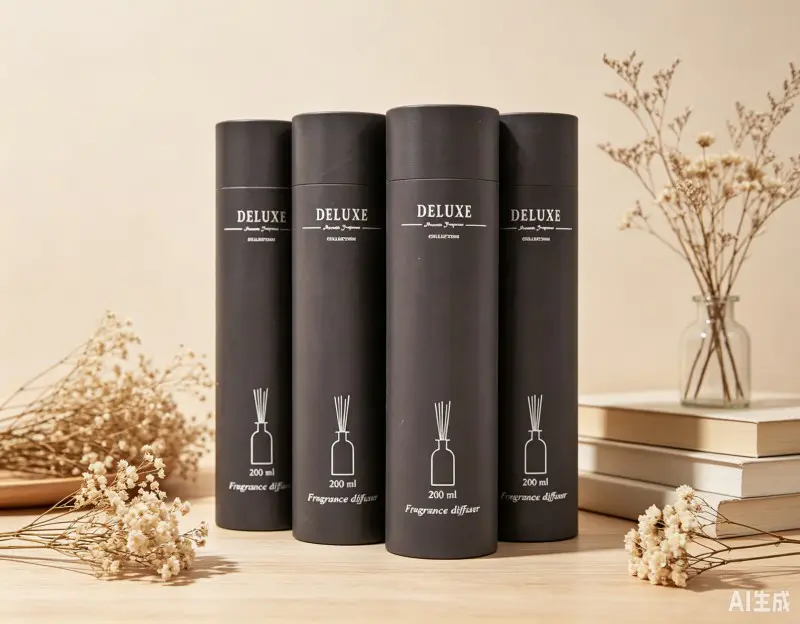
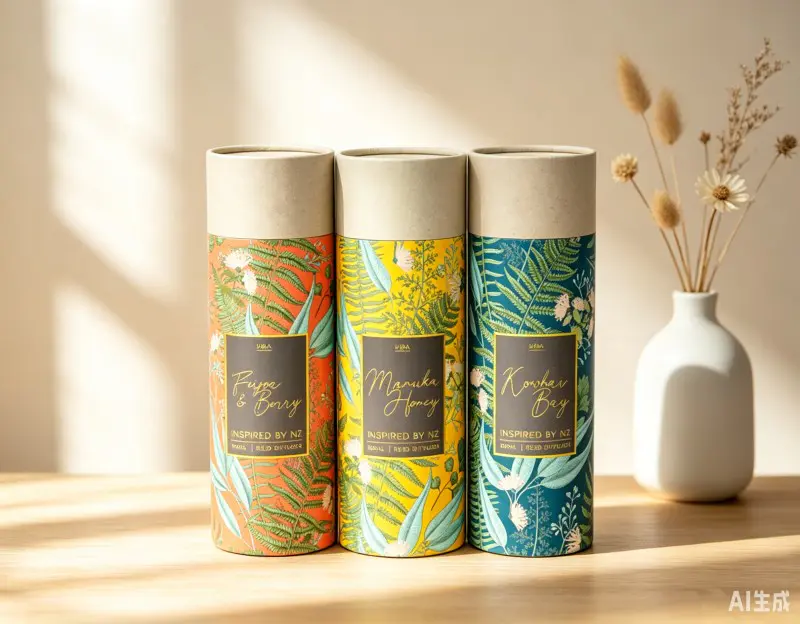

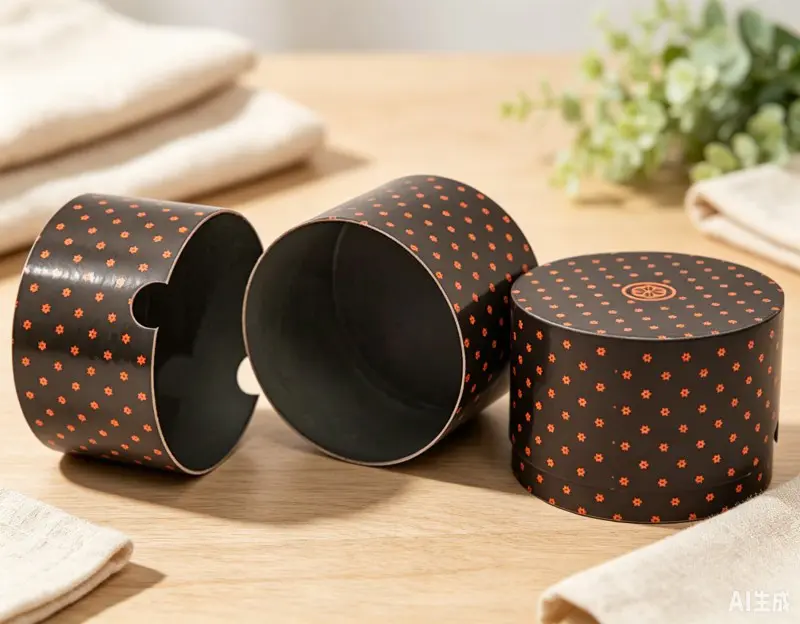


As one of the top China cardboard tube packaging manufacturers and paper tube packaging suppliers, we devote all of our efforts to research and launch more high quality packaging products to global market.
Cardboard tubes are one of those products that show up everywhere once you start looking — inside a roll of paper towels, at the center of a fabric bolt, protecting architectural drawings in transit, or holding fireworks together. But the term covers an enormous range of products, from thin-walled tissue cores to heavy-duty structural tubes used in construction forming. If you're sourcing cardboard tubes for a specific application, the difference between the right specification and the wrong one matters significantly — in load performance, dimensional accuracy, moisture resistance, and cost. This guide breaks down what you need to know to make the right choice.
Content
- 1 What a Cardboard Tube Is and How It's Made
- 2 Main Types of Cardboard Tubes and Their Differences
- 3 Key Specifications That Determine Performance
- 4 Wall Thickness and Crush Resistance: Getting the Strength Right
- 5 Moisture Resistance Options for Different Environments
- 6 Surface Finish Options and Their Applications
- 7 Standard Sizes vs. Custom Dimensions
- 8 Sustainability Profile of Cardboard Tubes
- 9 How to Source Cardboard Tubes: What to Ask and What to Check
- 10 Common Problems and How to Avoid Them
What a Cardboard Tube Is and How It's Made
A cardboard tube — also called a paper tube, paperboard core, or kraft tube depending on the application — is a hollow cylindrical structure manufactured by winding multiple layers of paperboard or kraft paper around a mandrel under tension, with adhesive applied between layers to bond them into a unified wall structure. The result is a composite paper product with considerably higher compressive and structural strength than any of the individual paper layers would provide on their own.
There are two primary winding methods used in cardboard tube manufacturing. Spiral winding — the more common of the two — feeds a continuous strip of paperboard at an angle to the mandrel, producing a helical seam that runs along the tube's length. This method is efficient for high-volume production and produces tubes with consistent wall thickness and good crush resistance. Convolute winding (also called parallel winding) wraps the paperboard parallel to the tube's axis, producing a tube with no diagonal seam. Convolute tubes are generally stronger in the axial direction and more dimensionally precise, making them the preferred choice for applications requiring tight tolerances or high axial load capacity.
The paper layers used in construction vary by application. Standard industrial cores use recycled kraft or chipboard plies for cost efficiency. Higher-performance tubes incorporate virgin kraft paper plies for improved strength and surface quality. Specialty tubes may use plies treated for moisture resistance, chemical resistance, or food contact compliance. The number of plies — and their individual grammage — determines the final wall thickness and the structural properties of the finished tube.
Main Types of Cardboard Tubes and Their Differences
The cardboard tube category encompasses products with very different performance profiles. Understanding the main types prevents misspecification and helps narrow down options quickly.
Industrial Cores
Industrial paper cores are the high-volume backbone of the cardboard tube market. They serve as the winding mandrel for rolls of film, foil, paper, fabric, tape, and wire — essentially any product that is manufactured, stored, and transported in roll form. Core dimensions are tightly controlled because the core's inside diameter must match the winding equipment at the converting plant, and the core's crush resistance must support the tension of the wound roll without collapsing. Standard inside diameters for industrial cores run from 38mm (1.5 inches) to 150mm (6 inches), with 76mm (3 inches) being the most common. Wall thickness varies from 3mm for light-duty applications to 15mm or more for heavy film and metal foil winding.
Mailing and Postal Tubes
Cardboard mailing tubes are designed to protect documents, posters, artwork, blueprints, and other rolled materials during postal transit and courier delivery. They are available in standard lengths from 300mm to 1500mm and diameters from 38mm to 100mm, typically with plastic end caps that can be secured with adhesive or tape. The wall construction for mailing tubes prioritizes impact resistance and rigidity — the tube needs to absorb point impacts from other parcels in transit without crushing or buckling. Heavy-duty cardboard mailing tubes with wall thicknesses of 5mm to 8mm are appropriate for valuable artwork or irreplaceable documents; standard 3mm wall tubes handle most general document shipping needs adequately.
Packaging Tubes with End Closures
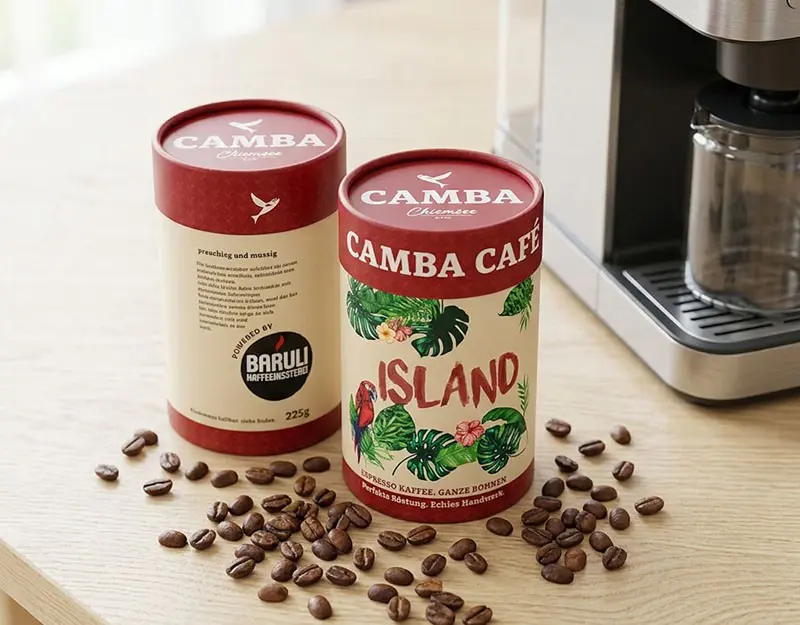
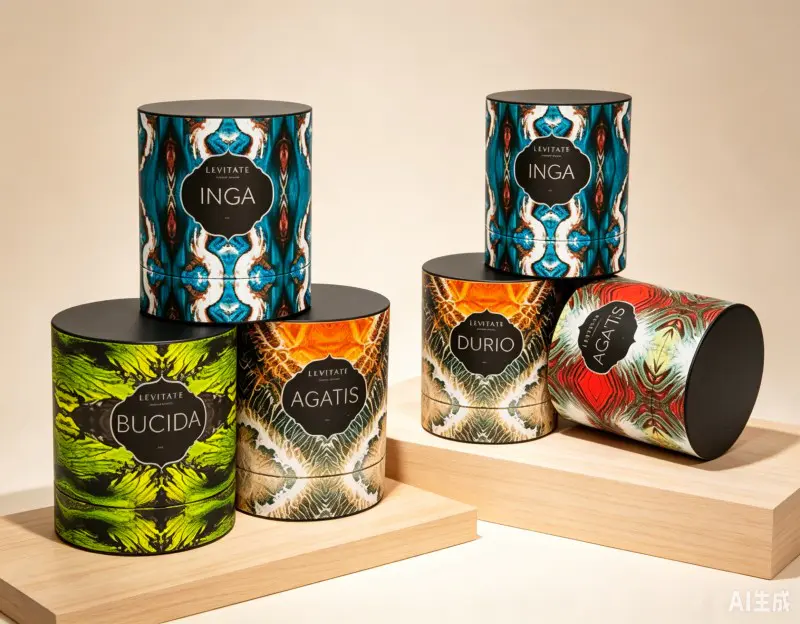
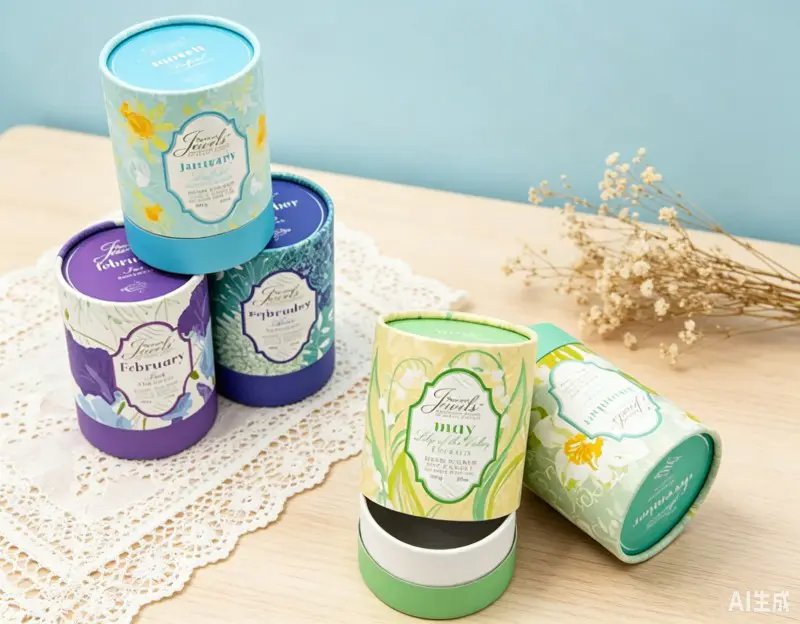
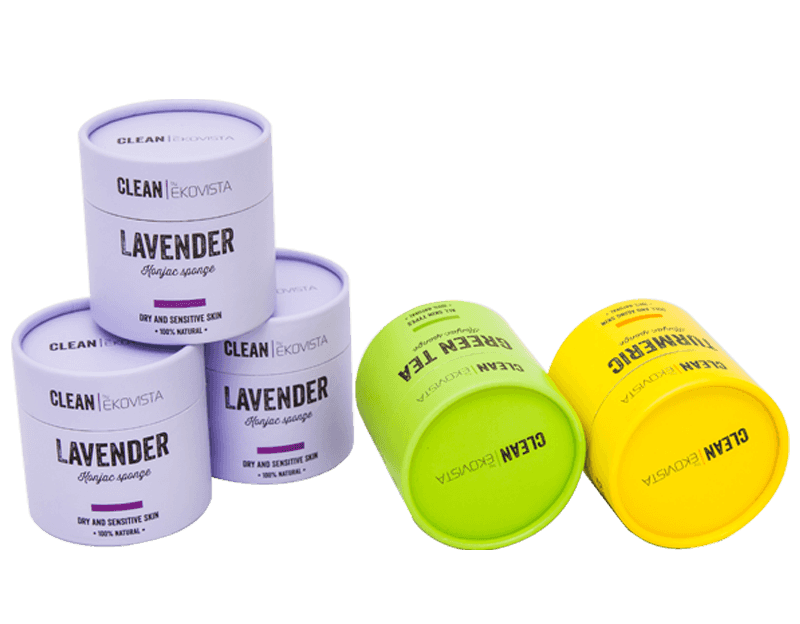
Round cardboard tubes designed as consumer or retail packaging — with fitted end caps, lids, or plug closures — are a growing packaging format for products ranging from cosmetics and whisky to tea, golf balls, and artisan food products. The tube body is typically produced with a smooth outer surface suitable for direct printing or label application, and the end closures can be metal, plastic, or paper. These tubes offer a premium unboxing experience and good product protection, and the cylindrical format makes them distinctive on retail shelves. Wall thickness for packaging tubes is typically 2mm to 5mm depending on the structural requirement and the desired premium feel.
Structural and Concrete Forming Tubes
Heavy-duty cardboard tubes are widely used in construction as formwork for cast concrete columns, piers, and footings. These tubes — sometimes called Sonotube, after a well-known brand — are produced in large diameters from 100mm to 900mm or more, with thick walls of 10mm to 25mm designed to withstand the hydrostatic pressure of wet concrete during pouring. The outer surface of the tube peels away cleanly after the concrete has cured, leaving a smooth cylindrical column finish. Concrete forming tubes are typically manufactured from recycled paper plies bonded with water-resistant adhesive and sometimes include a wax or polymer treatment on the inner surface to prevent moisture transfer from the concrete into the tube wall.
Specialty and Technical Tubes
Beyond the main categories, cardboard tubes are produced for a wide range of technical applications: fireworks casings, textile winding cores, map and chart storage tubes, protective sleeves for glass and fragile profiles, and cores for the carpet and flooring industry. Each of these has specific requirements — dimensional precision, wall composition, surface treatment, or end configuration — that differentiate them from standard industrial or packaging tubes. For specialist applications, working with a manufacturer rather than a distributor is typically necessary to achieve the required specification.
Key Specifications That Determine Performance
When evaluating or ordering cardboard tubes, the following specifications define the product's performance. Understanding what each one means in practice prevents the most common sourcing errors.
| Specification | Typical Range | What It Affects |
| Inside Diameter (ID) | 25mm – 900mm+ | Fit on mandrel or shaft; contents diameter |
| Outside Diameter (OD) | ID + 2× wall thickness | Clearance in housing or packaging |
| Wall Thickness | 1.5mm – 25mm | Crush resistance, structural strength, weight |
| Length | Custom cut to requirement | Application fit; cutting tolerance matters |
| Winding Type | Spiral or convolute | Dimensional precision, axial strength |
| Paper Ply Composition | Recycled / virgin kraft / specialty | Strength, surface finish, food safety |
| Moisture Resistance | Standard / treated / wax-lined | Performance in humid or wet environments |
| Diameter Tolerance | ±0.1mm to ±0.5mm | Fit precision on automated winding equipment |
Inside diameter tolerance is the most critical specification for industrial cores used on winding equipment. A core that is even 0.3mm undersize on the ID can jam on a winding mandrel or require excessive force to mount, disrupting production. Cores that are oversize on the ID will slip on the mandrel, causing misalignment and roll defects. For high-speed winding operations, specifying a tighter tolerance — ±0.1mm to ±0.2mm on ID — is worth the modest premium over standard tolerance product.
Wall Thickness and Crush Resistance: Getting the Strength Right
Wall thickness is the primary lever for controlling the structural performance of a cardboard tube, but the relationship between thickness and strength is not linear — it also depends on the paper ply composition, the number of plies, the adhesive system, and the quality of the winding process. Two tubes with identical wall thickness from different manufacturers can have significantly different crush resistance values.
The standard test for cardboard tube structural performance is the flat crush test (FCT), which measures the force required to crush the tube radially between two flat plates. For industrial cores, FCT values are typically expressed in N/mm of tube length (Newtons per millimeter) and represent the tube's resistance to the radial compression imposed by the wound roll. A light-duty tissue core might have an FCT of 15–25 N/mm; a heavy-duty film winding core for a high-tension winding application might require 80–120 N/mm or above.
For mailing and packaging tubes, flat crush is less relevant than impact resistance and column strength. A packaging tube needs to survive being dropped on its end — column crush — and being impacted laterally in a loaded postal bag. These performance requirements are better met by increasing the number of paper plies and using higher-basis-weight kraft paper rather than simply adding recycled chipboard plies, which add thickness without proportionate strength improvement.
Moisture Resistance Options for Different Environments
Standard cardboard tubes are manufactured with water-based adhesives and untreated paper plies — an adequate specification for most indoor, ambient-humidity applications but inadequate for environments where the tube will be exposed to moisture, high humidity, or direct liquid contact.
Several moisture resistance options are available depending on the degree of protection required. Moisture-resistant adhesive systems replace standard water-based adhesives with formulations that retain their bond strength in high-humidity conditions — typically tested to maintain 80% or more of dry-state bond strength at 90% relative humidity. This is the minimum specification for tubes used in cold storage, refrigerated distribution, or outdoor staging.
For more demanding conditions — tubes used in concrete forming, wet food processing environments, or direct water exposure — a wax treatment or polymer coating applied to the outer surface provides a barrier against moisture ingress into the tube wall. Wax-treated concrete forming tubes are a standard product specifically for this reason: the wet concrete in contact with the tube interior is balanced by a wax outer layer that prevents the tube from absorbing ground moisture during the curing period and swelling against the concrete surface.
Food-contact applications — tubes used to package food products directly, or cores used in food processing facilities — require paper plies and adhesives certified for food contact compliance under FDA 21 CFR (US) or EC 1935/2004 (EU). This is a distinct requirement from moisture resistance and must be verified by certificate from the manufacturer, not assumed based on the tube's general appearance or description.
Surface Finish Options and Their Applications
The outer surface of a cardboard tube affects its suitability for printing, labeling, and end-use appearance. Standard industrial cores have a natural kraft brown or grey recycled paper outer surface — functional but not suitable for consumer-facing applications. For packaging and retail tubes, several surface finish options are available.
- Smooth white outer ply: A calendered white kraft paper outer wrap gives the tube a clean surface suitable for direct offset or flexographic printing, or for self-adhesive label application. This is the standard specification for retail packaging tubes and premium mailing tubes where appearance matters. The smoothness of the outer ply directly affects print registration accuracy and color fidelity.
- Natural kraft outer ply: Brown kraft paper outer surface — either smooth or slightly textured — gives a natural, craft aesthetic that works well for artisan food packaging, eco-friendly branding, and sustainable packaging programs. The surface accepts printing and labeling but has a warmer, less clinical appearance than white-lined tubes.
- Foil or specialty outer wrap: For premium packaging applications — spirits, cosmetics, confectionery — the outer surface can be wrapped with metallic foil, textured paper, or printed laminate to achieve a high-end retail appearance. These wraps are applied after tube winding as a secondary operation and add lead time and cost, but the result is a packaging format that competes visually with rigid plastic or metal containers.
- Inner surface treatment: For product packaging applications where the tube interior is visible or where the product contacts the tube wall directly, inner surface treatment options include smooth white lining, moisture barrier lining, and food-grade coating. The inner surface specification is as important as the outer for packaging tubes — a premium outer finish paired with a rough recycled paper interior creates a poor unboxing experience and may not meet food contact requirements.
Standard Sizes vs. Custom Dimensions
Cardboard tube manufacturers typically hold stock in a range of standard dimensions that cover the most common industrial and mailing applications. Ordering from standard stock is faster and less expensive than custom production, but the available range may not match every application requirement precisely.
Standard stocked inside diameters for industrial cores typically include 38mm, 52mm, 76mm, 100mm, 127mm, and 152mm — the sizes that correspond to the most common winding equipment mandrel dimensions in the converting industry. Mailing tube stock sizes are typically offered in diameter and length combinations that cover the most common document and poster formats.
Custom dimensions are available from most manufacturers but require a minimum order quantity (MOQ) — typically 500 to 2,000 tubes for a custom size, though this varies significantly by manufacturer and tube complexity. For businesses with recurring needs for a non-standard dimension, the cost per unit from custom production at volume is typically competitive with standard stock pricing, and the dimensional fit eliminates the performance compromises of using the nearest standard size.
Length cutting is one area where custom specification is available with minimal MOQ constraint. Most tube manufacturers can cut to any specified length from their standard diameter range on short notice, making length customization accessible even for smaller orders. Cut length tolerance — typically ±1mm to ±2mm for standard production, tightened to ±0.5mm for precision applications — should be specified alongside the nominal dimension when ordering.
Sustainability Profile of Cardboard Tubes
Paper tubes have a significantly more favorable environmental profile than most plastic packaging formats. The base material is renewable, the manufacturing process uses water-based adhesives in most standard formulations, and the finished product is recyclable through standard paper and cardboard collection streams in most markets — a significant advantage over composite packaging formats that cannot be easily separated for recycling.
Recycled content in cardboard tubes varies by product type. Industrial cores typically incorporate 70% to 100% recycled fiber content — the structural requirements are met by the winding construction rather than virgin fiber strength, making this an effective use of recycled material. Premium packaging tubes using virgin kraft outer plies have a lower recycled content percentage but still typically incorporate recycled plies in the inner wall layers.
End-of-life recyclability is generally straightforward for standard tubes — they are accepted alongside cardboard and paper in most recycling programs. The exception is tubes with heavy wax treatments, foil lamination, or plastic inner liners, which may require separation or may be rejected by standard paper recycling streams. For brands positioning their tube packaging on sustainability credentials, confirming end-of-life recyclability with the manufacturer — and specifying water-based adhesives and non-plastic surface treatments — ensures the recyclability claim holds up under scrutiny.
How to Source Cardboard Tubes: What to Ask and What to Check
Whether you're buying mailing tubes in small quantities or industrial cores by the truckload, the following checklist covers the key information to establish with a supplier before committing to a purchase.
- Confirm the critical dimension and its tolerance. For industrial cores, inside diameter and its tolerance are the primary specification. For mailing tubes, outside diameter and wall thickness are more relevant. Always state which dimension is controlled and what tolerance is acceptable — don't assume the manufacturer's standard tolerance matches your requirement.
- Specify the performance requirement, not just the dimension. Stating a flat crush resistance requirement (e.g., minimum 50 N/mm) or a column crush requirement is more useful than specifying wall thickness alone, because it allows the manufacturer to meet the requirement with the most cost-effective construction rather than defaulting to excess material.
- Ask for a sample before committing to volume. Physical samples allow you to verify dimensional accuracy, surface quality, and structural feel before production. For industrial cores, testing the sample on your actual winding equipment is the only reliable way to confirm fit and performance.
- Verify food contact compliance if relevant. For any tube in contact with food — directly or indirectly through packaging — ask for the relevant food contact certificates (FDA, EC 1935/2004, or national equivalent) from the manufacturer. A statement that the tube is "suitable for food contact" without accompanying certification is not adequate for regulatory compliance.
- Clarify packaging and delivery format. Cardboard tubes can be delivered loose in bulk, banded in bundles, or packaged individually depending on downstream handling requirements. For industrial cores delivered to automated handling systems, consistent bundle size and tube orientation can affect line efficiency — worth specifying rather than assuming.
- Ask about batch consistency controls. For applications where color, surface quality, or dimensional consistency across batches matters — retail packaging tubes in particular — understanding what the manufacturer's quality control process involves and what documentation is available per batch helps manage the risk of visible variation between production runs.
Common Problems and How to Avoid Them
| Problem | Likely Cause | How to Prevent It |
| Core collapses under wound roll tension | Insufficient flat crush resistance for winding tension | Specify FCT requirement based on actual winding parameters |
| Core won't fit on mandrel or is too loose | ID tolerance too wide or nominal ID mismatch | Tighten ID tolerance specification; test sample before ordering |
| Tube absorbs moisture and softens in storage | Standard tube stored in high-humidity environment | Specify moisture-resistant adhesive; improve storage conditions |
| Print or label not adhering to outer surface | Rough or contaminated outer ply surface | Specify smooth calendered white outer ply for printed applications |
| Mailing tube crushed in transit | Wall thickness insufficient for postal handling impacts | Upgrade to minimum 5mm wall for valuable document shipping |
| Color inconsistency between batches of packaging tubes | Outer ply paper grade varying between production runs | Specify outer ply grade by paper reference; request batch certificates |
