 English
 Español

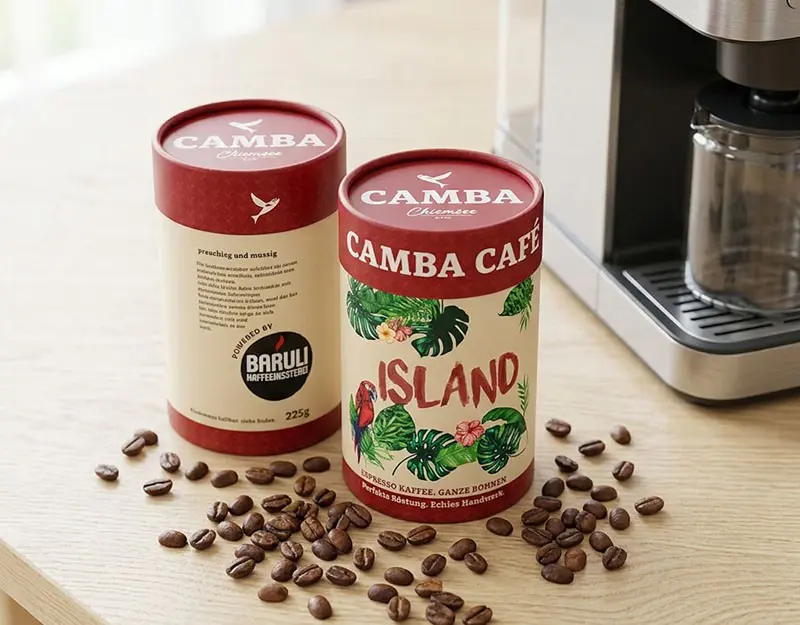
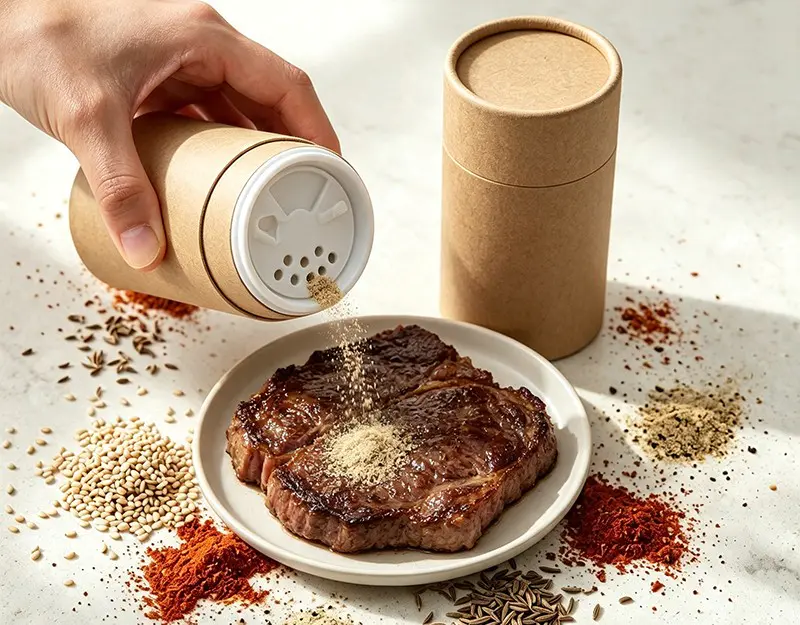
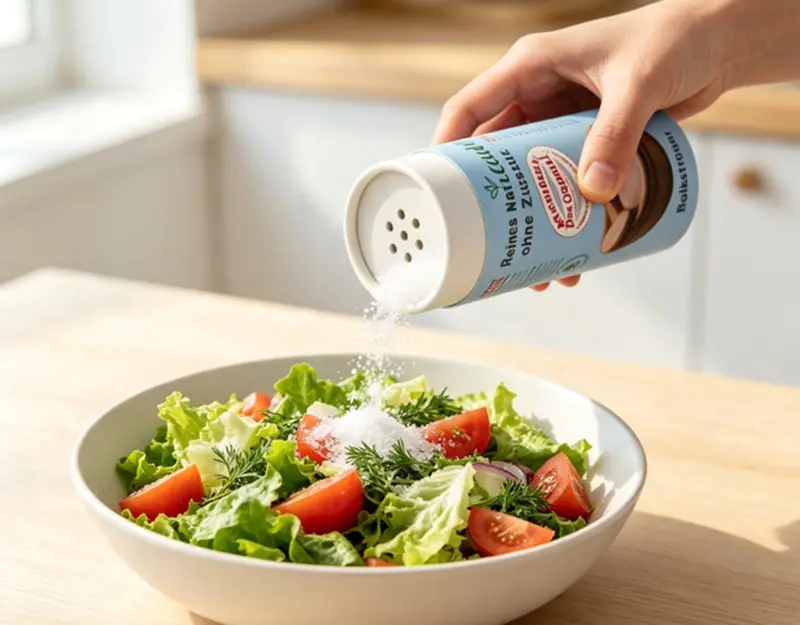
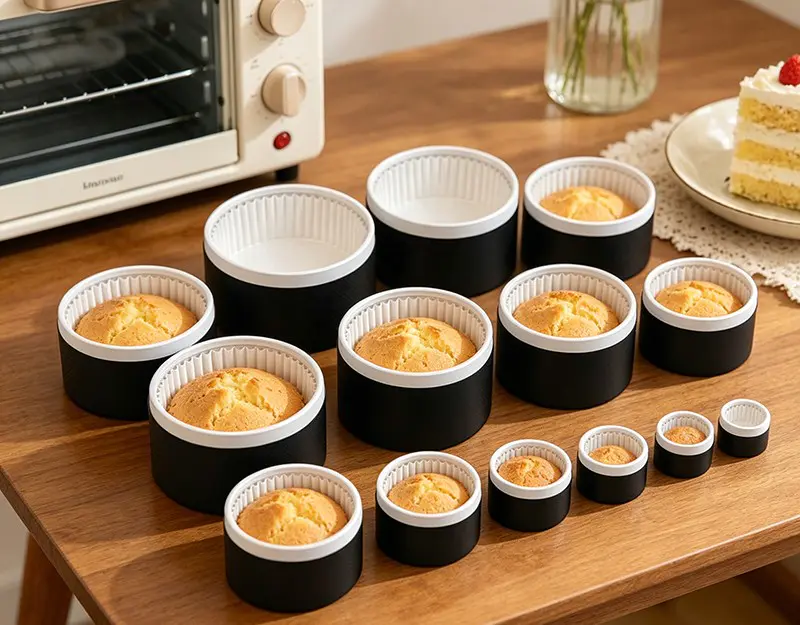
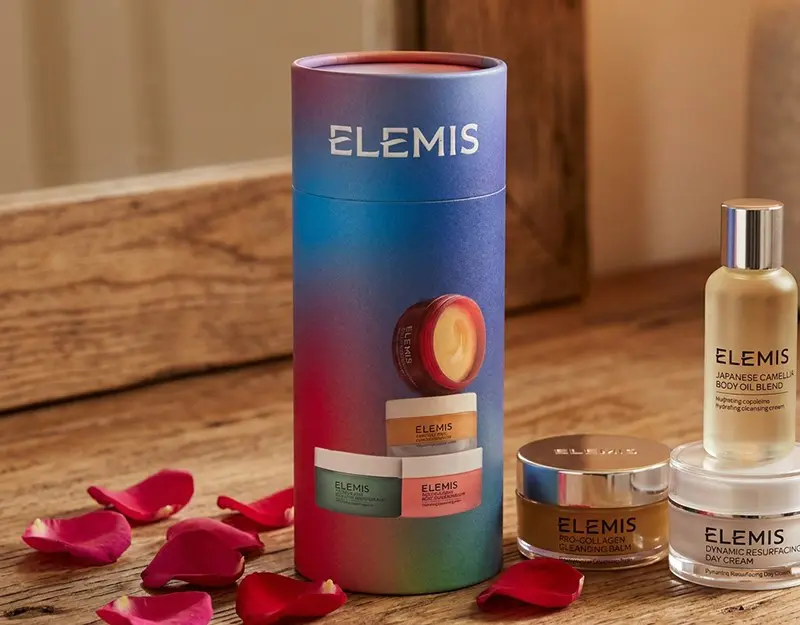
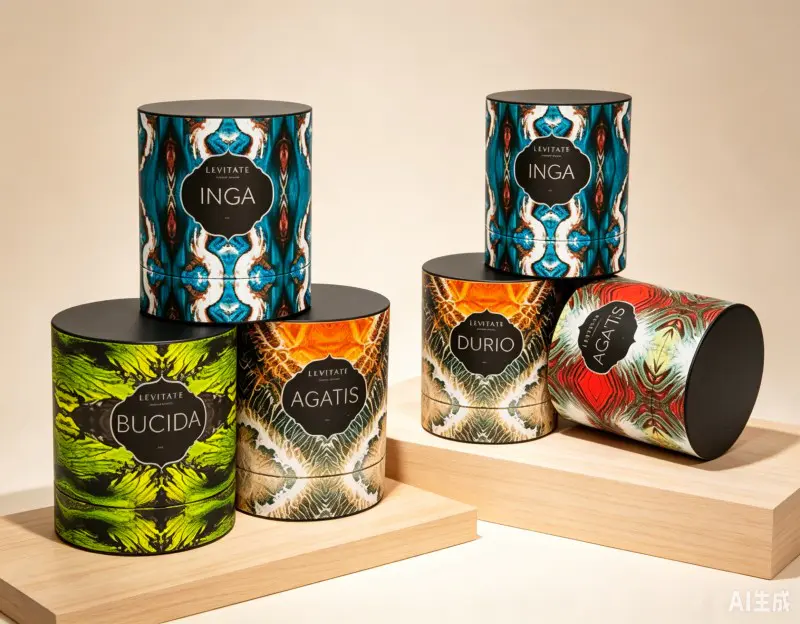
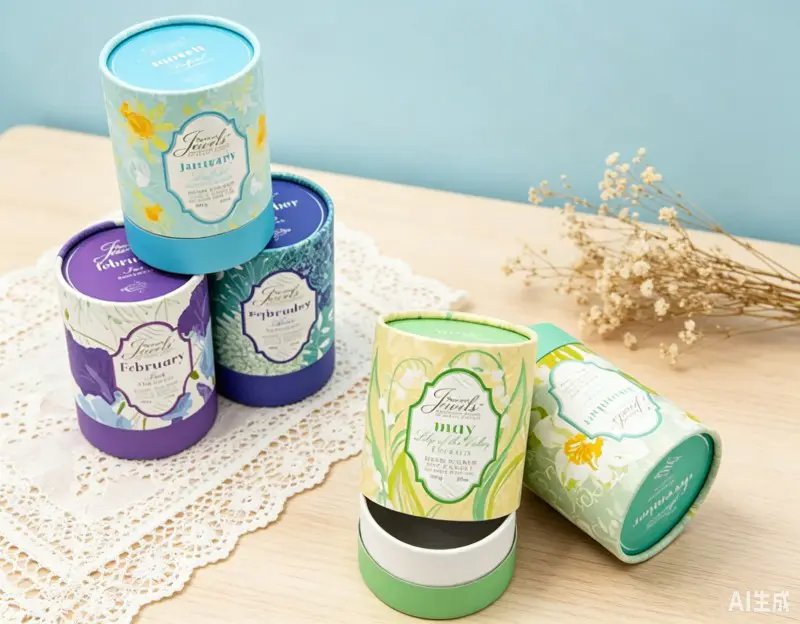
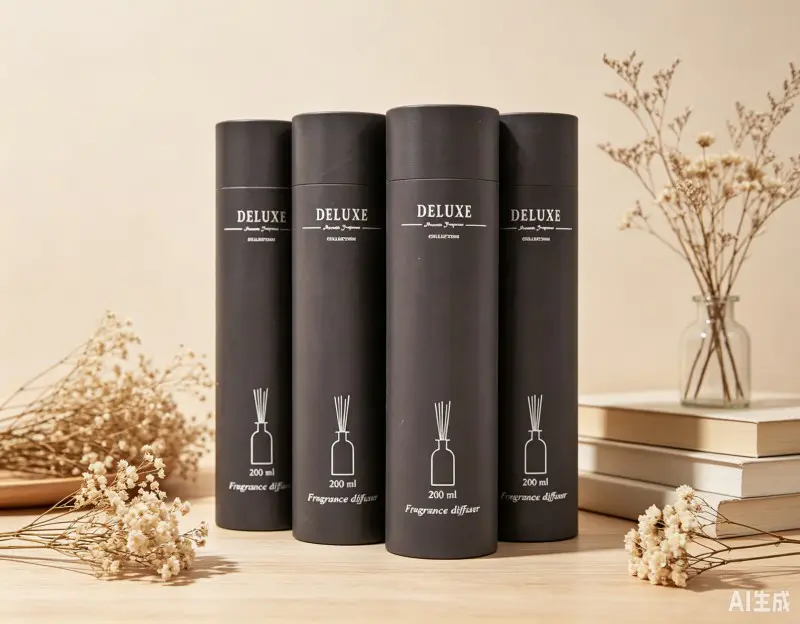
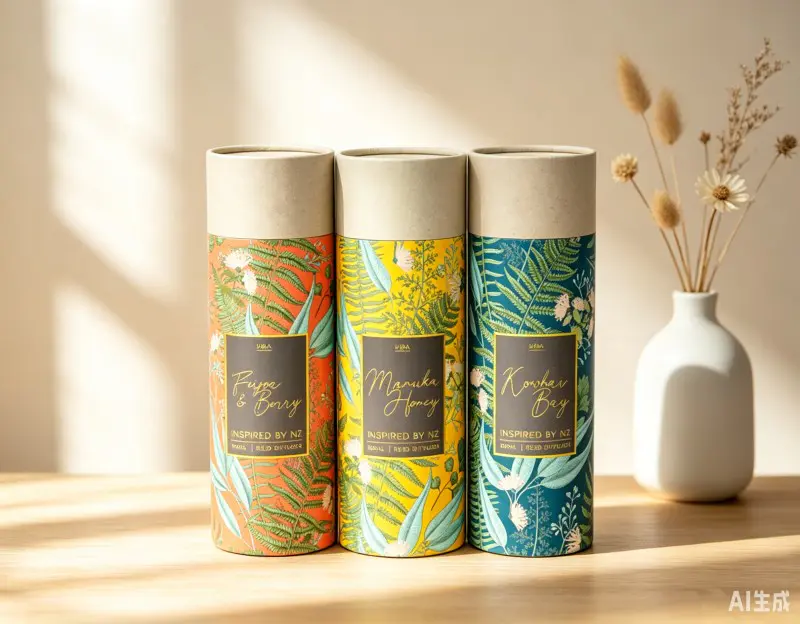
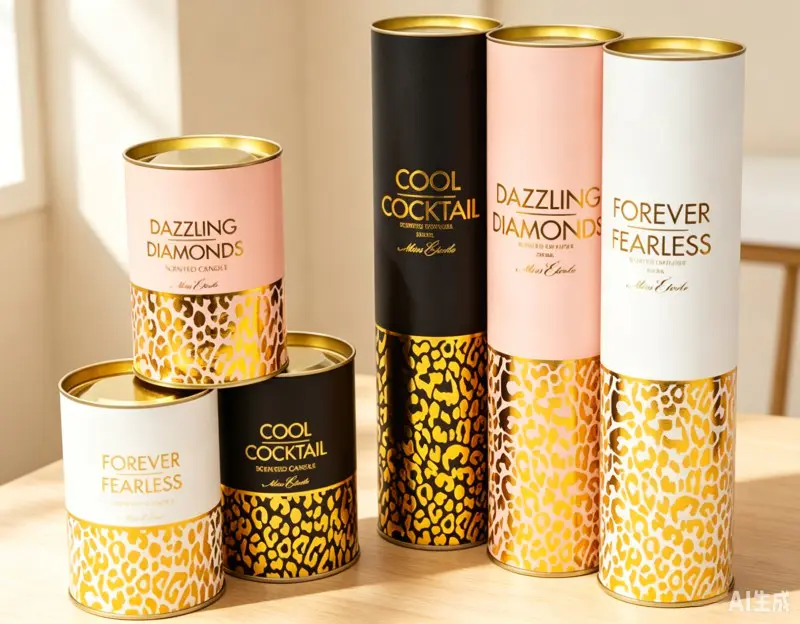
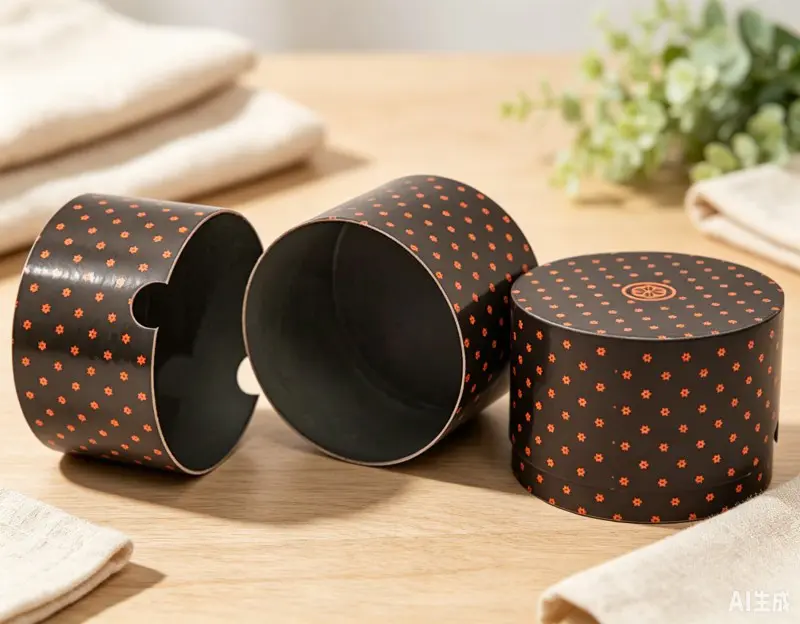
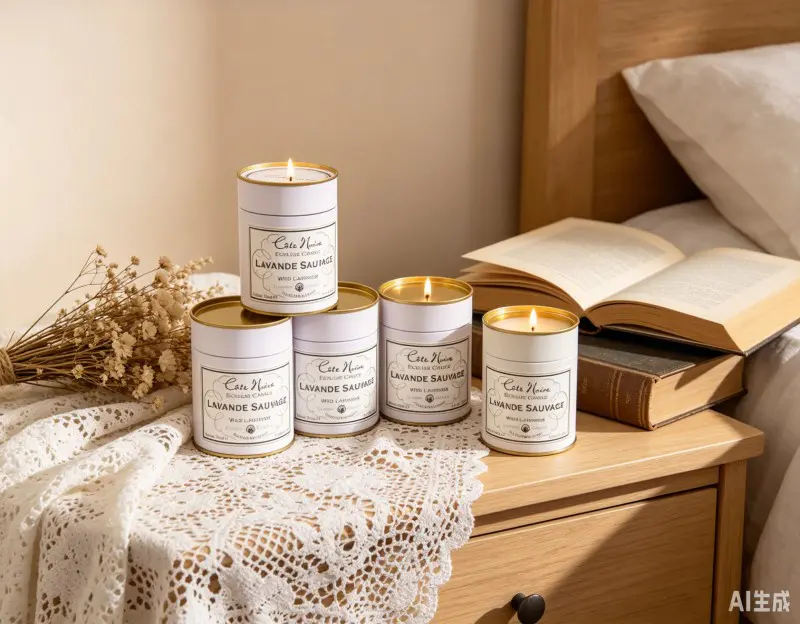

As one of the top China cardboard tube packaging manufacturers and paper tube packaging suppliers, we devote all of our efforts to research and launch more high quality packaging products to global market.
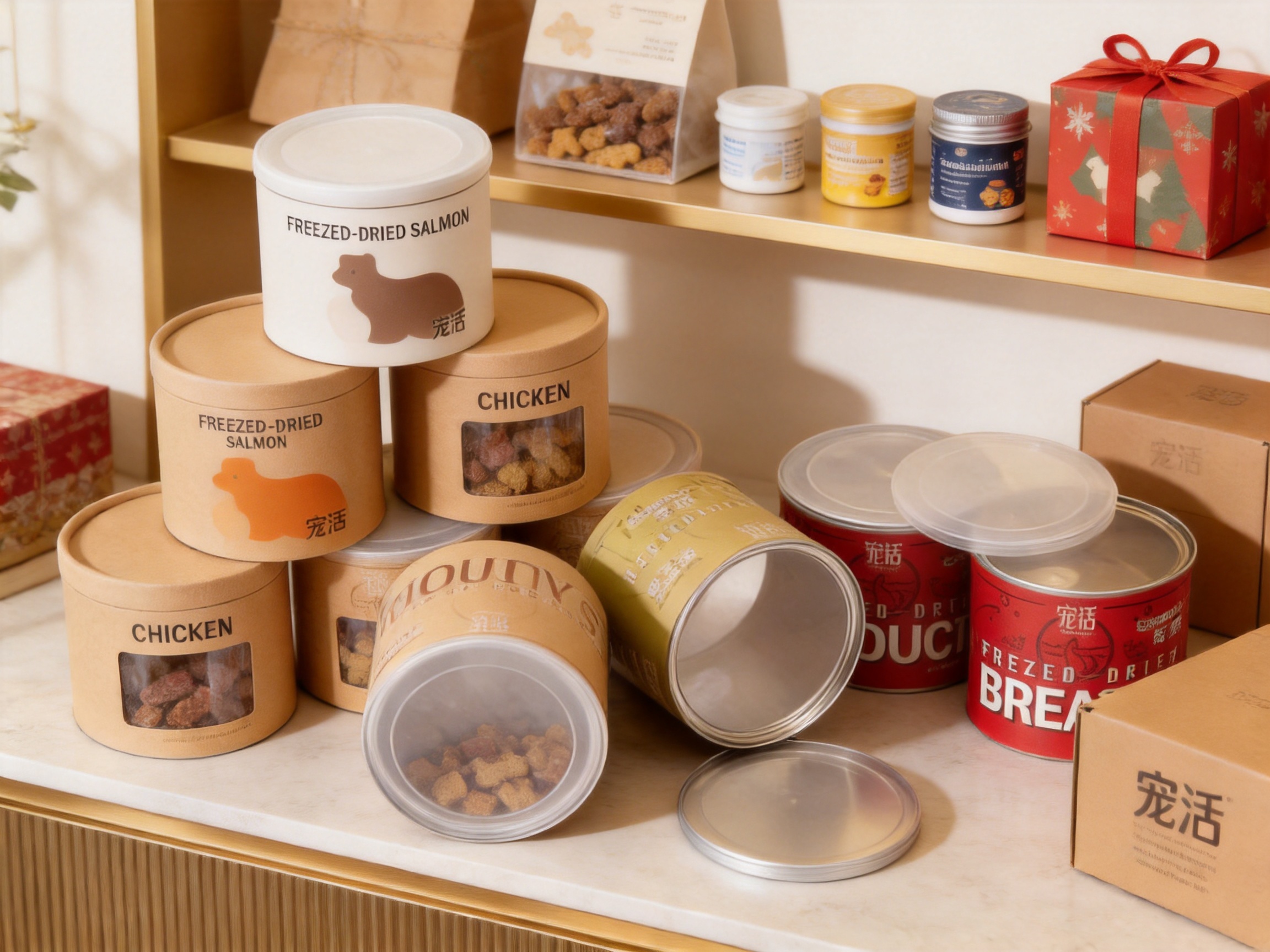
Packaging is no longer a secondary consideration for pet-care brands. It protects the product, communicates quality, supports storage convenience, and helps determine whether a customer remembers a product after the first purchase. The custom printed clear food packaging pet tin box with lid is designed to address these needs through a hybrid structure that combines paper, plastic, and tin components. It offers the visual appeal of a printed cylindrical package, the protective characteristics of an airtight container, and the practical convenience of a reusable lid.
With an internal diameter of 83 millimeters and a height of 100 millimeters, this cylinder-shaped container is suited to selected pet treats, dry snacks, supplements, small food products, and other compact goods. Its structure is based on a one-piece airtight paper can construction, aluminum foil lining, coated or kraft paper, and a protective tin component. The packaging can be customized with CMYK printing, a custom logo, and a matte finish, making it suitable for businesses that need packaging aligned with a particular brand identity.
This article examines the product’s construction, manufacturing considerations, performance advantages, customization options, sustainability features, quality requirements, and commercial applications. It also explains how an experienced composite-can and paper-can manufacturer can support the transition from a packaging concept to a dependable production solution.
Content
- 1 1. Product Overview
- 2 2. Why Packaging Matters in the Pet-Care Market
- 3 3. Hybrid Material Construction
- 4 4. Advantages Compared with Conventional Packaging
- 5 5. Printing and Surface Finishing
- 6 6. Manufacturing Process and Technical Control
- 7 7. Manufacturing Strengths and Industry Experience
- 8 8. Sustainability Considerations
- 9 9. Applications for Pet Products
- 10 10. Applications Beyond Pet Care
- 11 11. Quality Assurance for Buyers
- 12 12. Order Planning and Customization
- 13 13. Logistics, Storage, and Handling
- 14 14. Common Development Challenges
- 15 15. How the Product Can Strengthen a Brand
- 16 16. Recommended Evaluation Checklist
- 17 17. Frequently Asked Questions
- 17.1 Q1: What is the main structure of this container?
- 17.2 Q2: What are the listed dimensions?
- 17.3 Q3: Is the package suitable for pet treats?
- 17.4 Q4: What does the aluminum foil lining do?
- 17.5 Q5: Can the design be customized?
- 17.6 Q6: What surface finish is specified?
- 17.7 Q7: What is the minimum order quantity?
- 17.8 Q8: Is this package recyclable?
- 17.9 Q9: Can the package be reused?
- 17.10 Q10: How should the package be tested before mass production?
- 17.11 Q11: What are the benefits of buying directly from a factory?
- 17.12 Q12: Can the same type of package be used outside pet care?
- 18 18. Conclusion
- 19 References
- 20 Product: Custom Printed Clear Food Packaging Pet Tin Box with Lid
1. Product Overview
The custom printed clear food packaging pet tin box with lid is a cylindrical package developed for products that benefit from protection, convenient handling, and strong shelf presentation. Although the product is listed under pet care, its food-packaging construction also makes it relevant to treats, snacks, dry ingredients, nutritional products, and other goods that require a clean and protective container.
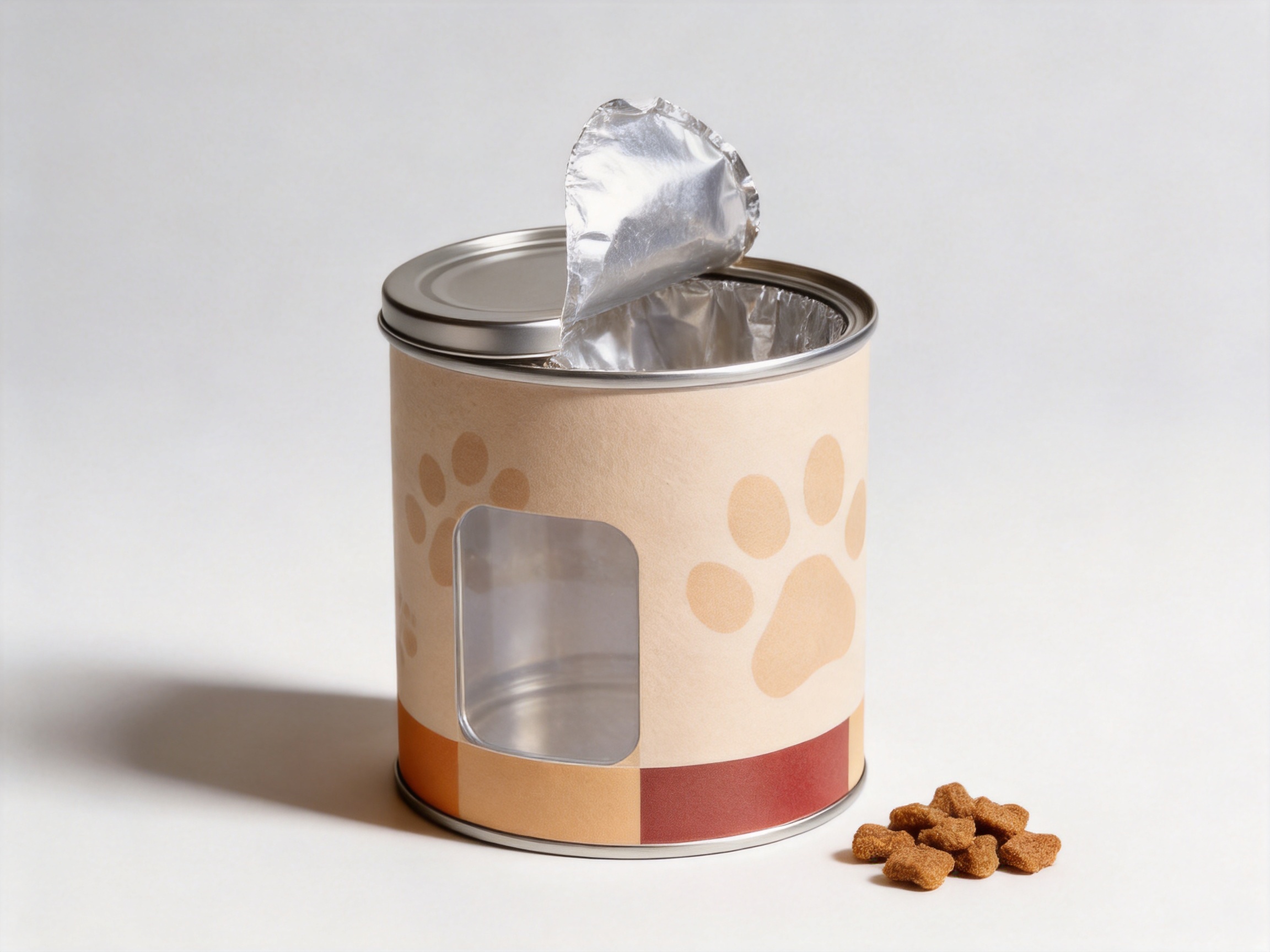
The container uses a combination of paper, plastic, and tin. Each material performs a different function. Paper creates the main printed body and provides an efficient surface for brand communication. Plastic can contribute to visibility or structural integration, depending on the final specification. Tin supports closure performance, durability, and a premium tactile impression. An aluminum foil lining provides an additional barrier between the packaged product and the surrounding environment.
The product is specified as a one-piece airtight paper can. This construction is particularly useful when product freshness and protection from external exposure are important. The lid helps close the package after filling, while the cylindrical body supports efficient handling, stacking, labeling, and visual recognition on a retail shelf.
Key specifications include an internal diameter of 83 millimeters, a height of 100 millimeters, CMYK printing, matte post-printing treatment, a custom logo option, a minimum order quantity of 5,000 units, and factory-direct production. The exact capacity will depend on the product density, filling method, headspace requirements, and lid configuration, so buyers should confirm the final usable volume through sampling before mass production.
| Item | Specification | Commercial Significance |
|---|---|---|
| Product type | Custom printed clear food packaging pet tin box with lid | Combines presentation, protection, and closure convenience |
| Primary structure | One-piece airtight paper can | Supports product containment and freshness protection |
| Materials | Paper, plastic, and tin | Creates a hybrid balance between printability, visibility, and durability |
| Paper options | Coated paper or kraft paper | Allows different visual styles and sustainability positioning |
| Barrier layer | Aluminum foil lining | Helps limit exposure to moisture, light, odors, and air |
| Shape | Cylinder | Offers recognizable shelf presentation and comfortable handling |
| Dimensions | ID83 × 100 millimeters | Suitable for compact products and controlled portion formats |
| Printing | CMYK printing | Supports detailed full-color graphics and photographic designs |
| Surface treatment | Matte finish | Creates a soft appearance and reduces distracting reflection |
| Customization | Custom logo and custom order accepted | Supports private-label and brand-specific packaging programs |
| Minimum order quantity | 5,000 units | Appropriate for organized product launches and established supply programs |
2. Why Packaging Matters in the Pet-Care Market
Pet products are purchased by people, but they are consumed by animals. This creates a packaging requirement that is more demanding than simple visual appeal. Owners want to understand the product quickly, while the package must protect the contents from handling, transport, moisture, contamination, and repeated opening. In many cases, the product is used over several days or weeks, making resealability and storage convenience important.
Pet treats and supplements are particularly sensitive to packaging performance. A package that allows moisture to enter may reduce texture, aroma, and palatability. A package with an ineffective closure may expose the contents to air or household odors. A package that is difficult to handle may be inconvenient for owners, especially when they need to dispense small portions repeatedly.
A cylindrical container with a lid can provide a more distinctive alternative to ordinary flexible pouches or basic plastic tubs. Its shape is easy to recognize, comfortable to hold, and suitable for counter displays, shelves, gift sets, and subscription boxes. The printed exterior also gives brands a large communication area for product names, feeding guidance, flavor information, ingredient claims, and usage instructions.
Premium packaging can also influence perceived product value. A sturdy composite package with a clean matte finish may appear more carefully designed than a low-cost disposable container. This can support premium pet treats, functional supplements, specialty snacks, and limited-edition products. The reusable nature of the container may further encourage customers to retain it for small-item storage after the original contents have been consumed.
3. Hybrid Material Construction
3.1 Paper as the Main Printed Surface
Paper is an effective material for high-quality exterior graphics. It accepts detailed CMYK images, brand colors, illustrations, text, patterns, and decorative elements. Compared with printing directly onto some rigid plastic surfaces, a paper exterior can provide a more natural tactile feel and a broad design area.
Coated paper is suitable when a smooth, refined surface is required. It can support crisp small text, strong color reproduction, and a more controlled matte appearance. Kraft paper may be selected when the brand wants a natural, earthy, or environmentally conscious visual language. Kraft-based designs are often used for organic-inspired pet products, natural treats, handmade snack concepts, and products positioned around responsible sourcing.
Paper also contributes to the package’s stiffness and shape. When formed into a cylindrical composite body, multiple paper layers can create a stable structure with a consistent round profile. The final performance depends on paper weight, winding or forming methods, adhesive selection, seam construction, lining configuration, and end closure design.
3.2 Plastic for Visibility and Functional Integration
The product specification identifies plastic as one of the structural materials. Depending on the final engineering design, plastic may be used in a transparent section, a window, a lid component, a protective part, or another functional element. The clear feature can help shoppers see the product or visually confirm the fill level, which is especially valuable for treats with attractive shapes or colors.
Visibility can reduce uncertainty at the point of sale. Customers may want to see the size, color, or general appearance of a pet treat before purchasing. A transparent or clear component can also help warehouse and household users identify the product quickly. However, the final amount of transparency should be balanced against light sensitivity, barrier requirements, and the need to protect the contents during storage.
When plastic is integrated into a paper-and-tin package, component compatibility must be considered. The manufacturer needs to evaluate fit, sealing, dimensional tolerances, adhesive performance, and resistance to transport stress. Clear components should be inspected for scratches, haze, deformation, and inconsistent appearance because these defects can be more visible on a premium package.
3.3 Tin for Closure and Durability
Tin provides a firm, durable component that can improve the feel of the lid and support repeated handling. A tin lid can create a more substantial opening and closing experience than a thin disposable film. It may also add a premium visual accent to the package, especially when combined with a carefully selected paper design and matte finish.
Durability is important for packages used in homes with frequent opening and closing. The lid must maintain a reliable fit without becoming excessively difficult to remove. The package should be designed so that users can open it without damaging the printed body or creating sharp exposed edges. The final design should also consider child safety, pet access, and the possibility that the package may be stored in a warm or humid domestic environment.
Tin is not intended to replace the entire paper structure in this product. Instead, it works as part of a composite system. The paper body offers a large printable surface, while the tin element can reinforce the closure and premium character. This division of functions is one of the central advantages of a hybrid container.
3.4 Aluminum Foil Lining as a Barrier Layer
The aluminum foil lining is an important functional feature. It can help reduce the movement of air, moisture, odors, and light between the product and the outside environment. This is relevant for pet treats, dry foods, seasoning-style products, and supplements that may lose quality when exposed to humidity or oxygen.
A barrier layer does not automatically make every product shelf-stable under every condition. Performance depends on the complete package system, including the body, lining, closure, seams, end components, and filling process. Product characteristics such as fat content, water activity, aroma intensity, particle size, and expected storage period also affect the packaging requirement.
For this reason, brands should identify the product’s sensitivity profile before approving a final specification. A manufacturer can then help determine whether the selected lining, closure, and body construction are appropriate. Package testing should be performed with representative contents and realistic transportation and storage conditions.
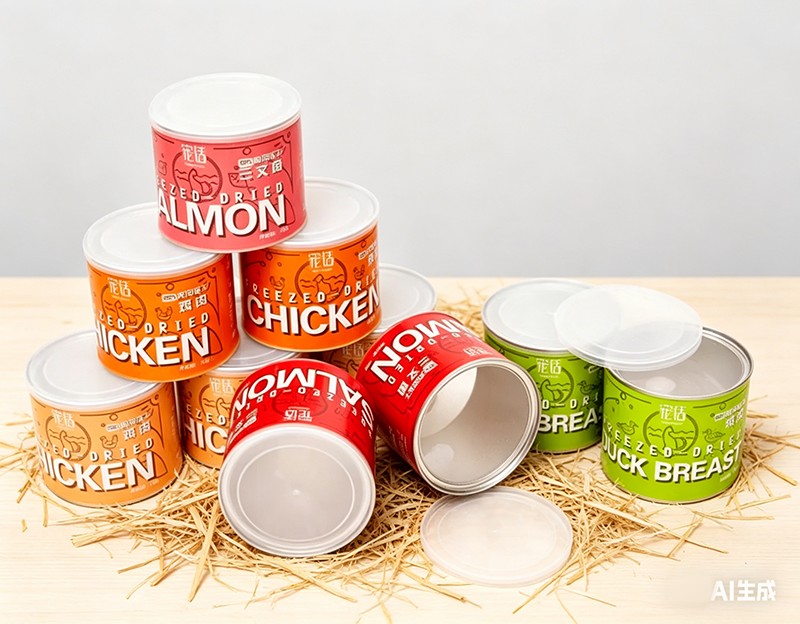
Custom Printed Clear Food Packaging Pet Tin Box with Lid
4. Advantages Compared with Conventional Packaging
4.1 Stronger Shelf Differentiation
Many pet products are packaged in flexible bags, standard plastic jars, or generic cartons. These formats can be effective, but they may offer limited visual differentiation when placed among competing products. A cylindrical paper can with a custom printed surface creates a distinct silhouette and can be recognized from multiple viewing angles.
The round format also provides a continuous communication area. A brand can place the main product name on the front, feeding or usage information on the back, and decorative elements around the sides. Unlike a flat carton, the cylinder can appear visually complete even when it is rotated on a shelf. This is useful for small retail displays and online product photography.
4.2 Better Balance Between Appearance and Protection
Some highly decorative packages provide limited protection, while some highly protective packages have a plain or industrial appearance. The hybrid paper, plastic, and tin structure attempts to balance both priorities. The printed paper surface offers design flexibility, the foil lining contributes barrier protection, and the tin component supports a more durable closure.
This balance can reduce the need to choose between a premium appearance and functional performance. It also allows the package to be positioned across several market levels. With kraft paper, restrained graphics, and natural colors, it can support an artisan or natural product. With high-density graphics, metallic details, and a carefully selected color palette, it can support a luxury or gift-oriented range.
4.3 Convenient Repeated Use
A lid-equipped container is appropriate for products that are consumed gradually rather than all at once. Pet owners can open the package, remove a portion, and close it again. This is more convenient than relying on a temporary clip or folding a flexible pouch after each use.
Repeated use also creates more opportunities for the package to remain visible in the home. A well-designed package may stay on a kitchen counter, shelf, or storage cabinet for an extended period. This increases the practical value of legible instructions, recognizable branding, and a clean exterior finish.
4.4 More Suitable for Premium and Gift Applications
Packaging is an important part of gift presentation. Pet gifts, holiday treats, adoption welcome kits, and specialty care packages benefit from containers that look presentable before wrapping. The cylindrical form, printed finish, and lid can make the package suitable for bundled products or seasonal editions.
A premium package does not need to be excessively complex. A simple design with strong typography, high-quality color reproduction, a matte finish, and a well-fitted lid can communicate care and quality. The package may also be reused for toys, grooming accessories, training rewards, or household items, extending its practical life after the original product is finished.
4.5 Flexible Branding and Private-Label Development
Custom printing allows different customers to use the same basic package format while developing distinct product identities. A manufacturer can produce packaging for independent pet-food brands, regional distributors, specialty retailers, veterinary product companies, subscription services, and promotional programs.
CMYK printing supports photographs, illustrations, gradients, and detailed label information. Custom logos can be integrated into the main artwork rather than applied as a separate sticker. This can create a more unified appearance and may reduce the visual irregularity associated with multiple labels or manual decoration processes.
5. Printing and Surface Finishing
5.1 CMYK Printing
CMYK printing uses cyan, magenta, yellow, and black inks to reproduce a broad range of colors. It is suitable for product images, animal illustrations, patterns, icons, ingredient panels, and branding systems that require more than one or two spot colors. The quality of the finished result depends on artwork preparation, substrate selection, color management, ink compatibility, drying, and inspection.
Before production, customers should provide print-ready artwork with correct dimensions, bleed areas, safe zones, and clearly defined text. The design should account for the curved surface because certain elements may appear distorted if placed too close to seams or around the strongest curvature. Small text should be tested at actual size rather than judged only on a computer screen.
Color expectations should be discussed before mass production. Screen colors, digital proofs, physical proofs, and production samples may differ. If a specific brand color is important, the customer should request an approved proof and establish a tolerance for acceptable variation. This is particularly important when the package must match cartons, labels, shipping cases, or other products in the same range.
5.2 Matte Finish
The specified matte finish reduces surface reflection and gives the package a softer, more contemporary appearance. Matte surfaces can make dark colors appear more controlled and can help text remain readable under bright retail lighting. They also provide a tactile distinction from glossy plastic packaging.
A matte finish is not only a visual decision. It can influence scuff visibility, cleaning behavior, ink adhesion, and the way the package appears after transportation. Packaging should be tested inside its intended shipping carton to check whether rubbing, compression, or movement creates marks. Protective packing arrangements may be necessary for products with large dark areas or delicate surface graphics.
5.3 Design Recommendations
The cylindrical format supports several design approaches. A vertical layout can emphasize the height of the container and make the product name prominent. A wraparound illustration can create a continuous visual story. A centered logo with a restrained information hierarchy can create a premium appearance. A window or clear component can be framed with printed graphics so that visibility becomes part of the design rather than an isolated technical feature.
Designers should maintain sufficient contrast between text and background, especially when using kraft paper. Nutritional information, feeding instructions, warnings, storage directions, batch information, and responsible-use statements should be clearly legible. The package should not allow decorative elements to compete with mandatory product information.
Brands should also consider how the package will appear in online listings. Product images are often displayed as small thumbnails, so the primary name and logo must remain recognizable at reduced size. A clear color block or distinctive symbol can help customers identify the product quickly in digital shopping environments.
6. Manufacturing Process and Technical Control
6.1 Product Brief and Engineering Review
Manufacturing begins with a detailed product brief. The customer should identify the product type, filling weight or volume, expected shelf life, storage conditions, closure expectations, artwork requirements, target market, and estimated annual demand. The manufacturer then evaluates whether the proposed dimensions and material combination are appropriate.
For the specified ID83 × 100 millimeter format, the internal diameter and height provide a starting point, but they do not alone define capacity. The usable volume is affected by the wall thickness, base construction, lid geometry, headspace, filling tolerance, and product shape. A dense powder, irregular treat, and lightweight dried snack may occupy very different volumes even when their weights are similar.
Engineering review should also address the relationship between the paper body and the lid. The fit must be secure enough for transport and household handling, but practical enough for repeated opening. If a transparent section is included, the design team should confirm its position, dimensions, and resistance to impact or deformation.
6.2 Material Selection and Incoming Inspection
Paper, kraft paper, coatings, foil, plastic components, tin parts, inks, and adhesives should be selected according to the product’s intended use. Materials need to be compatible with the forming process and suitable for the expected environment. When food or pet-consumable products are involved, material documentation and relevant compliance information should be reviewed as part of the purchasing process.
Incoming inspection may include checks for paper basis weight, surface quality, moisture, coating consistency, foil integrity, plastic clarity, tin dimensions, and component appearance. Consistent raw materials help reduce variation during forming and printing. They also improve the likelihood that lids, bodies, and lining layers will work together as intended.
6.3 Printing Preparation
Artwork is checked before printing to identify missing fonts, incorrect dimensions, unsuitable images, overprint issues, insufficient bleed, and color-management problems. The printing cylinder or other production setup is prepared according to the selected process. Test sheets or sample sections may be produced to confirm color density, registration, and surface appearance.
Printing on a curved or cylindrical package requires attention to alignment. The design must be positioned so the front panel, seam, window, and lid relationship remain consistent. Repeated packages should present the logo and key information in the same location. Poor registration can make an otherwise attractive package look unprofessional, so alignment inspection is essential.
6.4 Paper Forming and Composite Body Production
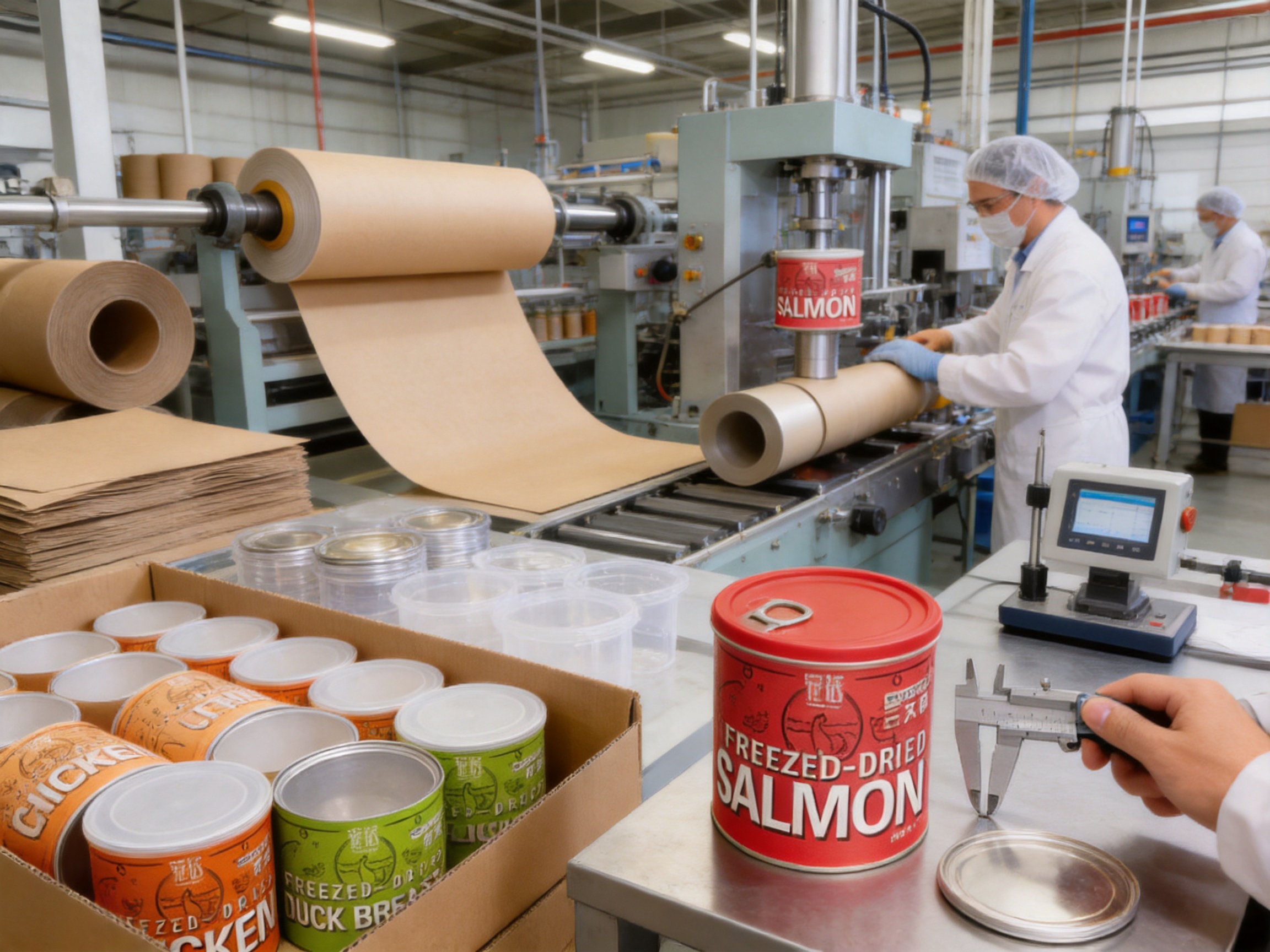
The printed paper layers are formed into the required cylindrical body using controlled production equipment. Depending on the construction, layers may be wound, laminated, bonded, or otherwise assembled around a forming mandrel. The process must maintain consistent diameter, roundness, wall strength, and seam quality.
Adhesive application is a critical control point. Too little adhesive may weaken the seam or allow layer separation, while too much may create visible squeeze-out, uneven surfaces, or problems during later assembly. Production teams must control adhesive quantity, open time, curing conditions, and bonding pressure. The selected adhesive should be compatible with the paper, foil, plastic, and any relevant coating.
The use of a high-speed composite-can production line can improve throughput and consistency when properly maintained and operated. Automated or semi-automated equipment can help standardize forming speed, tension, dimensions, and material placement. However, machinery alone does not guarantee quality; skilled process control, preventive maintenance, inspection, and corrective action remain necessary.
6.5 Lining and Barrier Integration
The aluminum foil lining must be integrated without wrinkles, punctures, open seams, or exposed gaps that could compromise the intended barrier function. The lining process should be controlled so that the foil remains properly positioned within the body and does not interfere with filling or closure.
Visual inspection can identify obvious defects, but barrier performance should also be evaluated through appropriate testing. Depending on the application, tests may include leakage checks, seal integrity checks, dimensional inspection, drop testing, compression testing, and environmental conditioning. The test plan should reflect the real product and its distribution route.
6.6 Lid Assembly and Closure Testing
The lid is assembled or fitted after the body and lining have reached the required condition. Closure testing should examine insertion force, removal force, fit consistency, visible gaps, deformation, and repeated-use performance. Samples should be opened and closed multiple times to determine whether the fit remains acceptable.
Transport testing is also useful. Filled packages can be subjected to vibration, handling, stacking, and controlled drops. After testing, inspectors should check for lid displacement, body crushing, surface damage, lining separation, and product leakage or contamination. The appropriate test severity depends on the shipping method and distribution environment.
6.7 Final Inspection and Packing
Before shipment, finished products may be inspected for dimensions, color, print registration, matte finish, surface cleanliness, lid fit, body roundness, and quantity. Defective units should be segregated according to agreed quality criteria. Packing methods should prevent excessive friction and compression during transportation.
Factories that operate as direct manufacturers can coordinate printing, forming, lining, assembly, and packing more efficiently than a supply chain divided among many unrelated subcontractors. Direct coordination may simplify communication, reduce handoff errors, and make it easier to trace production issues. Buyers should nevertheless request clear specifications, approved samples, inspection procedures, and production records for every major order.
7. Manufacturing Strengths and Industry Experience
The manufacturer described in the supplied information has worked in the composite-can and paper-can industry for more than 20 years. Long-term specialization is valuable because paper cans are not simply printed paper labels wrapped around a container. Their performance depends on the interaction of materials, forming methods, adhesives, linings, closures, and dimensional control.
The company is identified as the only member of the international Composite Can and Tube Institute in China’s packaging container industry. Membership in an industry organization can support technical exchange and awareness of sector developments, although customers should still evaluate each product against their own performance and compliance requirements.
The company was also the first enterprise in China to pass the QS certificate for producing food packaging containers, according to the supplied company information. This history is relevant to customers seeking food-related or pet-consumable packaging, but current documentation should be confirmed for the specific product, market, material combination, and intended application.
The manufacturer has reportedly built long-term partnerships with recognized companies and brands in food, beverage, tea, coffee, nutrition, and consumer products. Such partnerships suggest experience with the production expectations of established customers, including repeatability, capacity planning, packaging consistency, and delivery coordination.
In 2015, the company introduced a high-speed composite-can production line from Europe. A modern production line can strengthen manufacturing capacity by improving process stability, increasing output, and reducing manual variation. Its value is greatest when combined with trained operators, documented settings, planned maintenance, and systematic quality control.
More than 10 patented technologies are also identified in the company information. Patents may reflect investment in technical research and development, but the relevance of any particular patent depends on its connection to the customer’s chosen construction. A buyer should ask which process improvements apply to the requested package and how they affect quality, efficiency, or performance.
The company’s stated business covers food, daily chemical products, fast-moving consumer goods, and related categories. This breadth can be useful because it exposes the production team to different packaging requirements. Food products may emphasize barrier performance and hygiene, while cosmetics may prioritize appearance and dimensional precision. Experience across categories can support more adaptable packaging development.
8. Sustainability Considerations
The product is described as using recycled materials and as eco-friendly. The paper and kraft paper options can support a packaging strategy that reduces reliance on a fully rigid plastic container. Paper is also a familiar material to consumers and can communicate a lower-plastic design direction when presented accurately.
However, sustainability should be evaluated across the complete package rather than based on one material alone. The package contains paper, plastic, tin, aluminum foil, inks, coatings, and adhesives. These layers can improve performance, but they may also make separation and recycling more complex in some waste-management systems. The final environmental profile depends on the material percentages, local recycling infrastructure, production energy, shipping distance, use phase, and end-of-life treatment.
Brands should avoid making broad environmental claims without supporting evidence. Instead, they can request information about recycled content, paper sourcing, material composition, production waste, packaging optimization, and available compliance documents. If a package includes several bonded layers, the brand should determine how it is handled in its target markets.
Reuse is another sustainability consideration. A durable container may be retained for organizing small pet toys, treats, grooming tools, craft materials, or household accessories. Reuse cannot replace responsible material design, but it may extend the functional life of the package and improve the customer’s perception of value.
Size optimization is equally important. The ID83 × 100 millimeter format should be matched to the actual product quantity to avoid excessive empty space. Oversized packaging can increase material use and shipping volume, while undersized packaging may cause filling problems or product damage. A well-engineered package uses enough material to perform reliably without creating unnecessary bulk.
9. Applications for Pet Products
9.1 Dry Pet Treats
The package can be considered for biscuits, training rewards, freeze-dried pieces, dental treats, and other compact dry products. The airtight construction and foil lining can help protect texture and aroma, subject to validation with the actual product. A clear feature can make the treat appearance part of the buying decision.
For training treats, the compact format may be convenient for home use. The lid should be easy to open and close, while the package should be stable enough to stand on a counter or shelf. The printed body can communicate flavor, animal type, treat size, feeding guidance, and storage instructions.
9.2 Pet Supplements
Powdered supplements, small chews, tablets, and functional snacks may benefit from a barrier-oriented container. The product developer should consider moisture sensitivity, odor transfer, dosage accuracy, and the interaction between the contents and the lining. A package that looks premium can also support a veterinary, wellness, or specialized nutrition positioning.
Supplement packaging often requires detailed information. The cylindrical body should provide enough uninterrupted space for ingredients, directions, warnings, lot identification, expiration information, and responsible-use statements. Artwork planning should be completed together with regulatory review so that late changes do not disrupt production.
9.3 Seasonal and Gift Products
Holiday treats, adoption gifts, birthday products, and limited-edition collections can use the package as part of the campaign. A change in artwork may create a seasonal appearance without requiring a completely new container structure. The matte surface can support winter, festive, natural, or luxury-themed designs.
9.4 Subscription and Promotional Programs
Subscription companies and promotional programs often need packaging that is visually distinctive in photographs and unboxing experiences. The cylindrical container can be placed in a curated box with toys, accessories, or additional treats. Custom printing makes it possible to coordinate the package with a campaign theme, event, retailer, or collaboration.
10. Applications Beyond Pet Care
Although the listed category is Pet Care, the construction has broader potential. The supplied product categories include food packaging, coffee and tea, nutrition and supplements, chocolate and confectionery, snacks and nuts, seasonings and spices, cosmetics and skincare, gifts and crafts, candles and fragrances, coin banks, tube-with-window formats, car tissue holders, and other cylindrical packaging concepts.
For coffee and tea products, a barrier lining may help protect aroma and reduce exposure to moisture. For snacks and confectionery, the printed cylinder can create a giftable appearance. For seasonings, the container can offer a distinctive alternative to standard bags or jars. For cosmetics and skincare, the outside surface can communicate a natural or premium brand direction, although compatibility and regulatory testing would be required.
The same general manufacturing expertise can also be applied to non-food products. Craft supplies, candles, fragrance products, promotional items, and coin banks may use different interior requirements and closure designs. The package must always be adapted to the contents rather than treated as universally suitable.
11. Quality Assurance for Buyers
11.1 Sample Approval
Sample approval should take place before mass production. The sample should represent the intended paper, lining, plastic component, tin component, printing, finish, dimensions, and closure. Customers should fill the sample with the actual product or a representative substitute to evaluate fit, capacity, dispensing, storage, and appearance.
Samples should be reviewed under realistic conditions. They can be opened and closed repeatedly, stored in expected temperatures and humidity, placed in shipping cartons, and evaluated after handling. If the product will be sold internationally, the sample should be checked against the likely distribution route and retail environment.
11.2 Dimensional Control
Diameter, height, wall thickness, lid dimensions, seam position, and component alignment should be measured against agreed tolerances. Dimensional variation can affect filling equipment, label alignment, shelf stability, carton packing, and lid fit. A tolerance that is acceptable for manual filling may be unsuitable for automated lines.
11.3 Print and Appearance Inspection
Inspection should cover color, registration, text clarity, logo position, matte consistency, scratches, dents, stains, wrinkles, and visible adhesive. Because premium packaging is often judged immediately by appearance, cosmetic defects can affect customer perception even when the package remains functional.
11.4 Functional Testing
Functional testing may include closure checks, leak or seal testing, drop testing, compression testing, vibration testing, and barrier evaluation. The exact testing program should be selected according to the product’s risk profile. A dry treat with a short sales cycle may require a different validation plan from a moisture-sensitive supplement with a long shelf-life target.
11.5 Documentation
Buyers should maintain approved artwork, approved physical samples, material specifications, quality standards, inspection records, and change-control procedures. Any change to paper, foil, plastic, tin, adhesive, printing method, or closure should be communicated and evaluated. Documentation supports repeat orders and helps prevent accidental differences between production batches.
12. Order Planning and Customization
The stated minimum order quantity is 5,000 units. This level is suitable for a planned product launch, retail test with multiple locations, seasonal program, or recurring supply arrangement. Businesses should calculate their expected sales, launch schedule, storage capacity, and cash flow before confirming the order quantity.
Custom orders are accepted, allowing customers to develop packaging according to their brand and product requirements. Customization may include artwork, logo placement, paper selection, window or clear-component design, lid treatment, lining specification, internal dimensions, outer dimensions, and packing configuration. Not every customization is available at every quantity, so technical feasibility and tooling requirements should be discussed early.
The customer should provide a clear technical brief covering the product name, product category, filling method, target net weight, dimensions, desired closure, printing colors, finish, shipping destination, and required delivery date. If the package will be used for food or pet-consumable contents, the customer should also state the intended contact conditions and any market-specific documentation requirements.
Artwork should be submitted only after the structural dimensions and seam positions have been confirmed. Changing the body size after artwork completion may require substantial redesign. A coordinated development process saves time by allowing structure, printing, barrier, and regulatory information to be reviewed together.
Factory-direct purchasing can offer practical advantages. Communication may be more direct, production scheduling may be easier to coordinate, and technical questions can be answered by the organization responsible for the manufacturing process. Buyers should still establish written terms for lead time, payment, inspection, packaging, shipping marks, defect handling, and replacement or compensation procedures.
13. Logistics, Storage, and Handling
Finished cylindrical packages should be protected from crushing, excessive humidity, direct sunlight, and contamination during storage and transportation. Even a strong package can be damaged if cartons are overloaded or stored in unsuitable conditions. The external shipping carton should provide adequate compression resistance and should be sized to minimize movement.
Warehouse teams should avoid stacking beyond the recommended height. Excessive stacking may deform lids or create pressure marks on the printed surface. Packages should be stored on clean pallets, away from wet floors and chemical exposure. First-in, first-out inventory practices are useful when the packaging is produced for a product with a defined launch or expiration schedule.
Shipping tests should reflect the intended route. Sea freight, air freight, courier delivery, and domestic trucking impose different vibration, humidity, temperature, and handling risks. Packages intended for e-commerce may require additional protection because individual parcels are handled more frequently than palletized retail shipments.
The printed surface should be protected from rubbing during transport. Appropriate inner bags, dividers, shrink wrapping, tissue, or carton partitioning may be used, depending on the finish and the customer’s cost objectives. Packaging protection should be designed together with the product package so that the total system remains efficient.
14. Common Development Challenges
14.1 Capacity Miscalculation
A frequent mistake is assuming that dimensions automatically determine a product’s filling weight. Different products have different densities and settling characteristics. A container designed around height and diameter alone may hold too little or too much of the intended product. A physical filling trial is the most reliable way to confirm capacity.
14.2 Inadequate Barrier Expectations
An aluminum foil lining can contribute to barrier protection, but package performance depends on the entire system. A weak closure, damaged lining, porous seam, or incompatible adhesive can reduce the expected result. Brands should define the required shelf life and test the package with the actual contents rather than relying only on material descriptions.
14.3 Poor Artwork Placement
Curved packaging creates special design considerations. Logos placed too close to a seam may be difficult to view. Fine text may become hard to read around the side. A clear window can interrupt an illustration or remove space needed for required information. Early structural drawings and proof samples help avoid these problems.
14.4 Unclear Sustainability Claims
Describing a package as eco-friendly without explaining the basis of the claim can create regulatory and reputational risk. Brands should gather evidence for recycled content, paper sourcing, material composition, recyclability, reusability, or reduced plastic use. The claim should be limited to what can be supported in the relevant market.
14.5 Insufficient Closure Testing
A package may fit well when new but become less secure after repeated use, temperature changes, or rough handling. Closure testing should include multiple opening cycles and transportation simulation. If a product is used by children or stored in homes with pets, the brand should also consider whether the closure provides an appropriate level of access control.
15. How the Product Can Strengthen a Brand
A package is one of the few physical elements that customers encounter before consuming the product. The custom printed cylindrical format can establish a consistent visual identity across product variations. Different flavors or formulas can use a shared layout while changing colors, illustrations, or icons for easy recognition.
The matte finish can create a sophisticated appearance that supports premium positioning. Kraft paper can reinforce a natural or handmade story, while coated paper can support sharper imagery and more saturated colors. A clear component can add product transparency, while the tin lid can provide a tactile sign of quality.
The package can also support merchandising. Cylinders can be displayed individually, in groups, or in gift arrangements. Their compact footprint may be suitable for checkout areas, specialty shelves, promotional tables, and subscription boxes. A distinctive shape can make the product easier to recognize in photographs and videos.
After purchase, the package continues to communicate. Feeding guidance, storage instructions, ingredient information, and brand messages remain visible during daily use. If the container is reused, the brand may continue to receive indirect exposure in the customer’s home. This makes legibility and durable appearance important beyond the initial retail encounter.
16. Recommended Evaluation Checklist
Before approving this package, buyers should confirm the exact product category and contents. The phrase “pet tin box” may describe a package for pet products, but the appropriate material and compliance requirements depend on whether the contents are treats, supplements, accessories, or another item. The actual application should be stated clearly in the purchase specification.
Buyers should confirm the internal and external dimensions, approximate capacity, lid type, clear-component design, paper grade, foil specification, tin material, adhesive system, printing method, matte treatment, and packaging configuration. They should also request a physical sample and perform filling, closure, transport, and storage evaluations.
The following questions should be answered before mass production:
What is the target net weight and physical density of the product?
How long must the product remain in acceptable condition after filling?
Will the package be opened and closed repeatedly?
Does the product require protection from moisture, oxygen, light, or odor transfer?
Will the package be filled manually or by an automated line?
What printing colors and surface appearance are required?
Is a transparent section necessary, and how much visibility is appropriate?
What regulatory and material-contact documents are required in the destination market?
How will the package be handled after use?
What inspection standard will govern acceptable and unacceptable defects?
17. Frequently Asked Questions
Q1: What is the main structure of this container?
The product uses a one-piece airtight paper-can construction combined with paper, plastic, and tin components. It also includes an aluminum foil lining. The exact position and function of the plastic and tin parts should be confirmed in the final technical drawing.
Q2: What are the listed dimensions?
The listed size is ID83 × 100 millimeters, meaning an internal diameter of 83 millimeters and a height of 100 millimeters. Actual filling capacity depends on the product density, headspace, wall construction, and closure design.
Q3: Is the package suitable for pet treats?
It is listed under Pet Care and is intended for food-box packaging applications. It may be suitable for selected pet treats or supplements, but the final suitability must be validated using the actual product and the required storage period.
Q4: What does the aluminum foil lining do?
The lining acts as a barrier layer that can help limit exposure to air, moisture, odors, and light. Its effectiveness depends on the integrity of the entire container, including seams, body construction, lid fit, and handling conditions.
Q5: Can the design be customized?
Yes. Custom orders are accepted, and the product supports custom logos and CMYK printing. Customers can discuss paper selection, artwork, finish, dimensions, clear features, closure details, and other possible modifications with the manufacturer.
Q6: What surface finish is specified?
The listed post-printing treatment is a matte finish. This creates a lower-reflection appearance and a softer tactile effect than a conventional glossy surface.
Q7: What is the minimum order quantity?
The stated minimum order quantity is 5,000 units. Customers should confirm whether special structures, tooling, materials, or artwork requirements could affect the final quantity or cost.
Q8: Is this package recyclable?
The package includes several materials, including paper, plastic, tin, and aluminum foil. Recycling depends on the final construction and the waste-management system in the target market. Buyers should request material-composition information and avoid unsupported recycling claims.
Q9: Can the package be reused?
Its cylindrical body and lid may allow reuse for small pet items, treats, craft supplies, or household storage. Reuse depends on cleaning, product compatibility, closure condition, and the customer’s intended application.
Q10: How should the package be tested before mass production?
Customers should test actual filling, lid fit, repeated opening and closing, dimensional consistency, print appearance, drop resistance, compression, vibration, and storage under realistic conditions. Barrier and shelf-life tests should be designed around the specific contents.
Q11: What are the benefits of buying directly from a factory?
Factory-direct purchasing can simplify technical communication, production coordination, quality feedback, and repeat ordering. It is still important to establish clear specifications, sample approval, inspection standards, delivery terms, and change-control procedures.
Q12: Can the same type of package be used outside pet care?
The general composite-can format may also be considered for snacks, coffee, tea, nutrition products, confectionery, seasonings, cosmetics, gifts, candles, and other goods. Each application requires separate evaluation of materials, barrier performance, hygiene, compatibility, and legal requirements.
18. Conclusion
The custom printed clear food packaging pet tin box with lid is a versatile cylindrical package that combines a printed paper body with plastic, tin, and aluminum foil elements. Its main strengths are the balance between visual presentation and functional protection, the availability of custom CMYK printing, the matte surface treatment, the airtight paper-can construction, and the convenience of a lid for repeated use.
Compared with ordinary flexible bags or generic plastic containers, the package can provide stronger shelf differentiation, a more premium tactile experience, a broad printable surface, and potential reuse after the original product has been consumed. Its clear feature can support product visibility, while its foil lining can contribute to barrier performance for products sensitive to environmental exposure.
The product’s success depends on more than its listed materials and dimensions. Correct engineering, accurate capacity testing, compatible components, reliable forming, controlled adhesive application, precise printing, effective lining integration, and closure validation are all essential. A specialized manufacturer with more than two decades of composite-can and paper-can experience, a high-speed European production line, industry participation, reported food-packaging certification history, and patented technologies can provide valuable support throughout this process.
For buyers, the best approach is to treat the package as a complete system. Define the product requirements, confirm the structure, approve a physical sample, test the filled package, review documentation, and establish clear quality standards before ordering 5,000 units or more. When these steps are followed, the container can become more than a protective vessel: it can serve as a durable, recognizable, and commercially effective part of a modern pet-care packaging strategy.
References
1. Product specification sheet for the custom printed clear food packaging pet tin box with lid, including material, dimension, printing, lining, finish, and minimum-order information.
2. Company information supplied for the composite-can and paper-can manufacturer, including manufacturing history, industry participation, production-line development, partnerships, and patented technologies.
3. General principles of paper-can and composite-container engineering, including cylindrical forming, adhesive bonding, dimensional control, and barrier-layer integration.
4. General packaging-quality practices covering artwork approval, physical sampling, closure testing, transport simulation, inspection, and change control.
5. General sustainability assessment principles for multi-material packaging, including recycled content, reuse, recyclability, material separation, and end-of-life considerations.
