 English
 Español


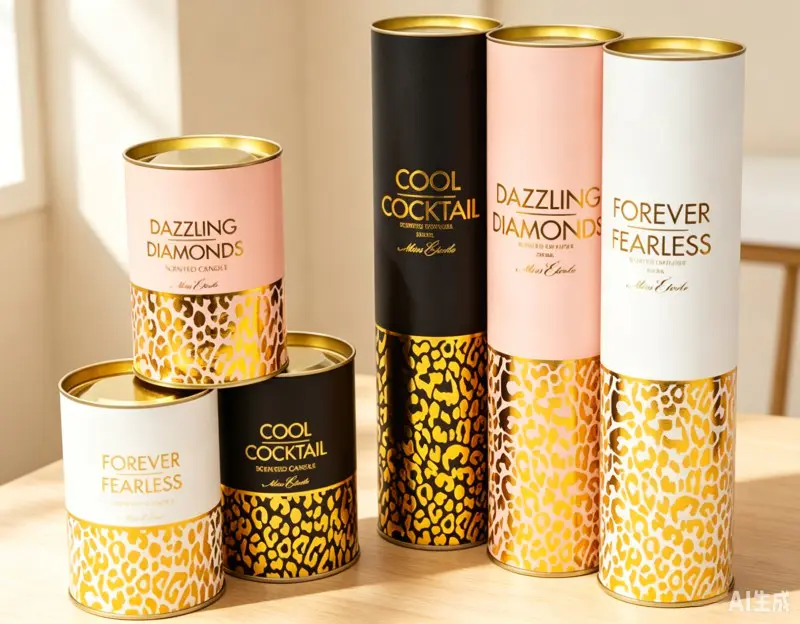
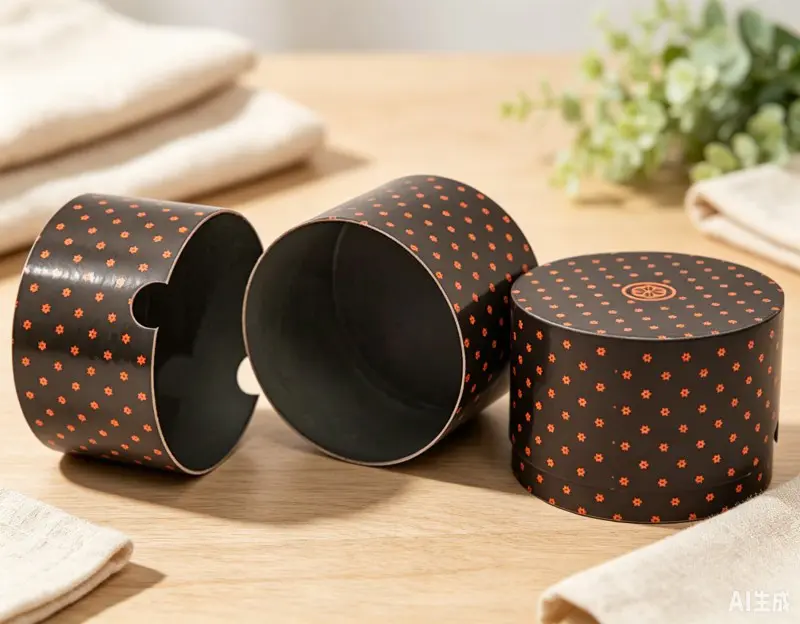
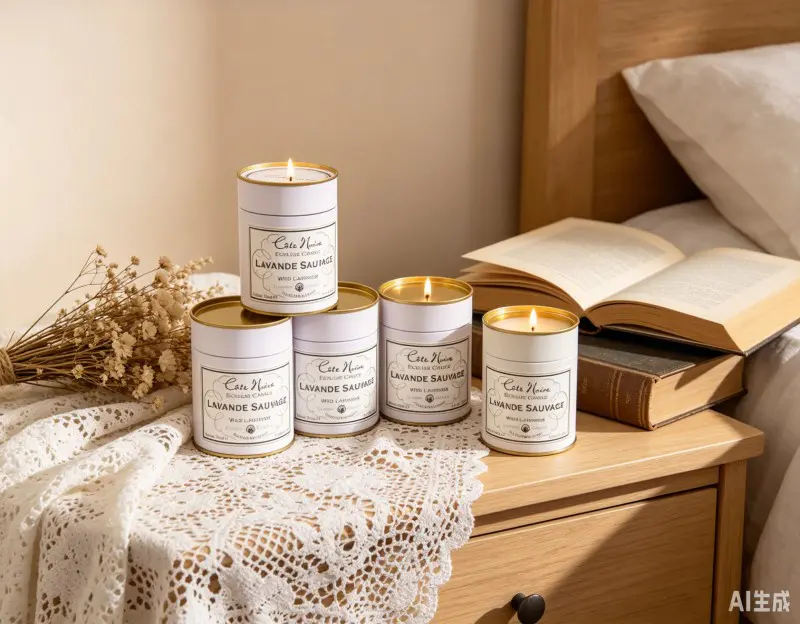

As one of the top China cardboard tube packaging manufacturers and paper tube packaging suppliers, we devote all of our efforts to research and launch more high quality packaging products to global market.
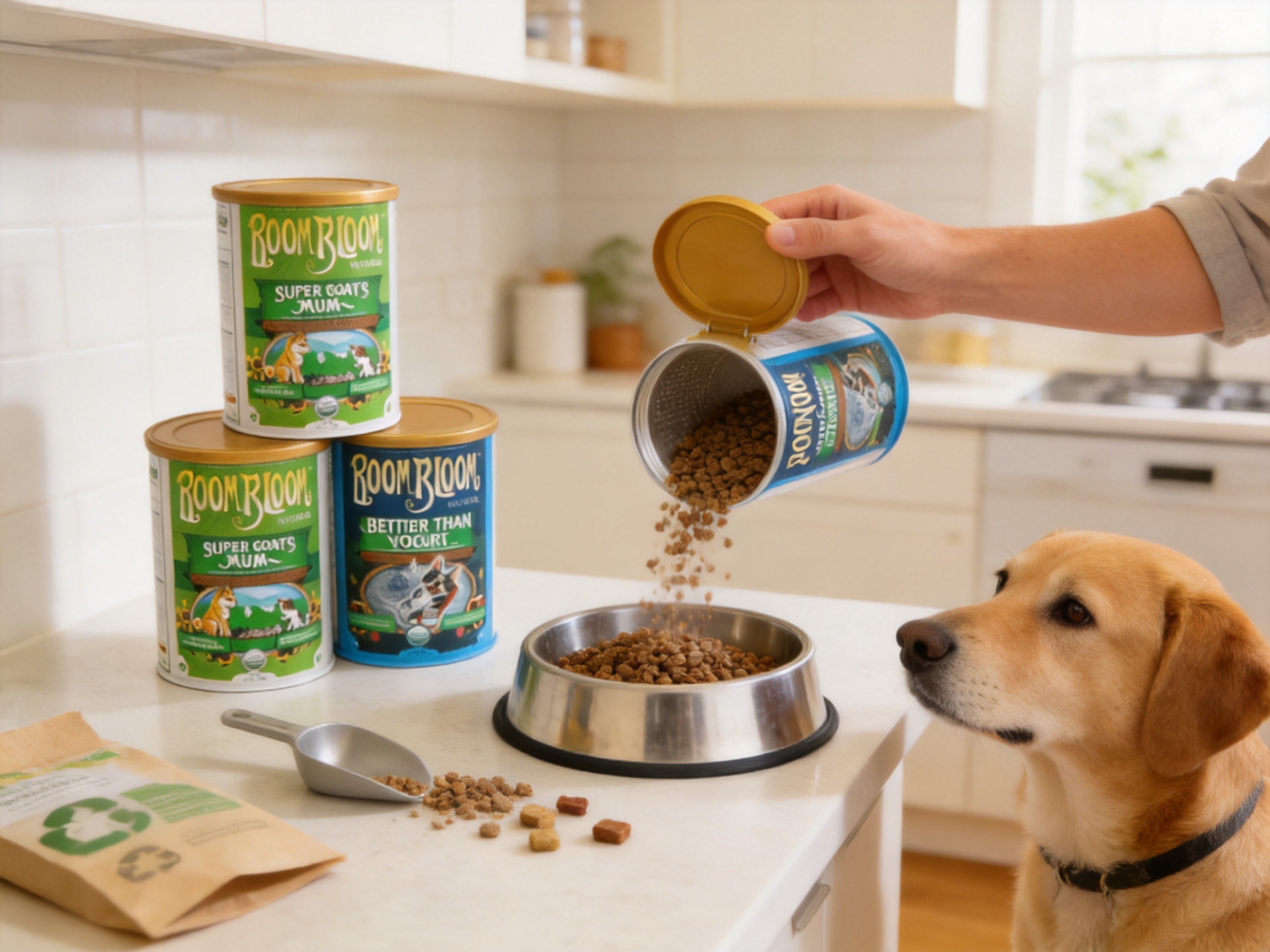
Packaging for pet food must do more than hold a product. It must protect the contents, communicate quality, support convenient daily use, and help brands respond to growing environmental expectations. An eco-friendly dog food storage container made from paper-based materials offers a practical alternative to conventional plastic jars, bags, and rigid composite packaging. Designed for dry dog food, treats, toppers, supplements, and other pet products, this paper tube combines a distinctive cylindrical shape with customizable printing, a functional shaker top, and a renewable material profile.
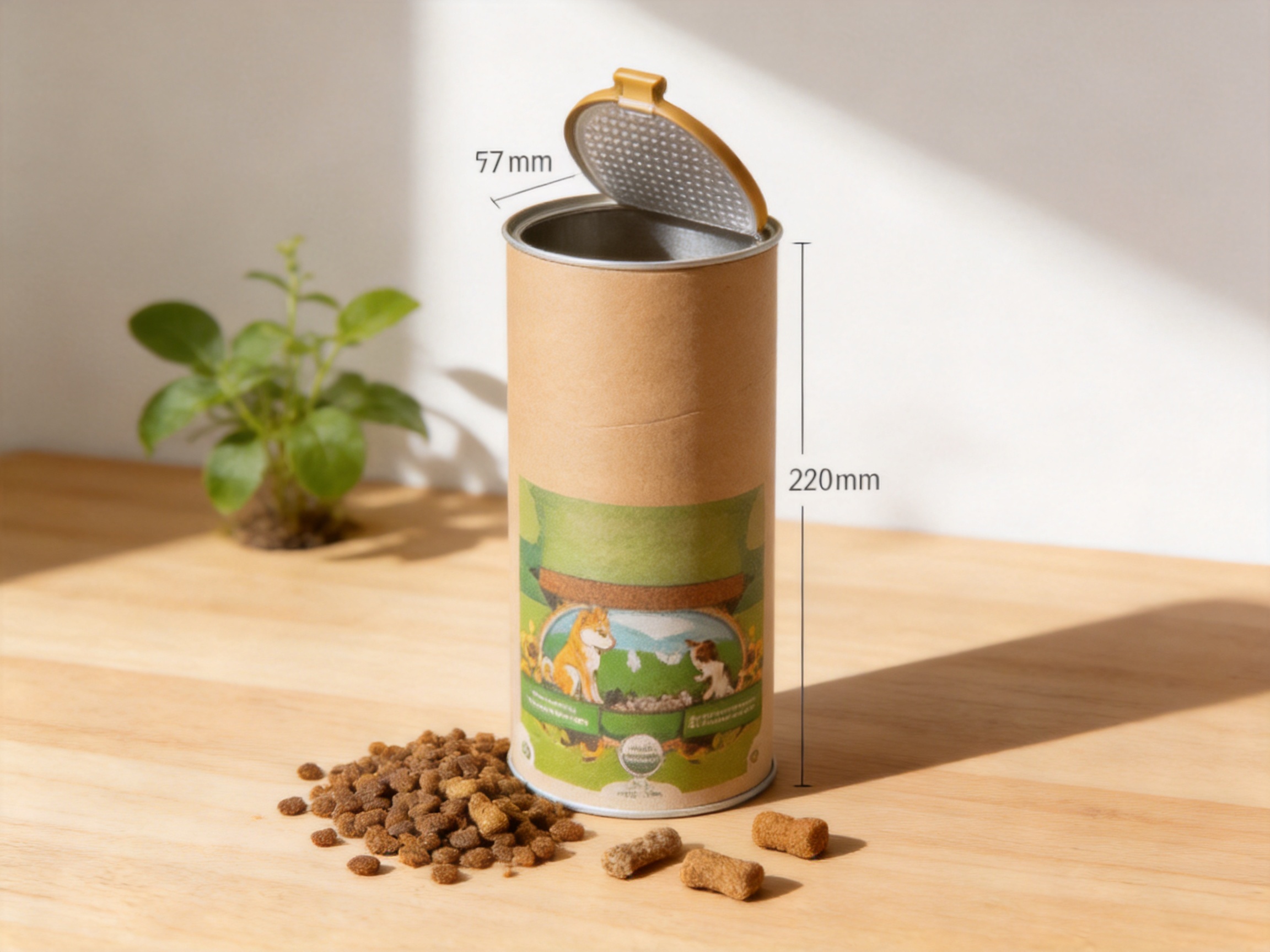
The dog food storage container described in this article is a premium paper tube with an internal diameter of approximately 73 millimeters and a height of approximately 220 millimeters. Its tall, compact format is suitable for shelf display, online retail packaging, subscription boxes, and everyday household storage. The container can be decorated with customized branding and produced with CMYK and PMS printing, while labeling options include art paper, kraft paper, and golden-based paper.
Manufactured by Hangzhou Qunle Packaging Co., Ltd., the container reflects more than two decades of experience in composite cans and paper can production. The manufacturer serves food, daily chemical, fast-moving consumer goods, and pet-care markets. Its production capabilities include high-speed composite can manufacturing, customized surface finishing, quality certifications, and packaging development for international customers.
For dog food brands, the product provides an opportunity to move beyond ordinary plastic packaging without giving up visual impact or convenient dispensing. For consumers, it can offer a neat way to store dry pet products while supporting a more responsible packaging strategy. For retailers and distributors, its cylindrical form creates strong shelf presence and allows product differentiation in a crowded pet-care market.
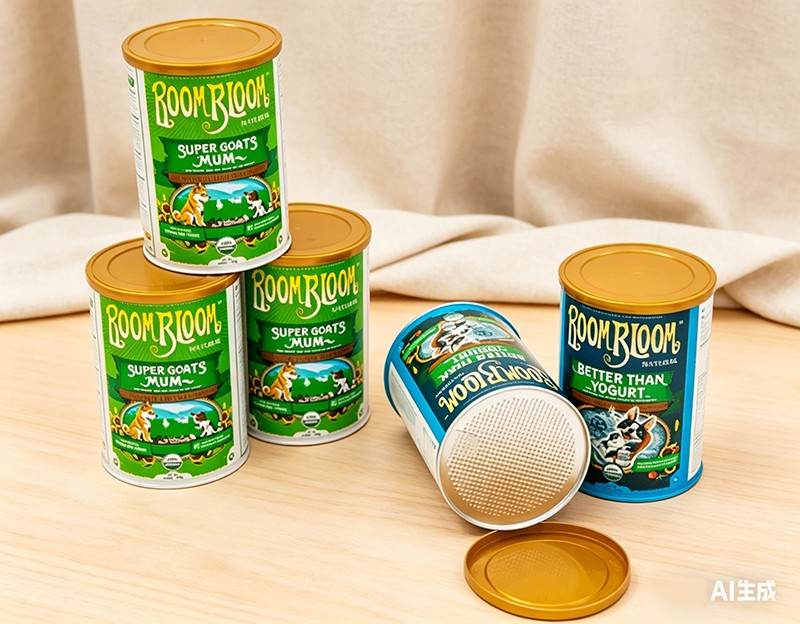
Eco-friendly Materials Dog Food Storage Container packing
Content
- 1 Overview of the Dog Food Storage Container
- 2 Why Paper-Based Pet Food Packaging Is Gaining Attention
- 3 Key Product Specifications
- 4 Design Advantages Compared with Conventional Competitors
- 5 Material and Structural Considerations
- 6 Advanced Manufacturing Capabilities
- 7 Quality Assurance and Compliance Support
- 8 Advantages for Different Types of Pet Brands
- 9 Customization Options
- 10 Packaging Performance During Logistics
- 11 Consumer Convenience and Usage Guidance
- 12 How This Container Compares with Common Alternatives
- 13 Recommended Product Development Process
- 14 Why Work with an Experienced Paper Tube Manufacturer?
- 15 Environmental Considerations for Responsible Brand Communication
- 16 Commercial Opportunities
- 17 Ordering and Supplier Communication Checklist
- 18 Q&A
- 18.1 What products can be packed in this container?
- 18.2 What is the standard size?
- 18.3 Is the container airtight?
- 18.4 Does the shaker top work for all types of dog food?
- 18.5 Can the logo and artwork be customized?
- 18.6 Which printing methods are available?
- 18.7 Which label materials can be selected?
- 18.8 Is glossy lamination available?
- 18.9 Is the package suitable for food-contact applications?
- 18.10 Can the tube be used for private-label products?
- 18.11 How should the container be stored?
- 18.12 How does the paper tube compare with a plastic jar?
- 18.13 Can the package be reused?
- 18.14 What information should be supplied when requesting a quotation?
- 19 Conclusion
- 20 References
- 21 Product: Eco-friendly Materials Dog Food Storage Container packing
Overview of the Dog Food Storage Container
This paper tube is developed for industrial packaging use in the pet-products category. Its primary application is the packaging and storage of dry dog food, although the same structure may be adapted for dog treats, biscuits, dental chews, powdered supplements, training rewards, and other dry pet products. The container is described as disposable and made with eco-friendly materials, making it especially relevant to brands seeking paper-forward packaging solutions.
The standard listed size is ID73MM*H220MM. “ID73MM” refers to an internal diameter of approximately 73 millimeters, while “H220MM” indicates an approximate height of 220 millimeters. Actual capacity depends on the density, shape, moisture content, and filling method of the dog food. Brands should conduct filling trials before confirming the final specification, particularly when using irregularly shaped kibble or products with fragile coatings.
The container uses a cylindrical paper tube structure. Compared with flat pouches or rectangular cartons, a round tube can create a more premium appearance and a memorable tactile experience. It can stand upright on a shelf, fit naturally into gift sets, and provide a broad printable surface around the circumference. The shape is also suitable for product lines that need a common packaging architecture across different flavors, recipes, or sizes.
A shaker-style top adds an important functional element. Depending on the final structure and filling requirements, the top may support controlled dispensing of small dry products, powders, crumbs, or toppers. For larger pieces of dog food or treats, the top can instead act as a resealable or presentation-oriented closure, subject to structural confirmation. The exact opening pattern, inner fit, and closure performance should be finalized through prototype testing.
The outside of the tube can be finished with a customized label or printed paper wrap. Listed label materials include 105-gram, 128-gram, and 157-gram art paper, kraft paper, and golden-based paper. These alternatives allow brands to balance color reproduction, natural appearance, texture, and perceived value. A kraft-paper label can emphasize an organic or natural positioning, while coated art paper can deliver sharper images and brighter colors.
Why Paper-Based Pet Food Packaging Is Gaining Attention
Pet owners increasingly evaluate products through several connected factors: ingredient quality, animal welfare, brand transparency, convenience, and environmental responsibility. Packaging has become part of that evaluation. A dog food brand may offer a carefully formulated recipe, but excessive or poorly designed packaging can weaken the overall sustainability message.
Paper tubes can help address this concern by replacing some conventional rigid plastic packaging with paper-based construction. Paper is widely recognized as a renewable material when sourced responsibly, and it can create a familiar recycling narrative for consumers. However, responsible packaging communication should remain accurate. Recyclability depends on the final structure, coatings, adhesives, closures, local waste systems, and contamination levels. Brands should verify disposal instructions and applicable local regulations before making specific environmental claims.
A paper tube also provides an alternative to single-use flexible bags. Some pouches are lightweight and efficient, but they may contain multiple material layers that complicate recycling. A paper-based tube can offer a more substantial package format while reducing reliance on plastic as the primary visible material. If a plastic or other non-paper component is required for moisture protection or closure performance, the product can still help reduce the overall plastic impression and support a paper-centered brand identity.
Environmental value is not limited to the raw material. Efficient dimensions, reduced empty space, responsible printing, optimized shipping, and appropriate end-of-life instructions all contribute to a packaging system’s performance. The cylindrical container can be developed around the actual product volume to avoid unnecessary material use. Its upright format may also improve visual organization during storage and retail display.
Key Product Specifications
| Specification | Available Information | Packaging Significance |
|---|---|---|
| Product type | Paper tube dog food storage container | Provides a cylindrical, paper-based format for pet products |
| Industrial use | Pet products | Suitable for dry dog food, treats, toppers, and related items after testing |
| Standard size | Approximately ID73MM*H220MM | Compact upright format with a strong shelf profile |
| Material direction | Kraft paper and other paper-based options | Supports natural visual positioning and reduced reliance on conventional plastic formats |
| Top style | Shaker top | May enable controlled dispensing for suitable dry products |
| Printing | CMYK printing and PMS printing | Supports photographic artwork, brand colors, illustrations, and product information |
| Label options | 105g, 128g, or 157g art paper; kraft paper; golden-based paper | Allows different balances of durability, texture, color, and premium appearance |
| Surface handling | Labeling and glossy lamination options | Improves visual impact and can add protection to printed surfaces |
| Customization | Customized logo and OEM/ODM orders accepted | Supports private-label, contract-manufactured, and brand-specific programs |
| Certifications listed | SGS, QS, FDA, and TUV | Provides a basis for documentation and market-specific compliance review |
The table summarizes the listed configuration, but a final technical specification should be prepared for every individual project. Dog food packaging requirements vary according to product size, oil content, aroma, moisture sensitivity, filling temperature, shelf life, distribution conditions, and closure design. A packaging supplier should therefore confirm the final material structure, inner lining, adhesive system, top assembly, and testing plan before mass production.
Design Advantages Compared with Conventional Competitors
Distinctive Cylindrical Appearance
Many dog food products are sold in rectangular cartons, plastic tubs, or flexible bags. A round paper tube immediately creates a different visual identity. Its vertical shape can look more like a premium pantry container than a disposable commodity package. This distinction can be valuable for boutique pet-food brands, specialty retailers, natural-product companies, and gift-oriented product lines.
The uninterrupted curved surface also gives designers a large area for storytelling. Brands can present a dog illustration, ingredient highlights, feeding guidance, nutritional information, sustainability messaging, and preparation instructions around the tube. The design can be read as the package rotates, allowing more communication than a small front panel alone.
More Engaging Consumer Interaction
Packaging that is pleasant to hold and easy to recognize can increase the likelihood that customers remember a product. The tube format offers a tactile difference from thin plastic pouches. Its rigid or semi-rigid body can feel stable in the hand, while the shaker top adds a sense of interaction. A consumer may use the container for measured toppers or small treats, depending on the finalized dispensing opening and product suitability.
Function must remain central to the design. The top should be evaluated for opening force, closure retention, dispensing consistency, cleaning considerations, and resistance to accidental opening. For a package intended for households with children or multiple pets, the closure should also be checked against foreseeable misuse. These tests can turn a visually attractive concept into a dependable daily-use package.
Strong Shelf Presence
A tall tube can use vertical retail space efficiently and create a clear block of color on the shelf. Consistent tube dimensions across a product family can produce a recognizable brand wall, while different label colors can distinguish recipes such as chicken, beef, salmon, puppy food, senior formulas, or grain-free treats.
The shape is also useful for point-of-sale displays. Several tubes can be arranged in circular or tiered formations, and the upright profile is suitable for countertop merchandising. In e-commerce, a distinctive package may improve thumbnail recognition, although product photography should clearly communicate dimensions and capacity so that consumers are not misled by the tall shape.
Flexible Branding and Decoration
OEM and ODM support allows a pet-food company to develop packaging that reflects its own positioning rather than selecting a generic stock container. The logo, color system, illustrations, text, and surface finish can be adjusted to suit premium, natural, playful, veterinary, or functional product categories.
CMYK printing is suitable for multi-color images, gradients, photography, and detailed illustrations. PMS printing is valuable when consistent brand colors are essential across packaging, marketing materials, and retail displays. The combination can support both detailed artwork and carefully controlled signature colors.
Glossy lamination can increase color intensity and provide a smooth, polished appearance. A kraft label can communicate a more natural visual language, while a golden-based paper may support limited editions, holiday collections, or premium gift packaging. The selected label should be matched with the intended handling conditions and the required durability of the package.
Material and Structural Considerations
The performance of a dog food storage container depends on more than the word “paper.” Paper grade, tube winding, adhesive selection, inner barrier design, label construction, closure fit, and production tolerances all contribute to the final package. Dry dog food can contain oils and aromatic ingredients that may migrate into packaging materials or affect odor retention. The structure must therefore be evaluated with the actual product rather than judged only by appearance.
A suitable inner surface can help protect the paper body from direct contact with the contents. Depending on the product and regulatory requirements, this may involve a food-contact-compatible lining or internal barrier. The correct solution depends on moisture sensitivity, fat content, expected shelf life, and the required packaging classification. Testing should include migration considerations, odor transfer, seal integrity, and interaction between the contents and the inner structure.
The paper tube should also resist deformation during filling, transportation, storage, and consumer handling. Compression testing can help assess whether cartons stacked in a warehouse or delivery vehicle will remain stable. Drop testing can reveal weaknesses in the base, shoulder, lid, or shaker assembly. Humidity conditioning is useful because paper-based packaging may respond differently in dry and humid environments.
The container is described as disposable, but a brand may wish to promote secondary use after the original product has been consumed. A clean, dry tube can potentially be reused for small toys, craft materials, or household items if the structure and hygiene instructions support that purpose. Brands should avoid implying unlimited reuse unless the package has been specifically designed and tested for repeated use.
Advanced Manufacturing Capabilities
Hangzhou Qunle Packaging Co., Ltd. has been engaged in the composite can and paper can industry for more than 20 years. This experience is significant because paper tube production requires coordinated knowledge of material selection, winding, adhesive application, printing, labeling, forming, closure assembly, and quality inspection.
The company is identified as the only member of the international Composite Can and Tube Institute in China’s packaging container industry. Membership in an industry organization can support technical exchange and awareness of developments in composite can and tube manufacturing. It also positions the company within a specialized packaging field rather than as a general-purpose paper converter.
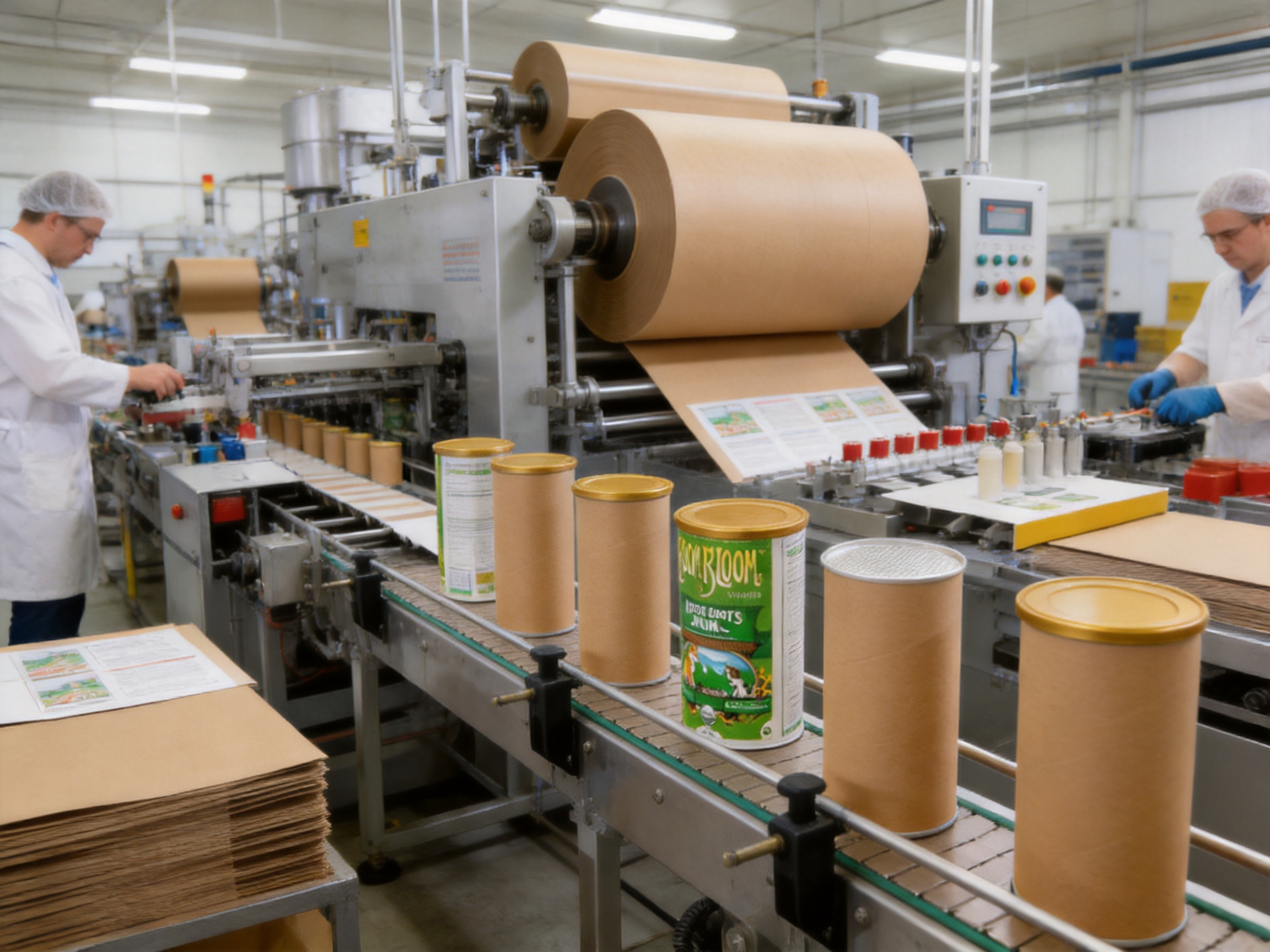
In 2015, the manufacturer introduced a high-speed composite can production line from Europe. High-speed equipment can improve production consistency, throughput, and process control when it is properly maintained and operated. For customers, this may support larger order volumes, more reliable delivery planning, and consistent dimensions across repeated production runs.
Modern production should be viewed as a complete process rather than a single machine. A capable packaging supplier must manage incoming paper inspection, artwork approval, printing control, tube forming, adhesive curing, cutting, base and top assembly, label application, and finished-product inspection. Each stage can affect the usability and appearance of the dog food container.
Artwork and Prepress Control
Production begins with a technical review of the customer’s artwork and structural requirements. The printing team must account for the curved surface, label overlap, color variation, barcode placement, text size, and regulatory information. Important information should not be placed too close to seams, edges, or areas that may be covered by the top or base.
Color proofs and physical samples can help customers approve the appearance before mass production. This is particularly important for PMS colors, kraft paper, golden-based paper, and glossy lamination, because the same ink can look different on uncoated, coated, or textured substrates. A documented approval process reduces the risk of disagreement after production.
Paper Tube Forming
Composite paper tubes are typically produced by building layers of paper around a mandrel. The winding pattern, paper tension, adhesive distribution, and curing conditions influence roundness, wall strength, and dimensional stability. For a container with a shaker top, the tube must maintain a consistent opening so that the closure fits securely and operates smoothly.
Automated or high-speed forming equipment can help maintain repeatability when production parameters are correctly set. Operators still need to monitor the process, because paper moisture, adhesive behavior, environmental conditions, and material variation can affect the outcome. Quality control should verify diameter, height, wall appearance, seam condition, and resistance to deformation.
Printing, Labeling, and Surface Finishing
The listed production options include CMYK printing, PMS printing, labeling, and glossy lamination. These processes can be combined according to the project’s visual and functional objectives. Direct printing may provide an integrated appearance, while a separate label can simplify version changes for multiple flavors or markets.
Labeling can also make product-line management more flexible. A manufacturer may produce a common tube body and apply different labels for different recipes, languages, or distribution regions. This approach can be useful for brands that sell several formulas but do not need entirely different structural packages for every product.
Glossy lamination can protect the printed surface from scuffing and improve resistance to incidental handling. However, lamination may influence end-of-life sorting and recyclability, so it should be selected with the brand’s environmental strategy and local recycling conditions in mind. If a matte or uncoated appearance is preferred, the brand can discuss alternative finishing methods with the manufacturer.
Closure and Shaker Assembly
The shaker top is a defining feature of this product. Its assembly should be treated as a critical functional process. The top must be aligned with the tube, remain attached during normal handling, and provide the desired dispensing behavior. The opening size should correspond to the particle size and flow characteristics of the packaged product.
Testing can include repeated opening and closing, inversion, vibration, drop impact, and controlled dispensing trials. For powdered supplements or fine toppers, tests should examine clogging and powder leakage. For kibble or larger treats, tests should confirm that pieces do not become trapped in the opening. If the product will be carried in a bag or shipped through parcel networks, closure retention is especially important.
Quality Assurance and Compliance Support
The product information lists SGS, QS, FDA, and TUV among the relevant certifications or compliance references. These references should be understood as documentation that must be matched to the specific product, material structure, production site, and destination market. A buyer should request current certificates, test reports, declarations, and scope information during the qualification process.
Food-contact and pet-food packaging requirements can vary by country. A package that is suitable for one market may need additional documentation for another. The customer should specify the intended sales regions, product type, filling conditions, and required shelf life. The manufacturer can then help identify an appropriate testing program, but the brand remains responsible for confirming legal requirements for its finished product.
Quality control may include dimensional inspection, visual inspection, color comparison, label adhesion testing, closure testing, compression testing, drop testing, and odor evaluation. Where the packaging directly contacts dog food, additional material safety and migration assessments may be needed. Records should be maintained for raw materials, production batches, inspection results, and corrective actions.
Consistent quality is especially important for printed pet packaging. A slight color shift may be acceptable for one type of package but problematic for a premium brand with strict color standards. A written specification can define acceptable tolerances for color, tube height, internal diameter, label position, top fit, surface defects, and carton packing.
Advantages for Different Types of Pet Brands
Premium and Natural Dog Food Brands
The paper tube can strengthen a premium or natural positioning through its tactile material, cylindrical form, and customizable kraft-paper options. Illustrations of ingredients, farm scenes, dogs, or botanical elements can be arranged around the body. A restrained color palette and matte or natural label can make the container feel artisanal, while high-quality PMS colors and selective glossy elements can create a more modern premium look.
Functional Supplements and Toppers
The shaker top is particularly relevant to powdered supplements, meal toppers, and small dry additives. Controlled dispensing can make the product easier to incorporate into a dog’s meal. The package can present feeding guidance, serving measurements, storage instructions, and usage benefits around the tube. Actual dispensing performance must be confirmed because powders differ significantly in flow behavior.
Dog Treat and Training Product Companies
Training treats and small biscuits can benefit from a compact, upright container that is easy to display and carry. A cheerful label design can make the package more approachable, while a resealable or controlled-opening top may help preserve convenience. The final closure should be selected according to the product’s size and the desired protection against moisture and aroma loss.
Private-Label Retailers
Retailers developing their own pet-care lines can use OEM/ODM services to create a distinctive container without establishing an independent packaging factory. Customized logos, labels, dimensions, colors, and surface treatments can support a coherent private-label range. A shared structural platform may also simplify procurement across several product variations.
Gift and Subscription Box Programs
The tube’s presentation value makes it suitable for gift sets, holiday collections, and monthly pet subscription boxes. The package can be coordinated with matching cartons, tissue paper, cards, and accessories. A high-quality label and carefully designed shaker top can make a small quantity of treats or supplements appear more special than a standard flexible bag.
Customization Options
Customization can begin with the product’s physical structure. Customers may discuss tube height, internal diameter, wall construction, base style, closure type, shaker opening, and capacity. Any change should be evaluated against filling efficiency, material use, shipping cartons, shelf stability, and customer handling.
The next level is graphic customization. The manufacturer can produce a customized logo and support brand-specific artwork. The package may include product names, flavor indicators, ingredient information, feeding instructions, barcodes, recycling guidance, batch information, and legally required declarations. Artwork should be prepared using the supplier’s dielines and printing specifications.
Label paper is another important choice. A 105-gram paper may be suitable for a lighter label application, while 128-gram or 157-gram paper may provide a more substantial feel. Kraft paper can reinforce a natural image, whereas art paper can offer smooth surfaces and strong image reproduction. Golden-based paper may be used for decorative or premium visual effects.
Finishing choices should support the product concept rather than add unnecessary complexity. Glossy lamination can enhance saturation and surface protection. Other options may be discussed depending on the manufacturer’s available processes and the customer’s environmental goals. The final finish should be tested for scuff resistance, label adhesion, appearance under retail lighting, and compatibility with storage conditions.
Packaging Performance During Logistics
Pet food packaging may pass through several environments before reaching the consumer. It can be transported from the factory to a distribution center, stored in warehouses, placed on retail shelves, shipped through e-commerce networks, and handled repeatedly in the home. The container must therefore be designed for more than visual appeal.
Its height-to-diameter ratio should be considered when planning secondary cartons. Individual tubes must be packed tightly enough to prevent excessive movement without creating damaging compression. Carton dimensions should use available shipping space efficiently. Protective dividers or fitted inserts may be appropriate for premium products, particularly when the top is more delicate than the tube body.
Humidity is an important consideration for paper-based packaging. Storage in damp warehouses or exposure to condensation can affect paper stiffness, labels, adhesives, and closure fit. Recommended storage conditions should be established during development. Finished packages should be kept away from direct water exposure and tested under representative environmental conditions.
For e-commerce, the brand should consider whether the primary container needs an additional mailer or protective carton. A tube can be visually attractive when it arrives, but the package may require secondary protection against drops, abrasion, and compression. Efficient protective packaging can preserve the environmental benefits of the primary paper tube.
Consumer Convenience and Usage Guidance
A dog food container should be intuitive to use. The package should make it clear how to open the top, how much product to dispense, and how to close it after use. Printed instructions can be placed on the label without interfering with the main visual design. If a shaker top is included, diagrams or concise wording may help consumers understand whether the package is intended for direct feeding, meal topping, or controlled portioning.
Storage advice should reflect the actual product. Dry dog food is generally best protected from humidity, heat, direct sunlight, and contamination. The label can instruct consumers to keep the container closed when not in use and to store it in a cool, dry location. If the product has special requirements, such as refrigeration after opening or rapid consumption, those instructions should be clearly visible.
The package should not encourage consumers to use the shaker top for products that cannot pass through its openings. Likewise, the container should not be represented as fully airtight unless airtight performance has been specifically tested and confirmed. Clear communication protects both the consumer and the brand.
How This Container Compares with Common Alternatives
Plastic jars often provide strong moisture resistance and impact durability, but they may contribute to greater plastic consumption and can look similar across competing brands. Flexible bags can be lightweight and economical, but they may offer less rigid protection and fewer opportunities for secondary use. Folding cartons can be highly printable and paper-based, but they may require an inner bag or liner for product protection.
The paper tube occupies a middle position. It offers more structure than a flexible pouch and a more distinctive appearance than many plastic containers. It can provide a large printable surface while using paper as the main visible body. Its limitations, such as sensitivity to moisture and the need to verify barrier performance, should be managed through appropriate structure and testing.
Compared with ordinary cylindrical cardboard packaging, this product has the added value of a specialized dog-food presentation and shaker-top concept. The manufacturer’s experience in composite cans and paper tubes can support more precise development than a supplier focused only on printed cartons. The ability to combine OEM/ODM production, customized labeling, and multiple printing methods can also simplify the sourcing process for brands.
Recommended Product Development Process
Step One: Define the Contents
The brand should provide the exact product type, particle size, density, fat content, moisture sensitivity, aroma profile, and target shelf life. A supplement powder will require different testing from large kibble. The filling weight and expected consumer usage should also be established.
Step Two: Confirm the Structure
The internal diameter, height, tube wall, base, top, shaker openings, and any inner barrier should be reviewed. Samples should be filled with the real product. The team should check whether the container holds the intended amount without excessive headspace or difficulty during filling.
Step Three: Approve Visual Samples
Printed proofs or prototypes should be checked for color, text, barcode readability, label position, logo size, and surface finish. Special attention should be given to kraft and golden-based papers, where color appearance may differ from digital artwork.
Step Four: Conduct Performance Testing
Testing should cover dispensing, closure retention, compression, drops, vibration, storage conditions, label adhesion, and product interaction. Shelf-life simulations can help identify changes in odor, texture, color, or structural performance.
Step Five: Complete Compliance Review
The buyer should confirm all documentation needed for the destination market. This may include food-contact information, raw-material declarations, test reports, quality certificates, labeling requirements, and environmental claims substantiation.
Step Six: Establish Mass-Production Controls
Before production, the customer and manufacturer should agree on approved samples, color tolerances, dimensions, acceptable defect limits, inspection frequency, packaging method, and shipping cartons. A clear quality agreement helps ensure that repeat orders match the original approval standard.
Why Work with an Experienced Paper Tube Manufacturer?
Specialized experience can reduce the risks associated with converting a packaging concept into a stable commercial product. A supplier with more than 20 years in composite cans and paper cans is familiar with the relationship between paper selection, forming, adhesives, labeling, closures, and logistics. This knowledge can help identify problems early, before they become expensive tooling or production issues.
Hangzhou Qunle Packaging Co., Ltd. has supplied packaging for food, daily chemical, fast-moving consumer goods, and related industries. Its reported partnerships with established companies demonstrate experience serving customers with demanding packaging expectations. While every project still requires its own validation, a broad customer base can indicate familiarity with artwork approvals, production scheduling, quality documentation, and export-oriented packaging requirements.
The company has also obtained more than 10 patented technologies and focuses on researching and launching paper and composite packaging products. Patents do not automatically guarantee that every package will meet a particular application’s requirements, but they indicate ongoing investment in technical development and product innovation.
Its combination of high-speed production equipment, OEM/ODM acceptance, customized logos, multiple label substrates, and printing capabilities can benefit brands seeking one manufacturing partner for development and production. This may reduce the need to coordinate separate suppliers for tubes, labels, printing, and finishing.
Environmental Considerations for Responsible Brand Communication
A paper-based dog food container can contribute to a more environmentally conscious packaging portfolio, but claims should be precise. “Paper-based,” “made with kraft paper,” or “designed to reduce reliance on conventional plastic formats” may be appropriate when supported by the actual structure. Claims such as “100% recyclable,” “plastic-free,” “biodegradable,” or “compostable” require specific evidence and may not apply if the container includes laminates, liners, adhesives, or plastic closures.
Brands should explain disposal instructions in a way that reflects local infrastructure. Some regions accept composite paper packaging, while others do not. If separation of components is possible, the label can provide practical guidance. If the package is intended for reuse, the instructions should specify suitable non-food applications unless the package has been validated for repeated food contact.
Environmental improvement should also consider the product’s full life cycle. Preventing food waste is important because the environmental impact of the dog food itself may be greater than that of the container. A package that protects the contents effectively, prevents premature spoilage, and helps consumers use the product properly can provide value even when it includes a functional barrier or closure component.
Commercial Opportunities
The container can support several commercial strategies. A brand may use it as the primary package for a premium product, a limited-edition flavor, a sampler, or a supplement line. It can also serve as a secondary presentation container around an inner pouch when additional barrier performance is required. This hybrid approach should be evaluated for material use, cost, assembly, and environmental impact.
Smaller brands can use customized labels to create a professional appearance without developing a completely different structure for every product. Larger brands can build a consistent family design across multiple tube heights and diameters. Retailers can use different label papers and finishes to create good-better-best product tiers.
The package is also suitable for seasonal campaigns. Holiday artwork, adoption-event promotions, gift bundles, and charity collaborations can be launched through a customized label while retaining the same basic tube structure. This flexibility may shorten the development path for limited runs, subject to minimum order quantities and printing requirements.
For international distribution, the large printable area can accommodate multilingual information, regulatory statements, and region-specific labels. The manufacturer’s experience with export-oriented customers can support communication about specifications and production requirements, although the importing brand should always verify local legal obligations.
Ordering and Supplier Communication Checklist
When requesting a quotation, buyers should provide the product name, filling weight, product density, desired capacity, target dimensions, closure preference, annual volume, first-order quantity, destination market, artwork requirements, label material preference, and expected delivery schedule.
It is also useful to ask for a complete sample set, including an unprinted structural sample, a printed proof, a filled sample, and a shipping sample. These samples answer different questions. The structural sample confirms dimensions, the printed proof confirms appearance, the filled sample confirms usability, and the shipping sample confirms protection in secondary packaging.
Buyers should request information about the paper grade, inner barrier, adhesive system, closure material, printing inks, lamination, production tolerances, testing methods, and inspection procedures. If the package will contact food or supplements, the supplier should identify the relevant compliance documentation for the complete package rather than only one raw material.
Communication should distinguish between a reference size and a guaranteed final specification. The listed ID73MM*H220MM format is a useful starting point, but capacity and performance must be verified with the intended contents. A professional supplier should be able to discuss how changes in wall thickness, top style, or label material affect cost and performance.
Q&A
What products can be packed in this container?
The primary application is dry dog food and other pet products. It may also be suitable for dog treats, small biscuits, meal toppers, powdered supplements, and training rewards. Suitability depends on particle size, moisture, oil content, shelf life, and the final inner structure. Product-specific filling and storage tests are recommended.
What is the standard size?
The listed standard size is approximately ID73MM*H220MM, meaning an internal diameter of about 73 millimeters and a height of about 220 millimeters. The final fill capacity depends on the density and shape of the contents. Custom dimensions may be discussed for different product volumes.
Is the container airtight?
The supplied information identifies the product as a paper tube with a shaker top, but it does not establish airtight performance for this specific configuration. The package should not be marketed as airtight unless the completed structure has undergone appropriate testing and meets the brand’s required specification.
Does the shaker top work for all types of dog food?
No. A shaker top is most naturally suited to powders, small toppers, crumbs, or suitably sized dry particles. Large kibble may not pass through the openings consistently. The opening pattern and product compatibility should be tested using the actual contents before production.
Can the logo and artwork be customized?
Yes. The product supports customized logos and OEM/ODM orders. Brands can discuss colors, illustrations, product information, label layouts, surface finishes, and language versions with the manufacturer.
Which printing methods are available?
The listed options include CMYK printing and PMS printing. CMYK is suitable for detailed multi-color artwork, while PMS printing can help maintain specific brand colors. The final method depends on the artwork, paper substrate, order quantity, and desired appearance.
Which label materials can be selected?
Listed choices include 105-gram, 128-gram, and 157-gram art paper, kraft paper, and golden-based paper. The best option depends on the intended visual identity, durability, print quality, texture, and finish.
Is glossy lamination available?
Glossy lamination is listed as a surface-handling option. It can provide a smooth appearance, stronger color impact, and additional surface protection. Brands should review how lamination affects disposal and environmental claims before selecting it.
Is the package suitable for food-contact applications?
The product information lists SGS, QS, FDA, and TUV among its certifications or compliance references. Buyers should request current documents applicable to the exact package structure and destination market. Food-contact suitability must be confirmed for the complete container and its intended use.
Can the tube be used for private-label products?
Yes. OEM/ODM orders and customized logos make the format suitable for private-label pet food, treats, supplements, and related products. The buyer should confirm minimum order quantities, artwork requirements, sampling procedures, and production timelines.
How should the container be stored?
The finished containers should generally be stored in a clean, dry environment away from direct water, excessive humidity, high heat, and direct sunlight. Final storage recommendations should be based on the actual materials, closures, labels, and product requirements.
How does the paper tube compare with a plastic jar?
The paper tube offers a more distinctive paper-centered appearance, strong branding space, and a potentially lower reliance on conventional plastic as the main package body. A plastic jar may provide stronger inherent moisture resistance. The right choice depends on the product’s barrier requirements, environmental strategy, cost, logistics, and consumer expectations.
Can the package be reused?
A clean, dry tube may be useful for secondary storage or craft applications, depending on its condition and structure. Unless repeated food contact has been specifically tested, brands should avoid promising that it is suitable for indefinite reuse with food.
What information should be supplied when requesting a quotation?
Buyers should provide the desired dimensions, filling weight, product type, product density, closure requirement, artwork, label preference, order quantity, target market, testing needs, and delivery destination. Providing a product sample or detailed product specification can make development more accurate.
Conclusion
The eco-friendly dog food storage container with shaker top is a distinctive paper tube solution for brands seeking a practical and visually differentiated pet-care package. Its approximately 73-millimeter internal diameter and 220-millimeter height create a compact upright format, while the cylindrical body offers extensive space for branding and product communication.
Its main advantages include a paper-forward material direction, memorable shelf presence, customized logo and artwork options, CMYK and PMS printing, multiple label substrates, and a functional top designed for controlled dispensing applications. Compared with ordinary plastic jars, flexible bags, or generic cartons, it can help a product stand apart while supporting a carefully developed environmental narrative.
The manufacturer’s more than 20 years of experience in composite cans and paper cans, specialized industry position, high-speed European production line, patented technologies, and OEM/ODM capabilities provide a strong foundation for commercial development. Nevertheless, every dog food product has different technical requirements. Barrier performance, closure fit, dispensing behavior, food-contact documentation, shelf life, and disposal instructions must be validated with the actual contents and target market.
When developed through careful sampling, testing, artwork approval, and production control, this paper tube can serve as more than a container. It can become a recognizable part of a dog food brand’s identity, a convenient tool for consumers, and a thoughtful alternative within the broader movement toward more responsible packaging.
References
Composite Can and Tube Institute. Technical Information on Composite Can and Paper Tube Packaging.
International Organization for Standardization. Packaging and Environmental Management Principles.
U.S. Food and Drug Administration. General Principles for Food-Contact Packaging Materials.
SGS. Packaging Material Safety, Migration Testing, and Quality Inspection Guidance.
TÜV. Product Quality, Manufacturing Inspection, and Packaging Compliance Resources.
Food Packaging Forum. Materials, Barriers, and End-of-Life Considerations for Paper-Based Packaging.
Hangzhou Qunle Packaging Co., Ltd. Product Information for Customized Paper Tube Packaging and Composite Cans.
