 English
 Español

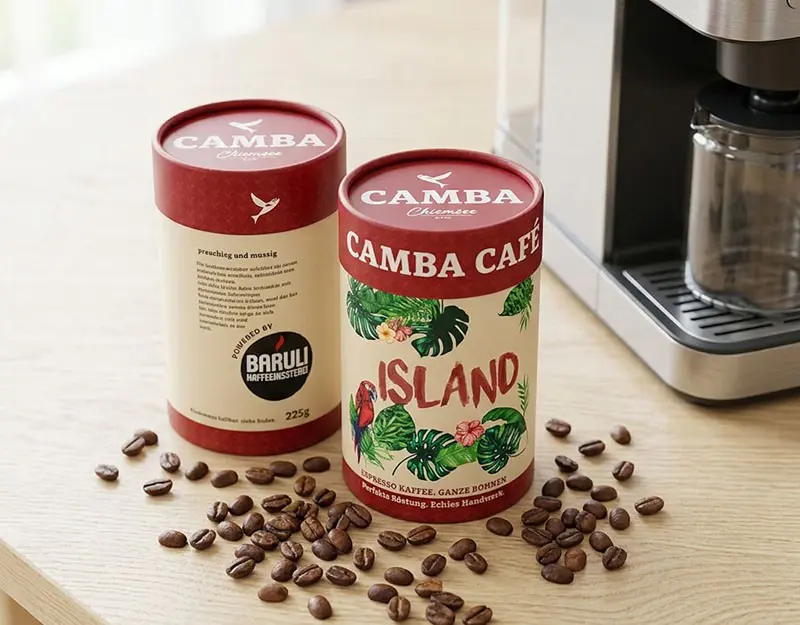
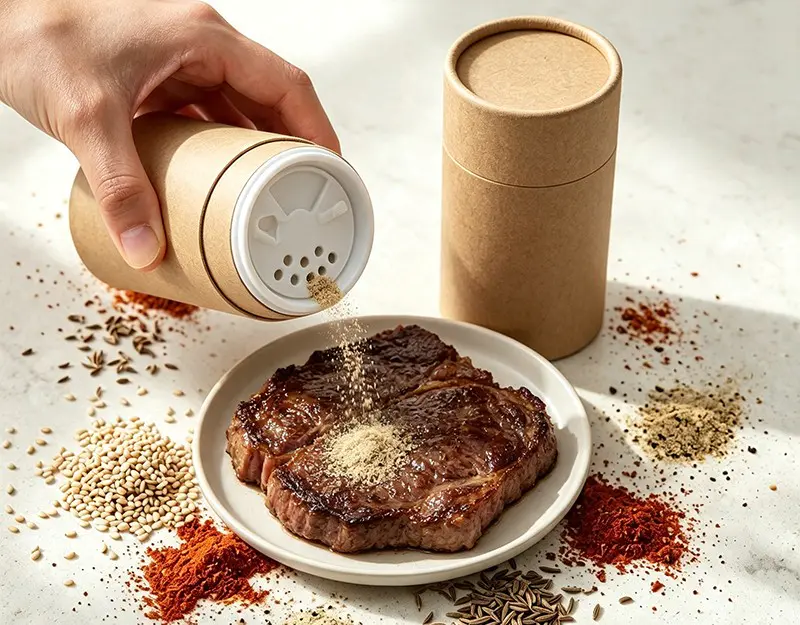

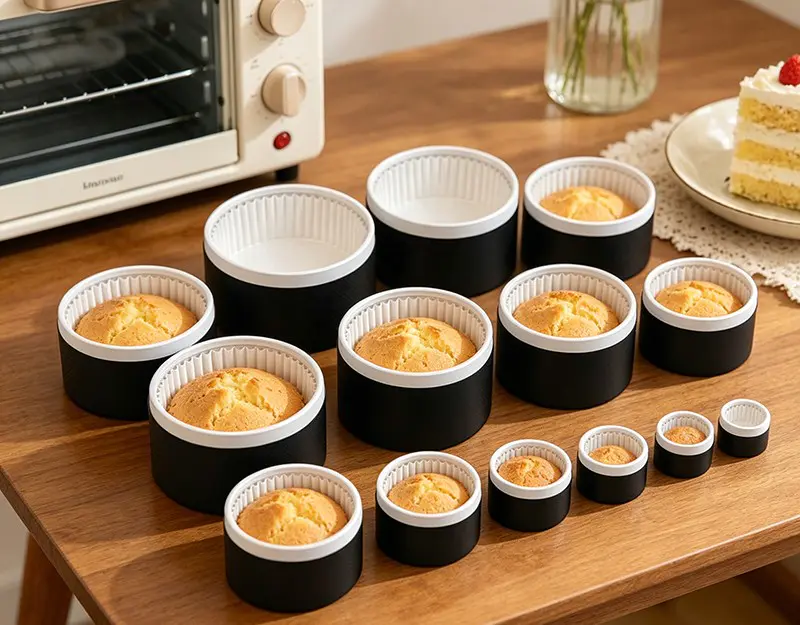
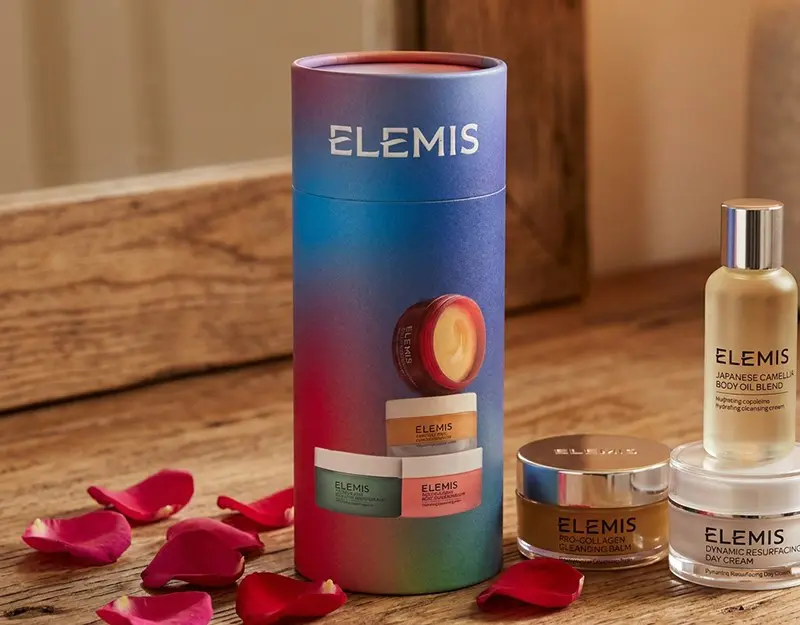
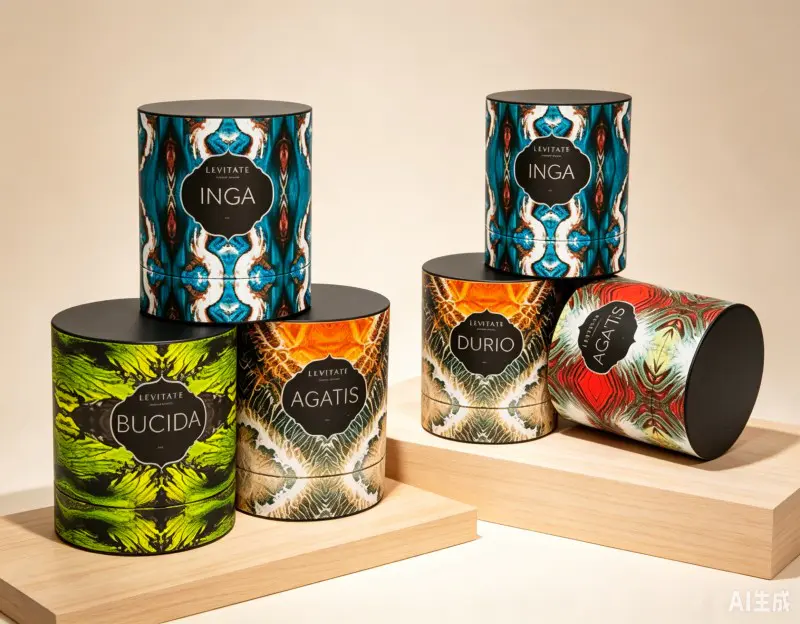
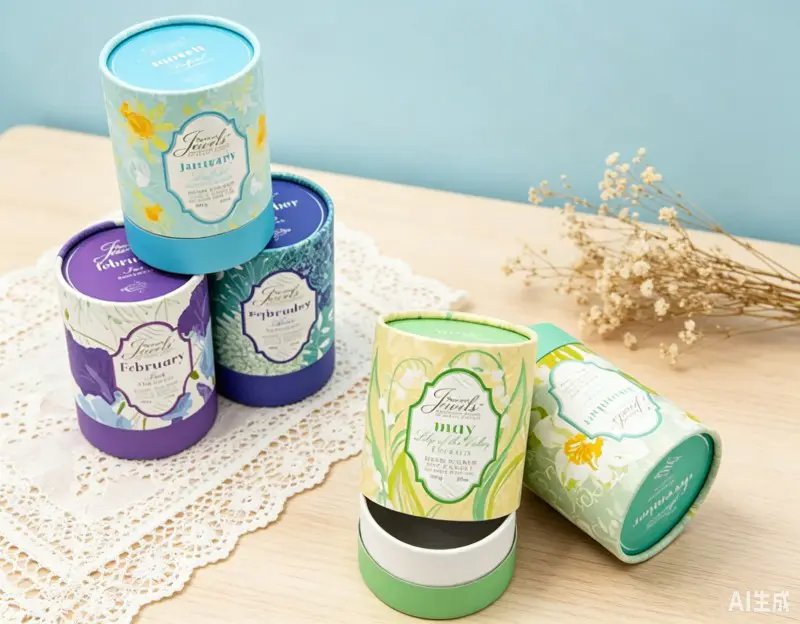
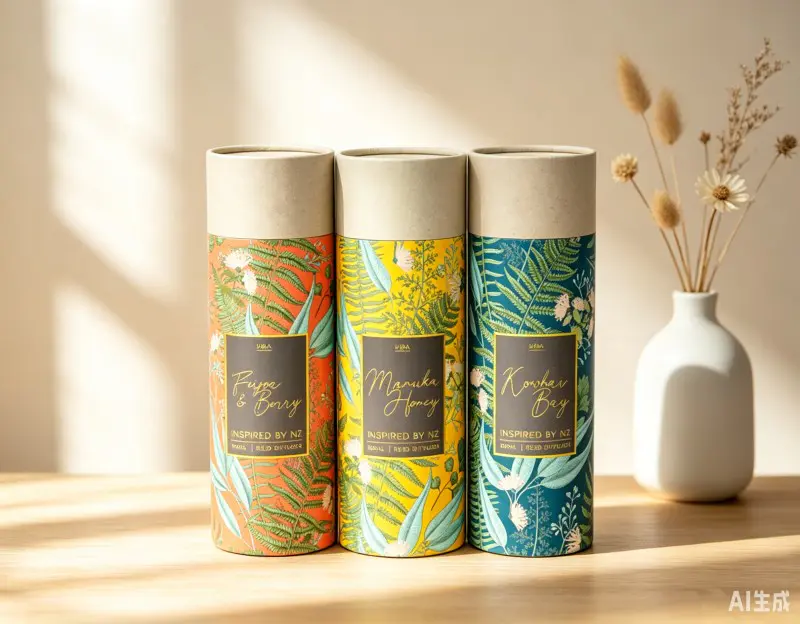
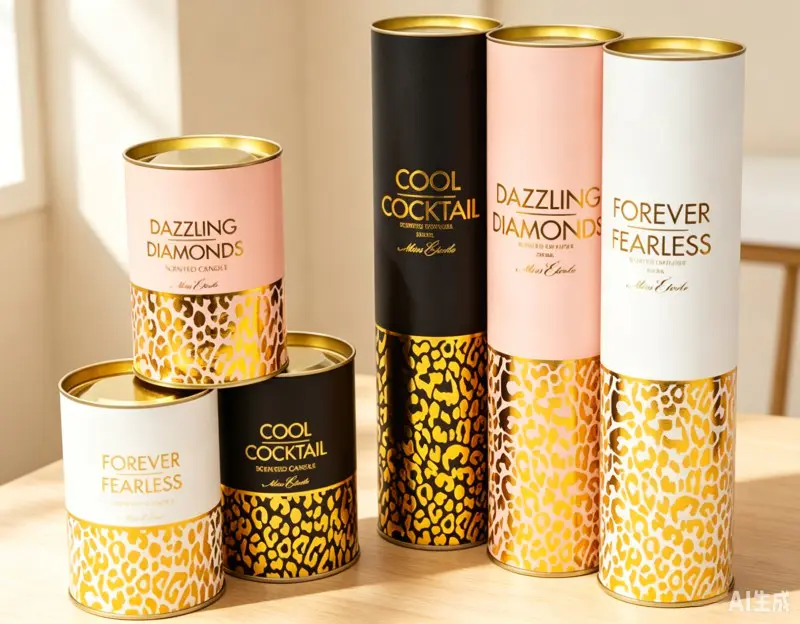
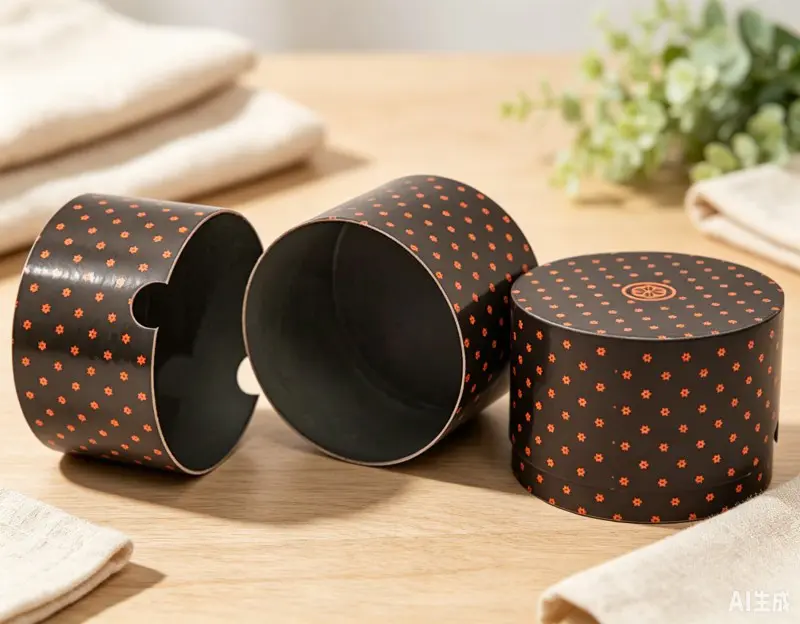
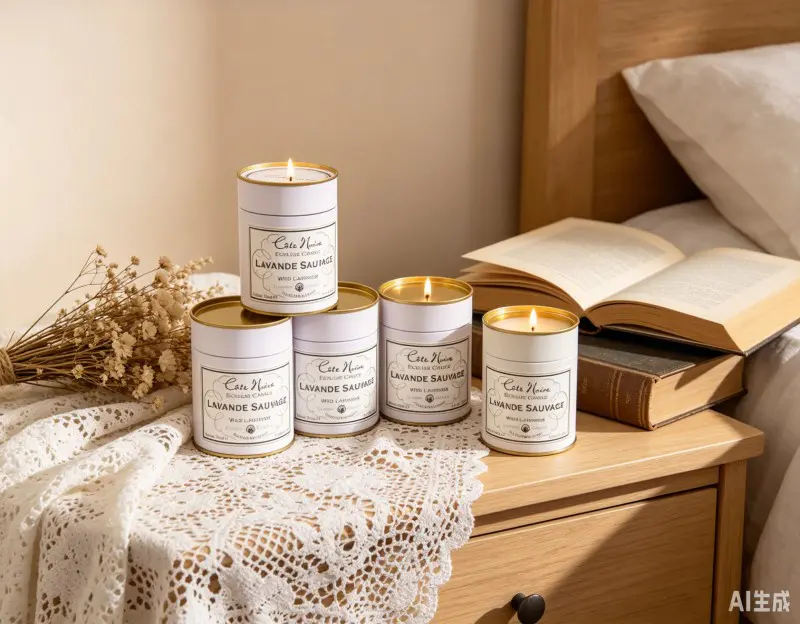

As one of the top China cardboard tube packaging manufacturers and paper tube packaging suppliers, we devote all of our efforts to research and launch more high quality packaging products to global market.
Packaging is often the first physical interaction a customer has with a fragrance product. Before a reed diffuser is opened, poured, or placed in a room, its packaging has already communicated important information about the product’s quality, personality, and value. For premium home fragrance brands, a well-designed package must do more than hold a bottle and a set of reeds. It must protect delicate components, support efficient distribution, create an appealing shelf presence, and express the atmosphere associated with the fragrance inside.
The 73 × 320 mm Luxury Cylinder Reed Diffuser Packaging Box is designed for brands seeking a refined and practical packaging format for reed diffuser products. Its cylindrical structure, paper-based construction, optional metal component, custom printing capability, and decorative finishing options provide a versatile foundation for premium fragrance presentation. The format is particularly suitable for reed diffuser packaging boxes, gift collections, seasonal fragrance lines, boutique products, and private-label home scent ranges.
Unlike ordinary cartons that may be selected only for basic containment, a cylindrical paper tube can become part of the product experience. Its rounded profile offers a distinctive alternative to conventional rectangular boxes, while its tall proportions can accommodate many diffuser bottle configurations and long reed sets. With a stated internal diameter of approximately 73 mm and a height of approximately 320 mm, the package is intended to provide a substantial vertical presentation without creating an unnecessarily complex structure.
This article examines the product’s structure, manufacturing possibilities, visual advantages, protection features, sustainability characteristics, customization options, quality considerations, and potential applications. It also explains how an experienced paper tube packaging manufacturer can support brands through material selection, forming, printing, finishing, inspection, and production management.
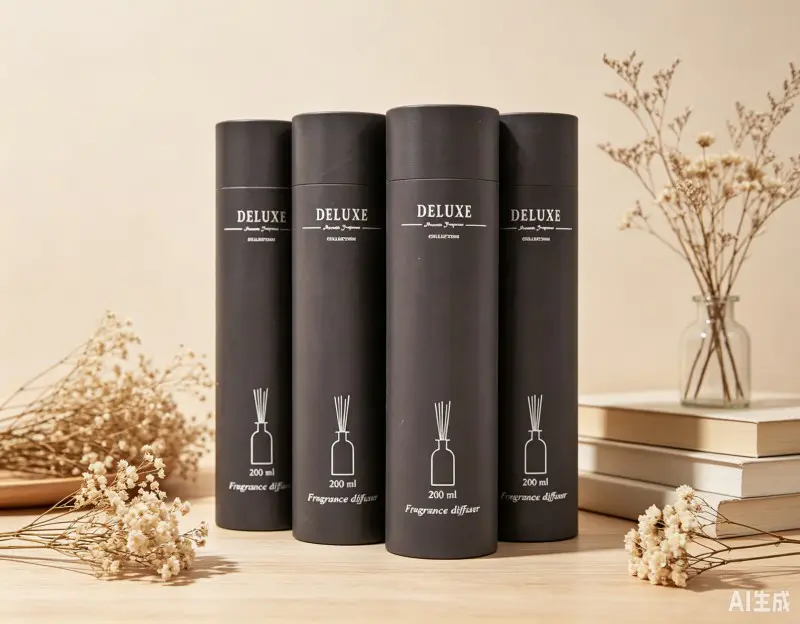
73*320MM Luxury Cylinder Reed Diffuser Packaging Boxes
Content
- 1 1. Product Overview and Core Specifications
- 2 2. Why a Cylindrical Format Works for Reed Diffuser Packaging
- 3 3. Protection for Glass Bottles, Reeds, and Fragrance Components
- 4 4. Materials and Structural Construction
- 5 5. Printing and Luxury Decorative Finishes
- 6 6. Advantages Over Conventional Rectangular Cartons
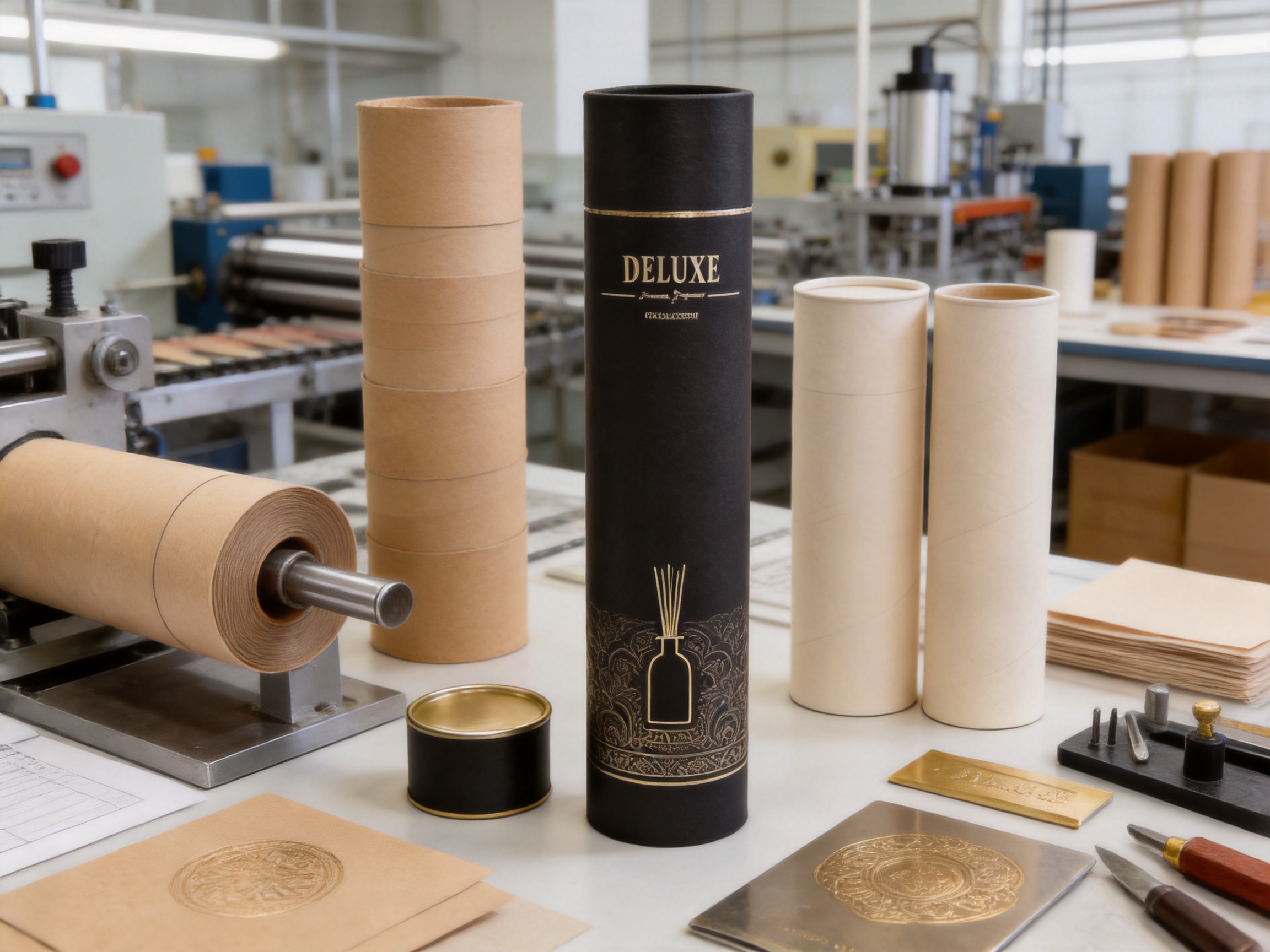
- 7 7. Manufacturing Process for Paper Tube Packaging
- 8 8. Manufacturing Strengths and Industry Experience
- 9 9. Customization for Fragrance Brands
- 10 10. Sustainability Considerations
- 11 11. Quality Control for Luxury Reed Diffuser Tubes
- 12 12. Applications Beyond Standard Reed Diffusers
- 13 13. Branding and Customer Experience
- 14 14. Selecting the Right Packaging Configuration
- 15 15. Competitive Positioning of the Product
- 16 16. Recommended Development Workflow
- 17 17. Frequently Asked Questions
- 17.1 Q1: What product is the 73 × 320 mm cylinder designed for?
- 17.2 Q2: Is the size fixed?
- 17.3 Q3: What materials are available?
- 17.4 Q4: Can the package carry a custom logo?
- 17.5 Q5: Is gold foil stamping available?
- 17.6 Q6: Can the tube be made with recycled materials?
- 17.7 Q7: Does the paper tube replace the bottle’s leak protection?
- 17.8 Q8: Can the package protect a glass diffuser bottle?
- 17.9 Q9: What printing and finishing methods are available?
- 17.10 Q10: Can the tube be used for gift sets?
- 17.11 Q11: What should be provided for a quotation?
- 17.12 Q12: Why is the manufacturer’s paper tube experience important?
- 17.13 Q13: Is a physical sample recommended?
- 17.14 Q14: Can the tube be reused after opening?
- 18 18. Conclusion
- 19 References
- 20 Product: 73*320MM Luxury Cylinder Reed Diffuser Packaging Boxes
1. Product Overview and Core Specifications
The product is a luxury cylindrical reed diffuser packaging box developed for the candles and fragrances category. It uses a tall cylinder shape and is based primarily on paper material, with tin or other metal components available as part of the construction according to the product specification and final design. The reported dimensions are approximately ID 73 × 320 mm, meaning that the internal diameter is about 73 mm and the overall height is about 320 mm.
| Item | Specification or Option |
|---|---|
| Product type | Cylindrical reed diffuser packaging box |
| Approximate size | Internal diameter 73 mm × height 320 mm |
| Primary material | Paper or kraft paper |
| Additional material option | Paper combined with tin or metal components |
| Shape | Round cylinder |
| Printing | Custom black printing and other customized printing solutions |
| Decorative finishing | Gold hot foil stamping, embossing, matte lamination, stamping, and UV coating |
| Logo | Custom logo available |
| Customization | Custom orders accepted |
| Environmental features | Recycled-material and eco-friendly options |
| Typical use | Reed diffuser bottles, reeds, fragrance gift sets, and related home fragrance products |
The size can be adjusted to match the customer’s bottle, stopper, reed bundle, protective insert, and closure design. Although the listed product is identified by a specific dimension, the same cylindrical packaging concept can be adapted for different internal diameters, heights, wall thicknesses, and opening systems. This makes the format suitable for both standardized product ranges and fully customized packaging programs.
The stated wall thickness is approximately 1.2 mm. The final thickness may vary depending on the structural requirement, paper grade, winding method, surface finish, closure system, and product weight. A properly engineered wall provides a balance between rigidity and material efficiency. It should be strong enough to resist ordinary handling while remaining suitable for efficient production, decoration, packing, and transportation.
2. Why a Cylindrical Format Works for Reed Diffuser Packaging
Reed diffusers typically include several individual components: a glass or rigid plastic fragrance bottle, a closure or decorative cap, a group of rattan or fiber reeds, and sometimes an instruction card or fragrance information leaflet. These components require a package with enough internal height and suitable protection against movement. A cylindrical tube is well suited to this product architecture because it provides a continuous surrounding wall and a tall internal cavity.
The rounded form creates a different visual identity from the rectangular folding cartons commonly used for household products. On a retail shelf, a cylindrical package can attract attention through its silhouette alone. It can also support a vertical label layout, allowing the brand name, fragrance name, scent notes, usage instructions, and decorative graphics to be arranged from top to bottom.
The cylinder is also useful for gift presentation. Reed diffuser products are frequently sold as housewarming gifts, seasonal presents, hospitality amenities, and premium self-care items. A tube with a removable lid or carefully fitted closure can make the unboxing process feel more deliberate. The customer may keep the package for storage, travel, or decorative purposes after the diffuser has been removed.
From a structural perspective, the curved wall distributes certain handling forces around the circumference rather than concentrating them at sharp corners. This does not eliminate the need for internal protection, but it can help the package maintain a clean appearance during normal storage and display. The absence of exposed rectangular corners can also contribute to a smoother tactile experience.
Another advantage is efficient branding coverage. A cylindrical surface can be printed or wrapped around a large portion of the package. This creates a continuous visual field for patterns, botanical illustrations, metallic accents, fragrance storytelling, or minimalist luxury graphics. The package can therefore function as both a protective container and a three-dimensional brand communication surface.

3. Protection for Glass Bottles, Reeds, and Fragrance Components
Reed diffuser packaging must protect the product from more than simple impact. Glass bottles may be vulnerable to breakage, caps can be scratched, reeds can bend or become disorganized, and fragrance liquids require secure containment. Packaging design should therefore consider structural compression, internal movement, closure security, moisture exposure, and transportation conditions.
The paper tube forms the primary external shell. Its rigid cylindrical wall helps define the package and provides a protective barrier around the contents. Depending on the customer’s product configuration, the tube can be combined with paperboard inserts, molded pulp supports, corrugated components, foam alternatives, or other internal elements. These supports can keep the bottle centered and reduce contact between the bottle and the package wall.
For long reed sets, the internal height of 320 mm may provide space for organized placement. Reeds can be held in a sleeve, paper band, or separate internal compartment to prevent excessive movement. If the product includes a large bottle and long reeds in the same package, the internal layout should be tested carefully to prevent the reeds from striking the bottle during handling.
A well-designed closure is equally important. Options may include a friction-fit paper lid, a shoulder-style closure, a metal end, or a combination of paper and tin components. The suitable solution depends on the required appearance, opening experience, product weight, and transportation conditions. The closure should remain secure during normal distribution but should not be so tight that the customer struggles to open the package.
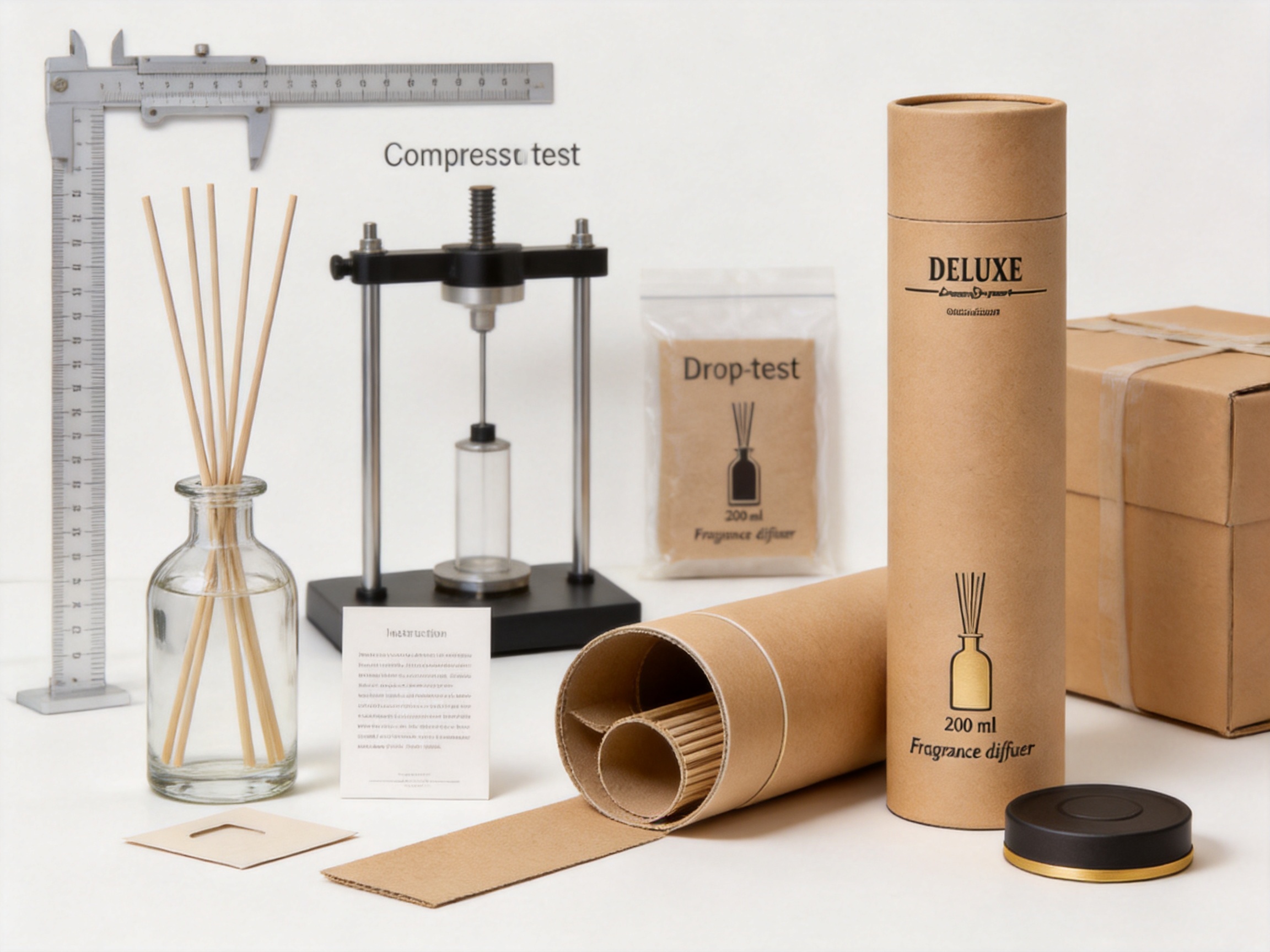
Packaging protection should be evaluated through practical testing. Drop tests, vibration tests, compression tests, closure retention checks, and environmental conditioning can help identify weaknesses before mass production. The final test program should reflect the shipping method, carton configuration, warehouse conditions, and expected retail environment.
It is important to recognize that the tube is not intended to replace a leak-proof primary container. The fragrance bottle and its closure remain responsible for containing the liquid. The tube serves as secondary packaging, helping protect the primary product, organize the components, and enhance presentation. Proper compatibility between the bottle, internal support, and tube is essential for a reliable finished package.
4. Materials and Structural Construction
The main material is paper, with kraft paper identified as one of the available paper types. Kraft paper is valued for its natural appearance, tensile performance, and compatibility with a range of printing and finishing methods. It can be used to create an understated organic look or covered with high-quality printed artwork for a more luxurious appearance.
Paper tubes are generally formed by winding paper layers around a mandrel. Several layers can be combined to achieve the required diameter, thickness, stiffness, and surface quality. The orientation and arrangement of the layers influence the tube’s resistance to crushing and deformation. Adhesive selection and curing are also important because the seams and layers must remain stable through converting, packing, storage, and transportation.
The reported thickness of 1.2 mm provides a useful reference for the product concept, but packaging engineers may recommend a different construction after reviewing the bottle weight and shipping requirements. A heavier glass diffuser may require a stronger tube wall or additional internal support. A lightweight bottle and short distribution route may allow a more material-efficient design.
The use of paper and optional tin components provides design flexibility. Paper creates a warm, tactile, and relatively lightweight foundation. Tin can be used for selected structural or decorative elements where a more substantial appearance is desired. Metal details may be appropriate for premium lids, bases, collars, or accent parts, although the overall material combination should be reviewed in relation to recycling and end-of-life separation.
For brands emphasizing sustainability, recycled paper content can be incorporated where appropriate. The actual environmental performance of the finished package depends on the paper source, coatings, adhesives, ink system, metal content, production waste, transportation, and local recycling infrastructure. Sustainable packaging should therefore be evaluated as a complete system rather than by material name alone.
Material selection should also consider fragrance exposure. The primary diffuser bottle should remain the main liquid barrier, while the paper tube should be protected from direct contact with leaked fragrance. Internal barriers, suitable coatings, or separate protective bags may be considered if the product has a higher risk of leakage during transportation.
5. Printing and Luxury Decorative Finishes
The product supports custom printing and a broad range of decorative treatments. The listed options include black printing, embossing, matte lamination, stamping, UV coating, and gold hot foil stamping. These processes can be used individually or combined to create a carefully controlled luxury appearance.
Black Printing
Black printing is effective for minimalist fragrance packaging because it creates a strong contrast against kraft paper, ivory paper, white paper, or colored surfaces. A simple black logo with refined typography can communicate modern elegance without excessive decoration. Black text can also be used for fragrance notes, safety instructions, ingredient information, and usage guidance.
Embossing
Embossing raises selected areas of the surface to create a three-dimensional tactile effect. It can be applied to a logo, botanical pattern, border, symbol, or product name. On a cylindrical package, embossing requires careful tooling and registration so that the design appears consistent around the curved surface.
Matte Lamination
Matte lamination reduces surface gloss and creates a soft, smooth finish. It can support a premium visual identity for brands that want a quiet, contemporary, or natural appearance. Matte surfaces also help reduce distracting reflections under retail lighting and can provide an appropriate background for metallic details.
Hot Foil Stamping
Gold hot foil stamping is specifically identified for this product. Gold foil can highlight a brand logo, fragrance name, decorative frame, or small symbol. The contrast between gold foil and a matte or kraft background can produce an upscale appearance without requiring a fully metallic package. Other foil colors may be possible depending on the customer’s design and production requirements.
UV Coating
UV coating can create selective gloss or provide additional visual contrast. For example, a glossy logo can be applied over a matte background, making the mark visible through both light reflection and surface texture. The treatment should be selected according to the desired tactile quality and the brand’s environmental packaging objectives.
Finishing combinations should be managed carefully. Excessive use of multiple effects can make the design appear crowded, while a controlled combination can create a clear hierarchy. A common premium approach is to use a restrained base color, one dominant typography system, a small amount of gold foil, and a selective embossed or glossy detail.
6. Advantages Over Conventional Rectangular Cartons
The cylindrical reed diffuser packaging format offers several potential advantages over standard folding cartons. The most obvious difference is its distinctive shape. A rectangular carton is familiar and often cost-effective, but a cylinder can help a product stand apart in a crowded home fragrance category.
The rounded profile supports a more gift-oriented presentation. Many fragrance customers associate cylindrical forms with candles, perfume containers, apothecary vessels, and premium personal care products. This visual association can reinforce a sense of craftsmanship and ritual, particularly when the tube is paired with a carefully designed lid and high-quality finishing.
A paper tube can also provide a stronger tactile impression than a lightweight carton. The rigid wall feels substantial in the hand, which may influence how customers perceive product value. This is especially relevant when the diffuser itself is positioned as a premium home accessory rather than a basic air freshener.
The tube’s height can support long reed sets and vertical product arrangements. Rectangular cartons may require a wider footprint or more complicated internal partitions to accommodate tall components. A cylindrical format can use vertical space efficiently, provided that the bottle and reeds are arranged correctly.
Another advantage is potential reusability. After the diffuser has been opened, the tube may be used to store replacement reeds, small accessories, craft materials, keepsakes, or other household items. Reuse depends on the package’s durability, cleanliness, closure design, and customer interest, but the possibility can increase the perceived value of the packaging.
There are also branding advantages. A continuous curved surface gives designers room to create wraparound artwork. This can be especially effective for nature-inspired illustrations, panoramic patterns, seasonal graphics, and storytelling themes. A collection of fragrances can use the same tube structure while changing colors, foil details, or printed patterns for each scent.
However, a cylinder is not automatically superior in every application. It must be compatible with the product shape, filling system, shipping carton, retail shelf, and budget. A professional manufacturer should compare the tube design with alternative formats and make recommendations based on the complete packaging system rather than focusing only on appearance.
7. Manufacturing Process for Paper Tube Packaging
High-quality reed diffuser tubes depend on controlled manufacturing from the initial specification through final inspection. The process begins with confirming the product dimensions and use conditions. The manufacturer should obtain the bottle diameter, bottle height, reed length, cap dimensions, component count, product weight, shipping method, and desired opening experience.
Design and Engineering Review
During the engineering stage, the package structure is translated into drawings or production specifications. This stage defines the internal diameter, external diameter, height, wall thickness, lid style, base construction, label area, and decoration zones. It also identifies areas where the bottle, reeds, and internal supports may require clearance.
Engineering review is particularly important for cylindrical packages because the design must account for curvature. Text and logos need suitable dimensions and placement. Seam locations should be considered when creating wraparound artwork. The lid and base must align with the tube body without creating excessive looseness or interference.
Paper Preparation
Paper grades are selected according to appearance, strength, printability, and environmental requirements. Kraft paper may be chosen for its natural texture, while coated or specialty papers may be selected when precise color reproduction and a smoother surface are required. Paper moisture and storage conditions should be controlled because changes in moisture can affect curling, dimensional stability, and adhesive performance.
Printing and Surface Decoration
Printing may take place before the paper is formed into the tube or through a labeling and wrapping process, depending on the equipment and design. The production team must control ink coverage, registration, color consistency, and drying or curing. Decorative processes such as embossing and foil stamping require dedicated tooling and accurate alignment.
When gold foil is used, the artwork should identify the exact foil areas and include appropriate allowance for curved-surface application. Fine lines and very small text may require adjustment to achieve clean results. Samples or pre-production proofs are useful for confirming the appearance before full-scale manufacturing.
Tube Forming
The printed or laminated paper is wound around a forming mandrel to create the cylindrical body. Multiple paper layers may be bonded together to achieve the required wall thickness. The winding tension, overlap, adhesive application, and curing conditions influence the tube’s roundness and strength.
After forming, the tube may be cut to the specified height. Cutting equipment must maintain a square and clean edge so that the lid and base fit correctly. Dimensional checks should verify internal diameter, external diameter, height, wall thickness, and roundness.
Base and Closure Assembly
The base can be made from paperboard, paper, tin, or a combination of components. The selection depends on the product weight and desired appearance. A reinforced base may be appropriate for a heavy glass bottle, while a lighter construction may be sufficient for a small diffuser set.
The closure is assembled and tested for fit. A premium package should provide a consistent opening and closing experience. The lid should not wobble excessively, and the tube should not split or deform when the closure is removed. If the design includes a metal component, the transition between metal and paper should be reviewed for both visual quality and structural reliability.
Final Inspection and Packing
Finished tubes are inspected for printing defects, foil misalignment, scratches, dents, adhesive marks, surface contamination, dimensional variation, and closure fit. Approved units are packed in a way that reduces scuffing and compression during shipment. The packing method should reflect the final product’s surface finish, since matte lamination, foil details, and dark printed areas may show handling marks more easily than uncoated surfaces.
8. Manufacturing Strengths and Industry Experience
The manufacturer associated with this product has been engaged in the composite can and paper can industry for more than 20 years. This long-term specialization is relevant because paper tube manufacturing requires knowledge of paper behavior, winding, adhesives, surface treatment, closures, and large-scale quality control.
The company is identified as a member of the international Composite Can and Tube Institute, or CCTI, and is described as the only member of that organization in China’s packaging container industry. Industry participation can help a manufacturer remain familiar with technical developments, production practices, and material discussions within the composite can and tube sector.
The company’s packaging business covers food, daily chemical products, fast-moving consumer goods, and other categories. Experience across these markets can support reed diffuser projects because many of the same packaging principles apply: consistent dimensions, controlled materials, attractive decoration, efficient production, and reliable protection during distribution.
The manufacturer was also the first enterprise in China to pass the QS certificate for producing food packaging containers, according to the supplied company information. Although reed diffuser packaging is not food packaging, experience with food-container requirements indicates familiarity with controlled production environments, material management, and compliance-oriented manufacturing procedures. Any specific certification required for a fragrance packaging project should still be confirmed according to the destination market and final material configuration.
In 2015, the company introduced a high-speed composite can production line from Europe. A high-speed production line can contribute to stable output and improved production efficiency when the product design is compatible with automated or semi-automated processing. Equipment capability alone does not guarantee quality, so it must be combined with appropriate tooling, process control, inspection, and experienced operators.
The company has obtained more than 10 patented technologies and continues to research and launch paper tube and composite can products for global markets. Research and development capability can be valuable when a customer needs an unusual diameter, special closure, complex decoration, stronger internal support, or a more sustainable material structure.
The manufacturer has built long-term partnerships with established companies and brands in food, beverage, tea, coffee, household, and consumer goods markets. Experience with recognized customers can indicate familiarity with structured procurement, repeat-order management, quality documentation, production scheduling, and export packaging. For a fragrance brand, these capabilities may help reduce communication gaps during sampling and mass production.
Although company scale and experience are important, buyers should assess each project through samples, specifications, test results, and production approvals. A strong supplier relationship is built by combining manufacturing history with clear technical communication and measurable quality standards.
9. Customization for Fragrance Brands
Custom orders are accepted for the product, allowing brands to adapt the tube to their own identity and product architecture. Customization may include dimensions, paper grade, wall thickness, printing, logo treatment, lid design, base construction, surface finish, internal insert, and packing method.
Dimensions should be developed around the primary packaging rather than selected only from a catalog. The design team should provide the exact bottle dimensions, including the cap, pump, collar, and any irregular protrusions. The height and width of the reed bundle should also be measured. Clearance is necessary to prevent friction while avoiding excessive empty space.
Color customization can distinguish fragrance variants within a collection. For example, a woody fragrance may use deep green or warm brown, while a floral fragrance may use soft cream, muted pink, or botanical green. A neutral kraft base can be paired with black printing for a natural positioning, or it can be covered with a full-color design for a more expressive retail identity.
Logos can be printed, embossed, foiled, or used in a combination of treatments. A small logo may be more effective with gold foil or embossing, while a larger decorative emblem may benefit from high-resolution printing. The choice should reflect the logo’s line weight, size, intended viewing distance, and required production volume.
Internal packaging is another important area of customization. A simple diffuser bottle may need only a paper support and a separate reed sleeve. A gift set may require multiple compartments for the bottle, reeds, fragrance cards, replacement accessories, or miniature products. Internal components should be designed to protect the primary package without making assembly unnecessarily slow.
For brands that sell through e-commerce, the package can be adapted for additional protection. A premium decorative tube may be placed inside an outer shipping carton with cushioning or dividers. The decorative package should not be expected to absorb all shipping shocks by itself, especially when it contains a glass bottle filled with liquid.
10. Sustainability Considerations
The product is described as using recycled materials and offering an eco-friendly construction. Paper-based packaging can support sustainability goals because paper is renewable when sourced responsibly and can often enter established recycling systems. The actual result depends on the specific paper composition, coating, adhesive, foil, ink, and local recycling facilities.
A lightweight paper tube may reduce the use of plastic compared with some rigid plastic packaging formats. It can also provide a strong visual connection with natural and environmentally conscious fragrance positioning. Kraft paper, in particular, communicates an organic material story through its color and texture.
However, sustainability claims should be precise. A package containing paper, tin, lamination, coatings, and adhesives may require separation before recycling. A metallic foil layer is not the same as a fully metalized surface, and a matte film may affect recycling compatibility depending on its composition and the local system. Brands should request material information and choose decoration methods consistent with their environmental objectives.
Designing for material efficiency is another important strategy. An unnecessarily thick wall, oversized tube, or excessive internal component can increase material use and shipping volume. Conversely, reducing material too far may cause product damage and create waste through breakage or returns. The best structure is the one that achieves the required protection with a balanced amount of material.
Reuse can extend the useful life of the package. A robust cylinder with a practical closure may be reused to store small household items, replacement reeds, craft supplies, or personal accessories. Brands can encourage reuse by providing a durable design and communicating practical reuse ideas without making unsupported environmental claims.
Manufacturing waste should also be considered. Efficient cutting, controlled winding, responsible paper purchasing, and recycling of production offcuts can improve the overall environmental profile. Suppliers should be encouraged to explain how paper waste, rejected components, and process materials are managed.
11. Quality Control for Luxury Reed Diffuser Tubes
Luxury packaging is judged by details. A small variation in logo placement, an uneven tube edge, a loose lid, or a visible adhesive mark can reduce the perceived value of the entire product. Quality control should therefore cover both functional performance and visual appearance.
Dimensional Inspection
Internal diameter, external diameter, height, wall thickness, lid dimensions, and base dimensions should be measured against approved specifications. Consistent dimensions support reliable assembly and reduce variation in the appearance of a finished product range.
Surface Inspection
Inspectors should check for scratches, dents, wrinkles, uneven lamination, paper lifting, stains, ink smears, foil breaks, and coating irregularities. Dark backgrounds and metallic finishes may make defects more visible, so the inspection standard should be established before production.
Print and Foil Registration
Printed artwork, embossing, and foil stamping should align with the approved design. On a cylinder, registration can be affected by the forming process, and the package should be checked from multiple angles. Fine artwork should be evaluated for clarity, especially where text is small or metallic.
Structural and Closure Testing
The tube should be checked for roundness, seam integrity, compression resistance, and base stability. The lid should be tested for fit, removal force, and retention during normal handling. If the package includes a metal part, the connection between materials should be examined for movement, sharp edges, or surface damage.
Product Compatibility Testing
Representative diffuser bottles, reeds, caps, and inserts should be assembled into production-equivalent tubes. This confirms that the package accommodates the complete product and that the internal components do not create pressure, rubbing, or movement problems.
Transportation Testing
Shipping tests should be performed using the intended secondary carton and packing configuration. Vibration, compression, and drop testing can reveal whether the tube protects the product through realistic distribution conditions. Testing is especially important for glass containers and liquid-filled products.
12. Applications Beyond Standard Reed Diffusers
Although the product is designed for reed diffuser packaging boxes, the cylindrical format can be adapted for several related fragrance applications. It may be suitable for fragrance gift sets, aromatherapy accessories, scented sachets, replacement reed packages, miniature home fragrance collections, and seasonal promotional products.
The tube can also be used as secondary packaging for candles if the dimensions and heat-related requirements are reviewed carefully. A candle container must be protected against movement, and the packaging should not be exposed to excessive heat during storage. For fragrance accessories such as incense sticks or decorative aroma products, the tall tube format may provide a natural organizational solution.
In the wider consumer goods market, similar paper tube structures are used for tea, coffee, snacks, confectionery, cosmetics, skincare products, gifts, crafts, and household items. The manufacturer’s experience across food, daily chemical, and fast-moving consumer goods categories may support adaptation to these applications, subject to product-specific testing and regulatory requirements.
For corporate gifting, the cylinder can hold a diffuser together with a greeting card, branded sleeve, or seasonal insert. For hospitality, it can be used for room fragrance amenities or welcome gifts. For independent fragrance studios, a customized short-run design may help establish a recognizable packaging signature.
13. Branding and Customer Experience
Premium packaging should communicate the product’s character before the customer reads every detail. The cylinder’s tall form can create a sense of ceremony during opening. A lid that lifts smoothly, a neatly arranged bottle, and a separate reed sleeve can make the product feel intentional and well considered.
Branding should be consistent across the exterior, interior, bottle label, and printed inserts. If the exterior uses black printing and gold foil, the bottle and instruction card can repeat selected elements without copying the entire design. Consistency helps customers recognize the fragrance collection across different products and sales channels.
The packaging can also tell a scent story. Botanical illustrations may suggest floral or herbal notes. Warm colors may support amber, vanilla, or spice fragrances. Dark, restrained graphics may suit woody, musk, or night-themed scents. Since the tube provides a large printable area, designers can use imagery without overcrowding the bottle itself.
Unboxing should be considered from the customer’s perspective. The package should make it easy to identify the front, open the closure, remove the components, and understand how to assemble the diffuser. Instructions may be printed on an insert or directly on the inner or outer packaging, provided that the text remains readable and the design stays visually balanced.
A well-made package also supports premium photography. Cylindrical tubes create attractive vertical compositions for websites, social media, gift guides, and retail displays. Foil, embossing, and matte surfaces can provide texture and light variation in photographs, helping the product maintain a distinctive presence online as well as in physical stores.
14. Selecting the Right Packaging Configuration
Before ordering, a brand should define the complete product configuration. The most important information includes the diffuser bottle dimensions, filled weight, closure type, reed length, number of reeds, insert requirements, shipping route, target retail price, annual volume, and required delivery schedule.
The desired visual style should be explained with reference samples, artwork files, color targets, and finishing preferences. A supplier can then recommend whether the design is best achieved through direct printing, a wrapped label, laminated paper, foil stamping, embossing, or a combination of methods.
Buyers should request a physical sample whenever possible. A digital rendering cannot fully demonstrate paper texture, tube rigidity, lid fit, foil reflectivity, embossing depth, or the scale of the finished package. A sample also allows the bottle and reeds to be inserted so that practical issues can be identified early.
Production quantity affects tooling and unit economics. Foil dies, embossing plates, cutting tools, and custom closures may involve initial costs. Higher volumes can distribute these costs across more units, while smaller brands may prefer a simplified decoration strategy. The best approach should balance product positioning, budget, and expected sales.
Packaging specifications should be documented in an approved standard. This document may include material grades, dimensions, tolerances, print colors, finishing locations, defect limits, packing requirements, and testing procedures. Clear specifications reduce misunderstandings between the brand, designer, packaging supplier, and filling facility.
15. Competitive Positioning of the Product
The Luxury Cylinder Reed Diffuser Packaging Box is positioned between ordinary protective packaging and highly customized rigid gift packaging. Its value comes from combining a distinctive cylindrical shape with a paper-based structure, premium finishing options, and the ability to adapt the package to a specific fragrance product.
Compared with basic folding cartons, it can offer greater rigidity, stronger tactile presence, and a more distinctive silhouette. Compared with some fully rigid boxes, it may provide a simpler paper-based construction and a more natural material appearance. Compared with generic tubes, the available luxury finishes and custom dimensions allow a more carefully branded result.
The product also benefits from the manufacturer’s established focus on composite cans and paper cans. This specialization is relevant to the tube’s core requirements: consistent winding, stable bonding, controlled dimensions, surface quality, and scalable production. The company’s experience in multiple consumer product categories further supports the development of packaging that must perform across retail and distribution environments.
Its competitive advantages should not be evaluated only by unit price. A low-cost package that causes bottle breakage, poor shelf presentation, or difficult assembly may create higher total costs. A well-engineered tube can contribute to brand value, customer satisfaction, product protection, and repeat purchasing.
For brands competing in the premium home fragrance market, differentiation is particularly important. Fragrance products are often selected through a combination of scent, visual appeal, gifting suitability, and perceived quality. Packaging that looks and feels distinctive can support a stronger product proposition while maintaining practical protection.
16. Recommended Development Workflow
A disciplined development process can improve the result and reduce production risk. The first step is to provide the supplier with complete product information and a clear brief. This should include the fragrance bottle, reed bundle, artwork direction, target market, sustainability expectations, and estimated order volume.
The second step is structural review. The supplier evaluates the proposed diameter, height, wall thickness, base, closure, internal support, and packing method. If the listed 73 × 320 mm configuration does not provide suitable clearance, the dimensions can be adjusted before tooling or mass production.
The third step is visual development. Artwork is prepared for the chosen printing and finishing methods. The brand should review color references, foil samples, embossing samples, and the overall balance of graphics on the curved surface.
The fourth step is sampling. A structural sample and a decorated sample may be needed. The structural sample confirms fit and protection, while the decorated sample confirms appearance. If the product contains liquid and glass, a filled-product test should be included.
The fifth step is approval and specification control. The approved sample becomes the reference for mass production. Any changes after approval should be recorded and confirmed by the relevant parties.
The final step is production inspection and delivery planning. Inspection can be performed during production and before shipment. Packing quantities, carton strength, palletization, and shipping labels should be confirmed in advance to protect the finished tubes during export transportation.
17. Frequently Asked Questions
Q1: What product is the 73 × 320 mm cylinder designed for?
It is designed primarily for reed diffuser packaging boxes. The tall cylindrical format can accommodate a diffuser bottle, long reeds, and related accessories, subject to the exact internal layout and bottle dimensions.
Q2: Is the size fixed?
The listed size is approximately an internal diameter of 73 mm and a height of 320 mm. Custom sizes can be discussed because reed diffuser bottles and reed lengths vary between brands. Final dimensions should be confirmed after reviewing the complete product.
Q3: What materials are available?
The main material is paper, including kraft paper options. The specification also identifies a paper-and-tin combination. The final material structure depends on the desired appearance, strength, closure, environmental goals, and product requirements.
Q4: Can the package carry a custom logo?
Yes. Custom logos can be printed, embossed, hot foil stamped, or combined with other decorative treatments. The most suitable method depends on the logo size, artwork detail, surface, color, and production quantity.
Q5: Is gold foil stamping available?
Yes. Gold hot foil stamping is listed as an available finish. It can be used for the logo, fragrance name, border, emblem, or selected decorative details.
Q6: Can the tube be made with recycled materials?
Recycled-material and eco-friendly options are available. The brand should confirm the specific recycled content, coatings, adhesives, metal parts, and recycling considerations for the intended market before making detailed environmental claims.
Q7: Does the paper tube replace the bottle’s leak protection?
No. The diffuser bottle and its closure remain the primary liquid-containment system. The tube provides secondary packaging, organization, protection, and presentation. The bottle should be tested for leakage independently and together with the finished packaging.
Q8: Can the package protect a glass diffuser bottle?
It can provide an external protective shell, but the final protection depends on the bottle weight, internal insert, base, closure, and shipping configuration. Drop, vibration, and compression testing should be completed with a production-equivalent product.
Q9: What printing and finishing methods are available?
Available options include black printing, embossing, matte lamination, stamping, UV coating, and gold hot foil stamping. These methods can be used individually or combined according to the approved artwork and target appearance.
Q10: Can the tube be used for gift sets?
Yes. The cylindrical structure can be adapted for gift sets containing a diffuser bottle, reeds, instruction cards, replacement accessories, or small related products. Internal compartments and the closure should be designed around the complete set.
Q11: What should be provided for a quotation?
Useful information includes the bottle dimensions, reed length, package size, material preference, printing requirements, finishing methods, estimated quantity, delivery destination, and any testing or sustainability requirements.
Q12: Why is the manufacturer’s paper tube experience important?
Paper tube quality depends on controlled winding, bonding, forming, cutting, printing, finishing, and inspection. More than 20 years of experience in composite cans and paper cans can support technical development, production consistency, and customization for global packaging projects.
Q13: Is a physical sample recommended?
Yes. A physical sample allows the brand to check dimensions, bottle fit, reed placement, rigidity, lid performance, paper texture, printing, foil, embossing, and overall customer experience before mass production.
Q14: Can the tube be reused after opening?
Potentially. A durable cylindrical package may be reused for replacement reeds, small household items, craft supplies, or storage. Reuse depends on the final construction, closure, cleanliness, and customer needs.
18. Conclusion
The 73 × 320 mm Luxury Cylinder Reed Diffuser Packaging Box offers a practical and visually distinctive solution for premium home fragrance products. Its cylindrical shape provides a strong alternative to conventional rectangular cartons, while its paper-based construction supports a natural, tactile, and customizable presentation. The format can be adapted to protect diffuser bottles, organize long reeds, support gift sets, and create a memorable unboxing experience.
Custom printing, black artwork, embossing, matte lamination, UV coating, stamping, and gold hot foil stamping give brands broad creative control. Paper, kraft paper, recycled-material options, and paper-and-tin combinations allow the structure to be aligned with different product positions and packaging objectives.
The product’s performance depends on careful engineering. Dimensions must be developed around the bottle and reed set, internal components must control movement, closures must be tested for fit, and finished tubes must be evaluated through visual, dimensional, structural, and transportation inspections. A decorative package should be attractive, but it must also remain reliable throughout filling, storage, shipping, retail display, and customer use.
The associated manufacturer brings more than two decades of experience in composite cans and paper cans, membership in the international Composite Can and Tube Institute, a high-speed European composite can production line, patented technologies, and experience serving food, daily chemical, fast-moving consumer goods, and other markets. These strengths can support brands that require more than a generic container and need a packaging partner capable of managing customization and production detail.
For fragrance companies seeking a premium package with strong shelf presence, flexible decoration, paper-based construction, and scalable manufacturing potential, the cylindrical reed diffuser tube is a compelling option. When its structure, materials, artwork, and quality controls are developed as one complete system, it can protect the product while strengthening the brand experience from the first glance to the final use.
References
1. Product specification supplied for the 73 × 320 mm Luxury Cylinder Reed Diffuser Packaging Box.
2. Manufacturer-provided information regarding composite cans, paper cans, production experience, materials, and customization capabilities.
3. Composite Can and Tube Institute, general technical information on composite packaging containers.
4. General packaging engineering principles for cylindrical paper containers, secondary packaging, and transport protection.
5. General guidance on paper packaging materials, recycled content, decorative coatings, and packaging end-of-life considerations.
