 English
 Español

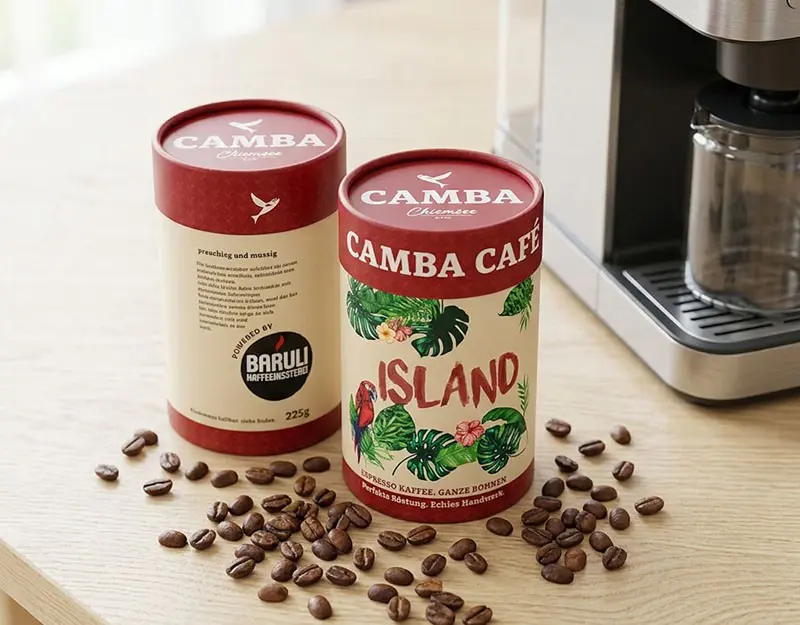
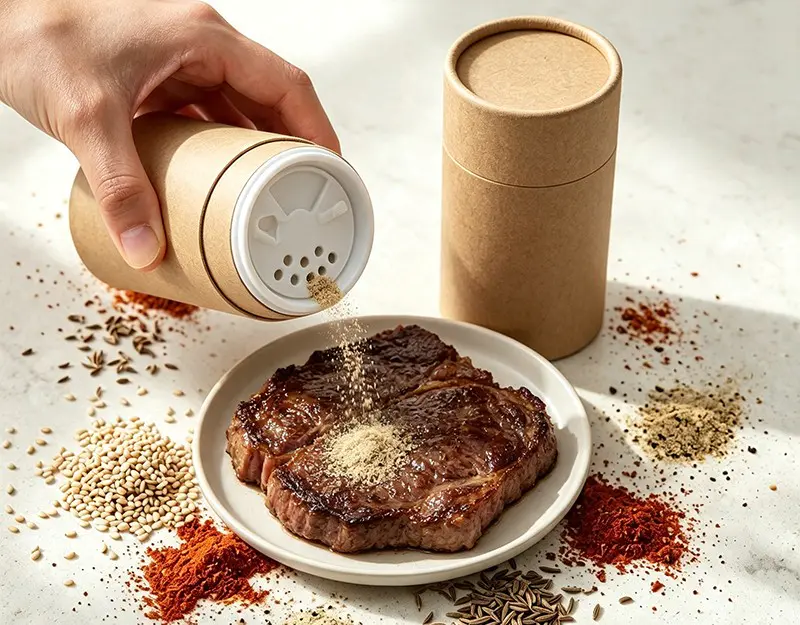
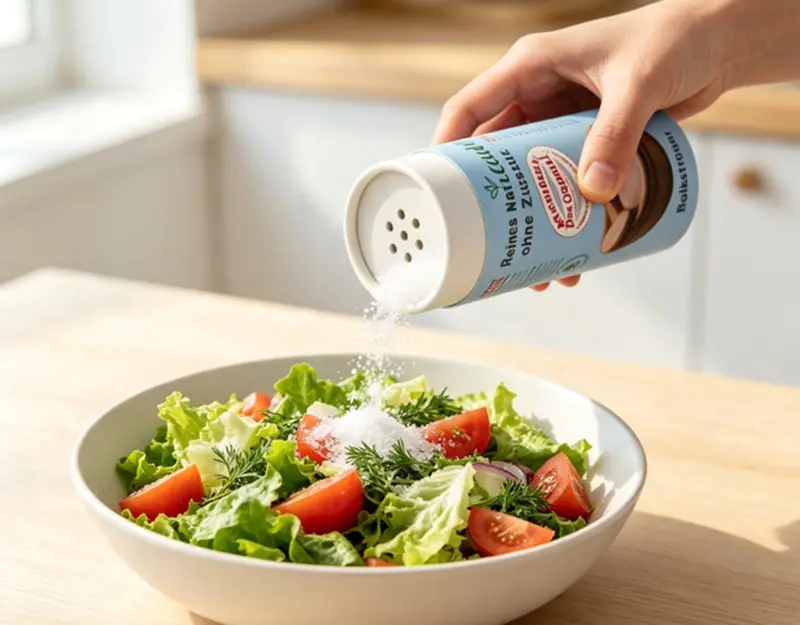
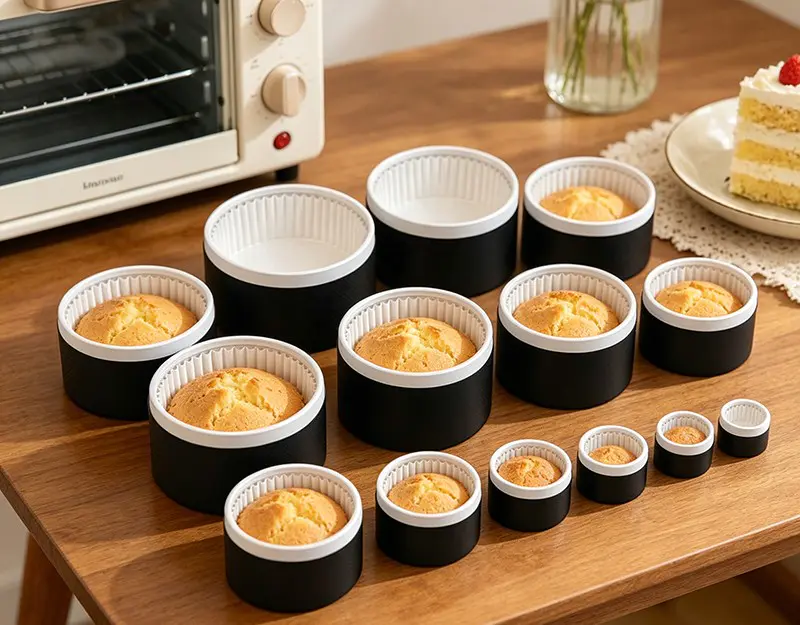
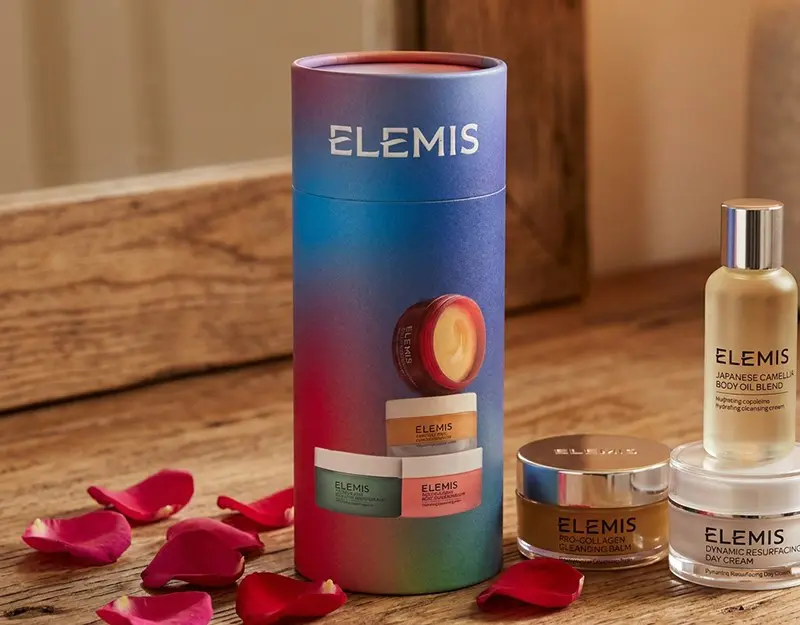
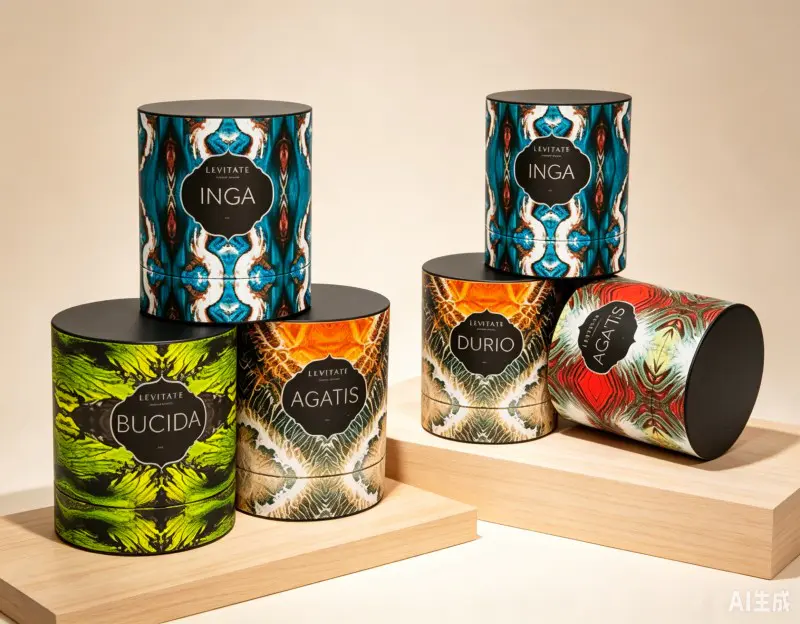
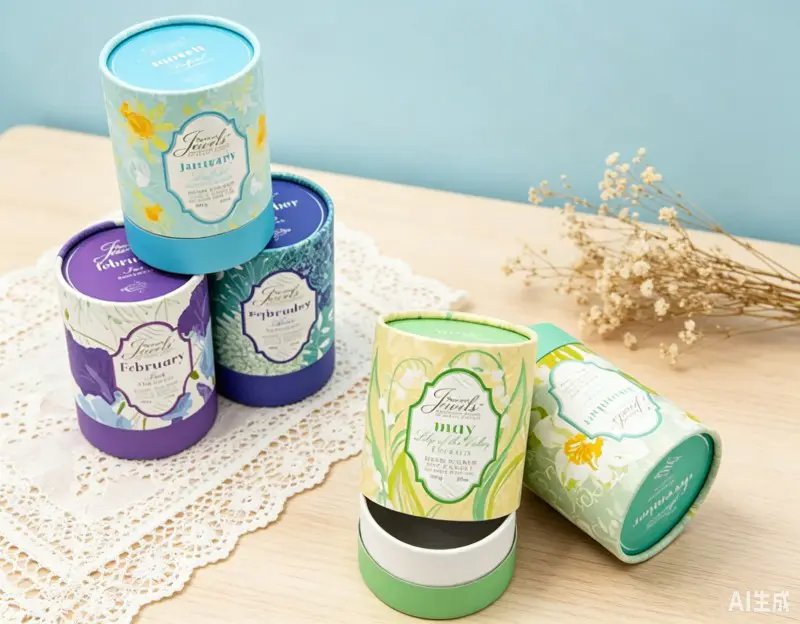
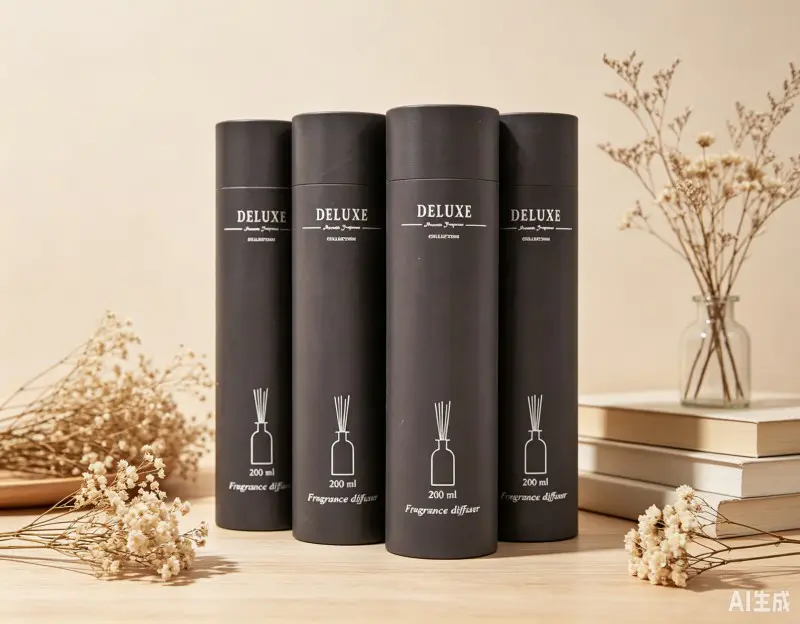
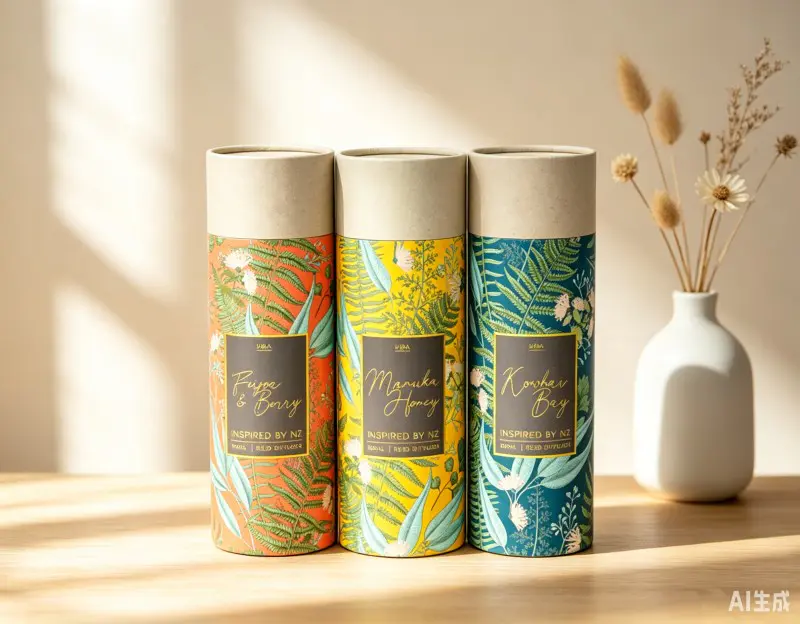
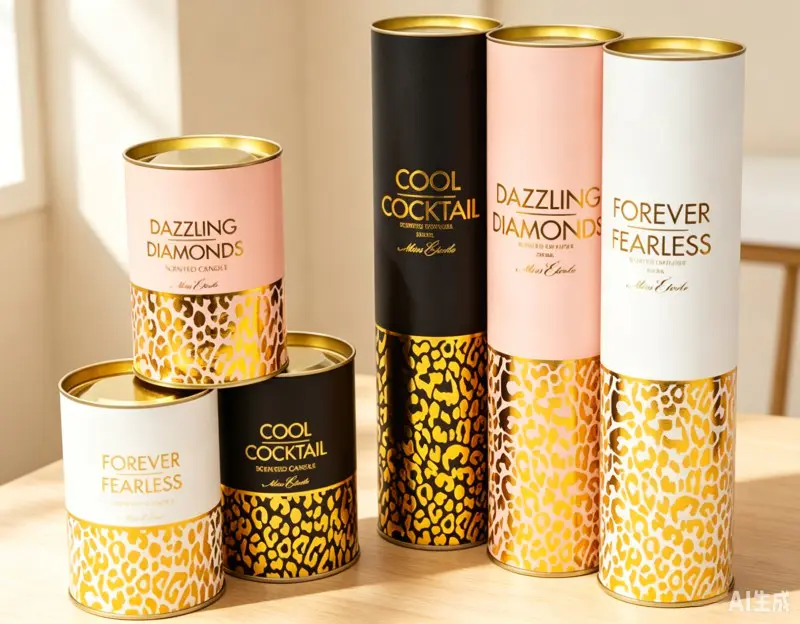
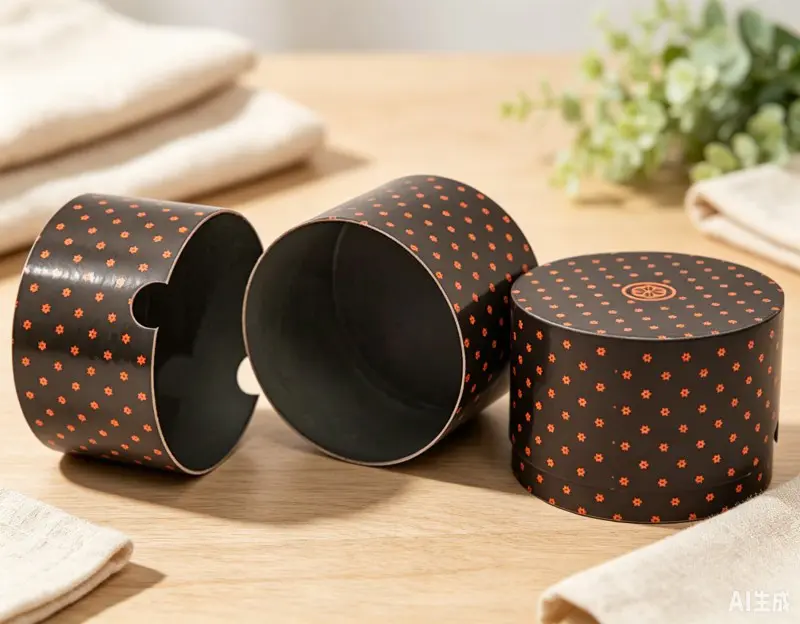
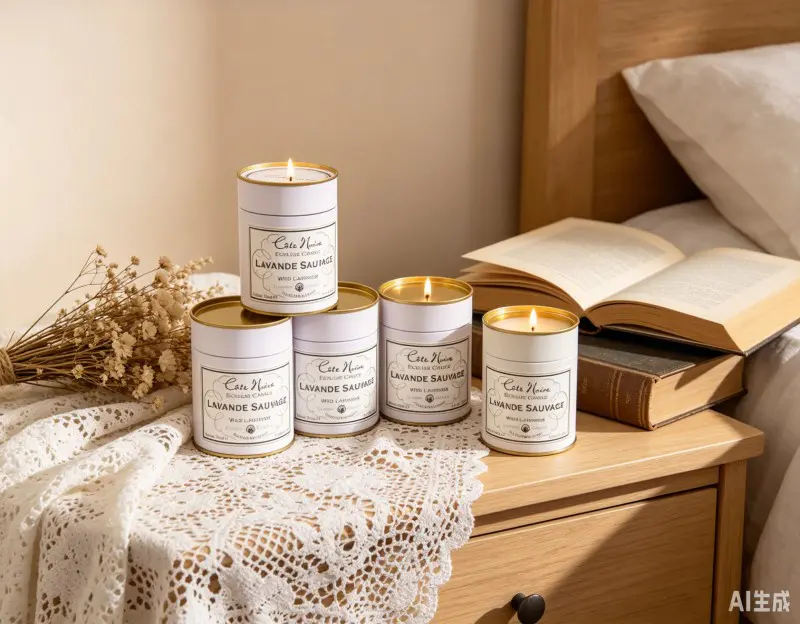

As one of the top China cardboard tube packaging manufacturers and paper tube packaging suppliers, we devote all of our efforts to research and launch more high quality packaging products to global market.
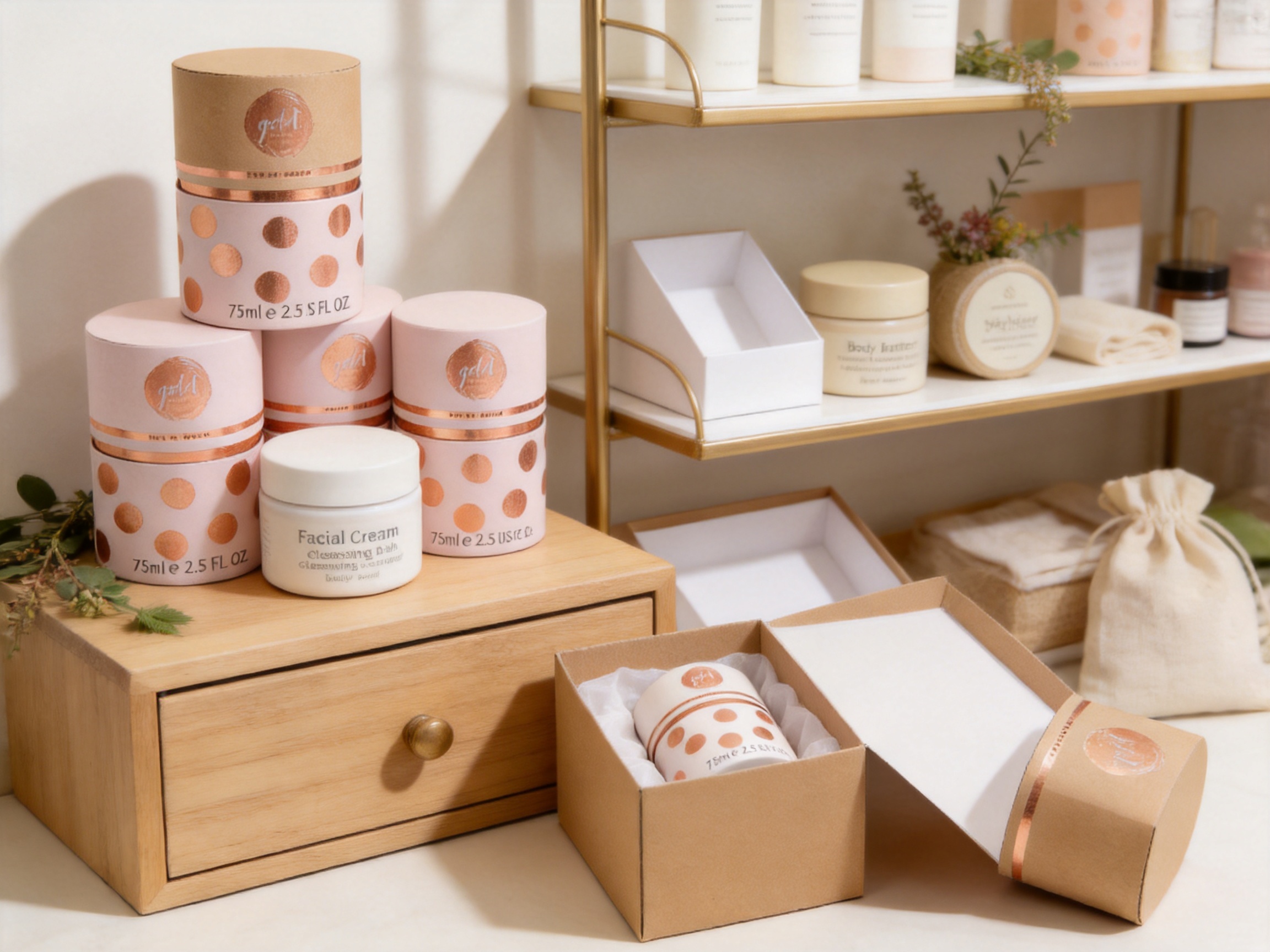
In the skincare market, packaging is more than a protective outer layer. It is the first physical point of contact between a customer and a product, a visible expression of brand quality, and an important part of the overall user experience. Luxury Round Paper Box Cosmetics Packaging for Skincare combines elegant presentation, practical protection, customization flexibility, and environmentally responsible materials in one refined packaging format.
This round paper box is designed for skincare products that require a premium appearance without relying on excessive plastic or complicated structural components. Its paper-based construction can be customized in color, size, printing, surface treatment, labeling, lining, and lid style. As a result, it can support a wide range of cosmetic concepts, including facial creams, moisturizers, serums, masks, balms, body care products, gift sets, and other daily chemical products.
Manufactured by Hangzhou Qunle Packaging Co., Ltd., the packaging is supported by more than two decades of experience in composite cans and paper can production. The company combines material knowledge, customized engineering, printing capability, and modern production equipment to create paper packaging for food, cosmetics, daily chemical products, fast-moving consumer goods, gifts, and related applications.
The following article examines the design, materials, manufacturing process, customization options, environmental advantages, product protection performance, and commercial value of this luxury round paper box for skincare packaging.
Content
- 1 1. The Role of Packaging in the Modern Skincare Market
- 2 2. Product Overview and Structural Features
- 3 3. Advantages of Round Paper Packaging Over Conventional Alternatives
- 4 4. Materials and Surface Finishing
- 5 5. Manufacturing Process and Quality-Oriented Production
- 6 6. Manufacturing Strength and Industry Experience
- 7 7. Applications in Skincare and Cosmetics
- 8 8. Branding and Design Opportunities
- 9 9. Protection, Handling, and Logistics
- 10 10. Sustainability Considerations
- 11 11. Why the Product Is Competitive
- 12 12. Customization and Ordering Process
- 13 13. Quality Control Points for Buyers
- 14 14. Frequently Asked Questions
- 14.1 Q1: What type of skincare products can use this round paper box?
- 14.2 Q2: Is the packaging made from paper?
- 14.3 Q3: Can the color and size be customized?
- 14.4 Q4: What printing method is available?
- 14.5 Q5: Is the package suitable for luxury cosmetics?
- 14.6 Q6: Can the paper box directly contain skincare formulas?
- 14.7 Q7: Is the packaging environmentally friendly?
- 14.8 Q8: Can the packaging be used for gift sets?
- 14.9 Q9: What makes the manufacturer suitable for this product?
- 14.10 Q10: Can buyers request samples before placing a large order?
- 14.11 Q11: Can the package support different product variants?
- 14.12 Q12: What information should be provided when requesting a quotation?
- 15 15. Conclusion
- 16 References
- 17 Product: Luxury Round Paper Box Cosmetics Packaging for Skincare
1. The Role of Packaging in the Modern Skincare Market
Skincare consumers increasingly evaluate products through both performance and presentation. A cream, lotion, serum, or treatment product may be judged before the container is opened. Shape, texture, color, printing quality, lid construction, and overall visual balance can influence whether a product appears effective, trustworthy, natural, luxurious, or suitable for gifting.
Round paper packaging offers a distinctive alternative to common rectangular cartons, plastic jars, and standard laminated boxes. Its cylindrical or rounded form creates a soft visual impression that aligns well with skincare, beauty, wellness, and personal care products. The absence of sharp corners can also make the package more comfortable to hold and more visually harmonious when displayed on a retail shelf, bathroom counter, vanity, or gift table.
For premium skincare brands, the package must communicate several qualities at the same time. It should look attractive, remain structurally stable, provide space for product information, support efficient storage, and help the brand demonstrate responsible material choices. Luxury Round Paper Box Cosmetics Packaging for Skincare addresses these needs through a combination of kraft paper construction, white paper lining, offset printing, matte lamination, and customizable dimensions.
Packaging also contributes to product differentiation. In a crowded cosmetic market, many products compete within similar price ranges and categories. A carefully designed paper tube or round paper box can give a product a recognizable silhouette. When this silhouette is combined with a refined surface finish and a coordinated label, the package becomes part of the brand identity rather than merely a disposable container.
2. Product Overview and Structural Features
Luxury Round Paper Box Cosmetics Packaging for Skincare is a customized paper container developed for skincare packaging applications. Its primary material is paper, with kraft paper used as an important structural component. The interior may include a white paper lining, while the outside can be enhanced through offset printing and matte lamination.
The product is suitable for brands that want a round, premium-looking package with a strong paper-based identity. Its design can be adapted according to the size and weight of the intended skincare product. Customization may include the external diameter, height, internal capacity, lid dimensions, artwork, color scheme, label format, lining arrangement, and finishing details.
The package includes a paper lid that can be engineered to provide a close fit around the body. Depending on the final design, the lid may support a clean visual transition between the top and the side wall. A properly developed lid helps maintain the product’s presentation quality during transportation, storage, retail display, and consumer handling.
The white paper lining creates a clean interior appearance. It can also help create contrast between the exterior artwork and the inner package surface. For brands using light-colored, pastel, botanical, minimalist, or clinical design themes, a white lining may reinforce the intended visual language.
The product is listed under HS Code 4819500000 and is manufactured as a customized paper packaging solution. Because the design is not limited to one fixed size, it can serve different skincare formats and product quantities. This flexibility is valuable for companies managing multiple product lines or planning seasonal packaging editions.
| Product Element | Specification or Option | Value for Skincare Brands |
|---|---|---|
| Primary material | Paper and kraft paper | Creates a natural, premium, and paper-based presentation |
| Product shape | Round or cylindrical box structure | Provides visual differentiation and comfortable handling |
| Interior | White paper lining | Offers a clean appearance and supports coordinated design |
| Surface treatment | Offset printing and matte lamination | Improves artwork presentation and gives a refined tactile finish |
| Lid | Paper lid | Maintains an integrated, all-paper appearance |
| Color | Customized | Allows alignment with brand guidelines and product positioning |
| Size | Customized | Supports different skincare products and fill volumes |
| Order type | Custom order accepted | Suitable for private-label, branded, seasonal, and promotional programs |
| Environmental profile | Biodegradable and recyclable paper-based design | Helps support sustainability objectives and consumer expectations |
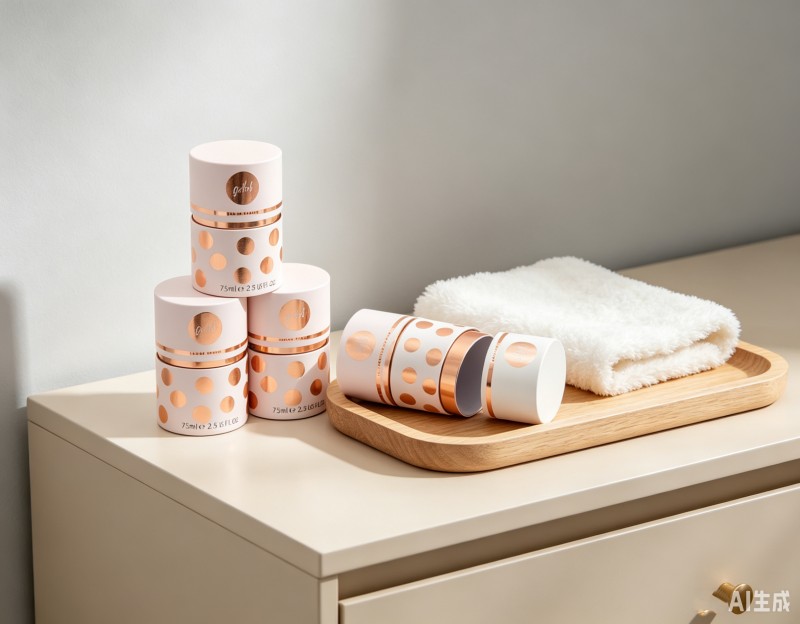
Luxury Round Paper Box Cosmetics Packaging for Skincare
3. Advantages of Round Paper Packaging Over Conventional Alternatives
3.1 Distinctive visual identity
Many cosmetic products use familiar rectangular folding cartons or standard plastic containers. Although these formats can be practical, they may not provide enough visual distinction in a crowded retail environment. A round paper box creates a different silhouette and can make a skincare product easier to recognize.
The circular profile communicates softness, balance, and approachability. These qualities are often associated with skincare and wellness products. A rounded package may be especially effective for facial creams, body butters, masks, natural balms, aromatherapy products, and gift collections.
3.2 Premium appearance without excessive material complexity
Luxury packaging does not always require heavy rigid board, multiple plastic components, metal accessories, or elaborate inserts. A well-engineered paper container can achieve a high-end appearance through proportion, printing, color control, surface treatment, and precise assembly.
Offset printing makes it possible to reproduce detailed graphics, logos, typography, botanical illustrations, patterns, and product information with a polished appearance. Matte lamination adds a smooth, low-reflection surface that can make the package feel more sophisticated and contemporary than a basic uncoated paper container.
The combination of a round structure and matte surface is particularly suitable for premium skincare concepts. It can support visual themes such as clean beauty, herbal care, dermatological care, spa products, organic-inspired products, and minimalist luxury.
3.3 Paper-based sustainability advantages
Environmental responsibility has become a major consideration in cosmetics packaging. Consumers, retailers, and brand owners are paying closer attention to material choices, recyclability, waste reduction, and the overall lifecycle of packaging. Paper-based packaging can help brands reduce dependence on conventional plastic formats and communicate a more responsible product philosophy.
The product is described as biodegradable and recyclable. Paper and kraft paper are renewable, widely understood packaging materials, and they can fit into sustainability strategies when sourced, printed, laminated, used, and disposed of appropriately. The actual environmental performance depends on the complete package design, coatings, inks, adhesives, local recycling infrastructure, and disposal conditions, but a paper-centered structure provides a strong starting point.
Compared with packaging that combines several inseparable materials, a paper-based round box may offer a simpler material story. This can make it easier for brands to explain their packaging choices to customers. It also supports marketing messages centered on conscious consumption, responsible design, and reduced reliance on plastic.
3.4 Customization for different product lines
Skincare brands rarely sell only one item. They may offer cleansers, toners, creams, masks, exfoliators, serums, body products, travel kits, and gift sets. A customizable paper box allows a unified structural concept to be adapted across a complete product family.
Different dimensions can be selected for different fill volumes. Colors can be adjusted to distinguish product variants. Labels can identify fragrance, skin type, ingredient theme, or product function. The same basic round format can therefore support a coordinated collection while preserving individual product differentiation.
3.5 Enhanced gifting potential
Skincare products are frequently purchased as gifts, particularly during holidays, birthdays, anniversaries, seasonal campaigns, and promotional events. A round paper box can improve perceived gift value by making the product feel more carefully curated.
The packaging may be used for single products or as part of a larger gift presentation. Its premium surface and customized artwork can help a modestly sized skincare product appear more complete and memorable. When the design includes coordinated colors, labels, and finishing, the package can contribute significantly to the unboxing experience.
4. Materials and Surface Finishing
4.1 Kraft paper construction
Kraft paper is widely valued for its strength, natural appearance, and recognizable environmental character. In a round paper box, kraft paper can serve as a structural layer that contributes to the rigidity and durability of the package. It also provides a suitable base for natural, earthy, or sustainability-oriented visual themes.
Depending on the selected design, kraft paper may be presented directly as part of the visual identity or covered with printed paper that carries the brand artwork. Both approaches are possible within a customized packaging program. A visible kraft appearance can emphasize authenticity and simplicity, while a fully printed exterior can support more detailed luxury graphics.
4.2 White paper lining
The white paper lining gives the interior a clean and orderly appearance. It may be particularly useful when the packaging is opened by the consumer and the inside of the container forms part of the unboxing experience.
A light interior can also improve the presentation of accessories, instruction cards, sachets, or secondary components placed inside the package. For brands using white, cream, pale pink, light green, or soft blue design systems, the lining can provide a consistent transition between the outside and inside surfaces.
4.3 Offset printing
Offset printing is appropriate for packaging that requires detailed artwork, consistent color reproduction, fine text, and professional presentation. It can support logos, ingredient information, usage instructions, product names, decorative patterns, and regulatory details.
For skincare packaging, print quality is important because consumers often associate sharp graphics and accurate color with manufacturing competence. A cleanly printed package can help communicate precision and product reliability. Offset printing is also suitable for larger production quantities where repeatability and visual consistency are important.
4.4 Matte lamination
Matte lamination creates a subdued surface with reduced glare. This finish can make colors appear more controlled and can give the package a soft, smooth tactile quality. It is well suited to premium skincare designs that aim for elegance rather than high gloss.
Matte surfaces can also support minimalist layouts. A simple logo, restrained typography, and one or two carefully selected colors may appear especially refined when applied to a low-reflection surface. The finish can help prevent the package from looking overly commercial while preserving a professional level of presentation.
Surface treatment should be selected according to the intended brand positioning and practical requirements. The final combination of paper, ink, lamination, adhesive, and structural components should be reviewed during sample development to ensure that the appearance and handling performance meet the project’s expectations.
5. Manufacturing Process and Quality-Oriented Production
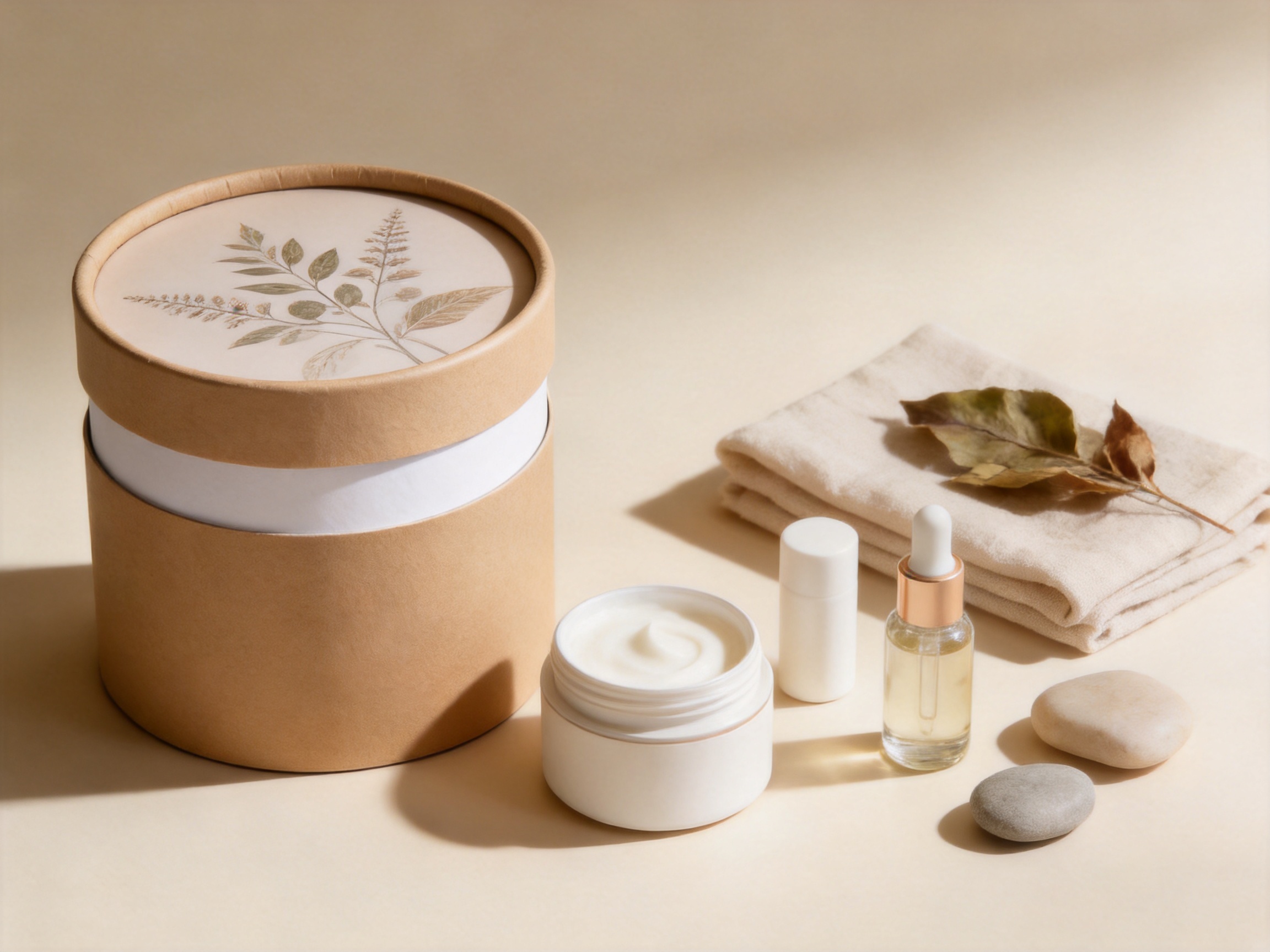
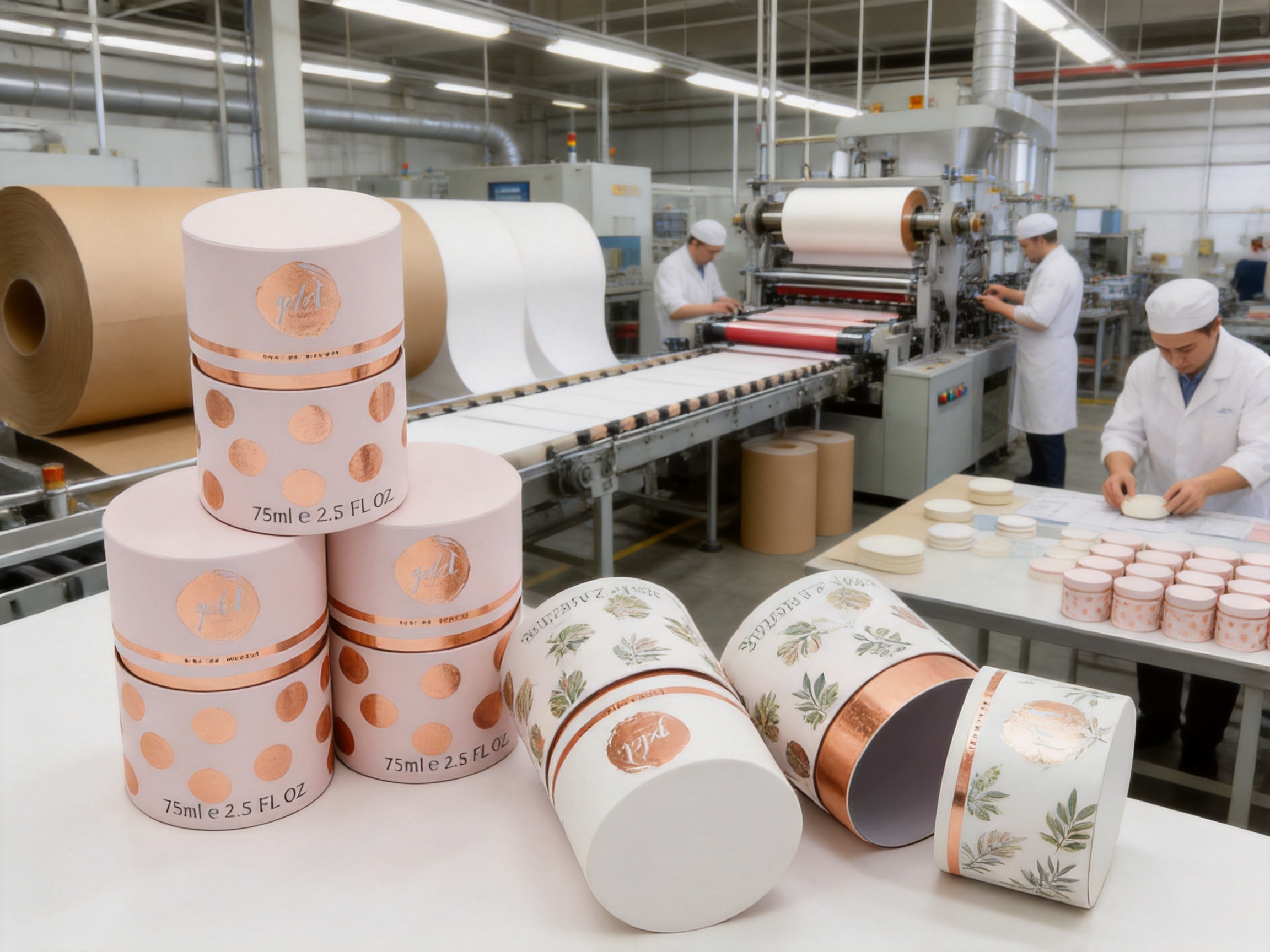
The performance of a customized paper box depends on more than the visible design. It also depends on the accuracy of paper preparation, forming, printing, lamination, cutting, assembly, and inspection. Hangzhou Qunle Packaging Co., Ltd. has been engaged in the composite can and paper can industry for more than 20 years, giving the company extensive experience in paper-based container production.
5.1 Design consultation and technical development
Production begins with an understanding of the customer’s product, target market, dimensions, artwork, required quantity, and intended use. Skincare products can vary considerably in size, shape, weight, and filling method, so packaging development should begin with accurate specifications.
The technical team can evaluate the desired diameter, height, wall structure, lid fit, lining requirements, label placement, printing area, and surface treatment. This stage helps identify potential problems before mass production, including insufficient internal clearance, difficult lid removal, weak edges, unsuitable proportions, or artwork that does not align correctly on the curved surface.
Because the product is customized, design development can be adapted to the brand’s packaging objectives. A company may request a compact round box for a small skincare balm, a taller container for a set of products, or a coordinated range of sizes for multiple items.
5.2 Paper selection and preparation
Paper selection affects structural strength, appearance, print quality, and environmental positioning. Kraft paper may be selected for its strength and natural appearance, while white paper can be used for the lining or printed exterior. The paper must be prepared in a way that supports stable forming and reliable adhesion.
Material preparation includes checking paper condition, thickness, moisture balance, surface suitability, and compatibility with printing and lamination. Consistent material preparation is important because variations in paper can influence roundness, edge quality, color appearance, and final assembly.
5.3 Printing and artwork application
Once the artwork has been approved, the printing stage applies the visual design to the selected paper. Offset printing can reproduce detailed images and typography, making it suitable for premium cosmetic packaging. Production control is needed to maintain consistent color and accurate registration throughout the order.
Skincare artwork often contains a combination of brand identity elements and product information. These may include the product name, skin application, ingredient highlights, usage instructions, volume, manufacturing information, recycling symbols, and decorative graphics. The printing layout should be carefully planned so that all important information remains legible after the paper is formed into a round package.
5.4 Lamination and surface protection
After printing, matte lamination may be applied to provide the intended surface appearance and additional protection for the printed layer. Lamination must be carried out evenly to reduce the risk of bubbles, wrinkles, peeling, or uneven texture.
Good lamination quality is especially important for cosmetics packaging because products may be handled frequently in stores, warehouses, salons, spas, and homes. A stable surface helps the package maintain its presentation quality during normal distribution and use.
5.5 Forming the round body
The printed and prepared paper components are formed into the round body of the box. Forming accuracy influences the cylinder’s symmetry, vertical alignment, wall stability, and compatibility with the lid. The body must remain sufficiently rigid to protect the contents and preserve the package’s appearance.
Modern production equipment can improve consistency in forming and help support repeatable dimensions across larger orders. The company introduced a high-speed composite can production line from Europe in 2015. This investment strengthened its manufacturing capacity and supported a more efficient approach to producing composite cans and paper containers.
5.6 Interior lining and lid assembly
The white paper lining is applied according to the approved structure. Careful placement helps create an even interior and reduces visible irregularities. The paper lid is then produced and matched to the body. Lid fit is a critical part of the consumer experience: it should be secure enough for handling while remaining practical to open and close.
For luxury skincare packaging, the lid should also align visually with the body. Uneven gaps, poor edge alignment, or inconsistent height can reduce the perceived quality of the entire package. Assembly inspection therefore forms an important part of the manufacturing process.
5.7 Quality inspection
Quality inspection may cover dimensions, shape, print accuracy, color consistency, surface finish, adhesion, edge condition, lid fit, structural strength, and cleanliness. The exact inspection plan can be adjusted according to the customer’s requirements and the intended application.
A quality-oriented process helps reduce the risk of receiving packaging that cannot be filled efficiently or that fails to meet retail presentation expectations. It also supports consistency when the same package is produced for repeated orders or several product variations.
6. Manufacturing Strength and Industry Experience
Hangzhou Qunle Packaging Co., Ltd. has more than 20 years of experience in composite can and paper can production. This long-term specialization is significant because paper containers require knowledge of material behavior, forming methods, structural design, adhesive use, printing compatibility, and finishing control.
The company is identified as a member of the international Composite Can and Tube Institute, known as CCTI, and is described as the only member of the institute in China’s packaging container industry. Industry participation can provide exposure to technical developments, production standards, and international packaging trends.
The company’s packaging business covers food, daily chemical products, fast-moving consumer goods, and other applications. This cross-sector experience can benefit skincare packaging because many of the same manufacturing principles apply across industries: dimensional stability, reliable closure, clean production, strong graphics, efficient forming, and consistent quality.
The company was also the first enterprise in China to pass the QS certificate for producing food packaging containers, according to the supplied company information. Experience with food packaging can indicate familiarity with hygiene-related production requirements and controlled manufacturing practices, although individual cosmetic projects should still be evaluated against their own specifications and compliance requirements.
Qunle Packaging has built long-term partnerships with well-known companies and brands in food, tea, coffee, confectionery, beverages, and nutrition. This customer experience demonstrates the ability to handle different packaging applications and visual requirements. It also suggests that the manufacturer understands the importance of repeatability, supply coordination, and delivery performance for commercial packaging programs.
More than 10 patented technologies are associated with the company’s packaging development activities. Patented technologies do not automatically define the performance of every product, but they indicate a continuing focus on research, process improvement, and product innovation.
The combination of specialized industry experience, modern equipment, technical development, and broad application knowledge gives the manufacturer a strong foundation for customized round skincare packaging. Buyers can benefit from working with a supplier that understands both the visual and structural sides of paper packaging.
7. Applications in Skincare and Cosmetics
7.1 Facial creams and moisturizers
Round paper packaging can be used for facial creams, moisturizing creams, night creams, hand creams, and other products that require a compact yet premium presentation. The round form can provide a natural fit for cream-oriented product concepts and can be adapted to different capacities.
7.2 Solid balms and treatment products
Solid balms, cleansing balms, massage products, and concentrated treatment products may benefit from a round box format. The package can be used as an outer container or as part of a secondary packaging system, depending on the filling and barrier requirements of the specific formula.
7.3 Skincare gift sets
A coordinated group of round paper boxes can be used for gift collections. Different diameters or heights can distinguish individual products while maintaining a consistent family appearance. Customized labels can identify product types, fragrances, skin concerns, or usage stages.
7.4 Spa and wellness products
Spa products, aromatherapy-inspired skincare, botanical treatments, and wellness items often use natural textures and muted colors. Kraft paper, matte lamination, and round construction can support these themes and help create a calm, tactile presentation.
7.5 Seasonal and limited-edition packaging
Because the artwork, color, size, and labeling can be customized, the format is suitable for limited editions and seasonal releases. Holiday graphics, special patterns, promotional messages, and gift-oriented designs can be introduced without changing the fundamental packaging concept.
8. Branding and Design Opportunities
One of the strongest advantages of customized round paper packaging is the ability to create a distinctive visual system. A brand may use the outer surface for a primary logo, product name, ingredient story, illustration, or decorative pattern. The curved structure provides a continuous design area that can be used creatively.
Minimalist brands may choose a single-color background with a centered logo and small supporting text. Botanical brands may use leaves, flowers, seeds, or natural textures. Clinical skincare brands may prefer precise typography, clean lines, and restrained color combinations. Luxury brands may combine a dark matte surface with metallic-style artwork, although the exact printing and finishing method should be confirmed during technical development.
The lid also provides a valuable branding area. A symbol, monogram, product name, or simple pattern on the top can improve recognition when several packages are displayed together. The side wall can carry detailed product information while the top remains visually clean.
Labels made from art paper can be used as a separate branding element. A label may contrast with the body color, provide a tactile feature, or make it easier to distinguish different product variants. It can also offer flexibility for brands that want to change product information without redesigning the entire package, subject to production and compliance considerations.
Packaging designers should consider how artwork behaves around a curved surface. Important text should not be placed too close to seams or edges. Repeating patterns should be aligned carefully. The relationship between the lid and body should be reviewed in a physical sample, since a design that looks correct in a flat digital file may appear different after forming.
9. Protection, Handling, and Logistics
A skincare package must protect the product during filling, warehousing, transportation, retail handling, and consumer use. The round paper box provides a structured outer package that can help shield the product from external contact and minor handling pressure.
The exact level of protection depends on the final wall thickness, internal construction, product weight, closure design, and shipping configuration. For products that are sensitive to moisture, oxygen, light, or contamination, the paper box should be used in combination with an appropriate primary container or inner barrier system. Packaging selection must always reflect the formula’s technical requirements.
The round shape can support efficient grouping in certain shipping and display configurations. It may also be easy to pick up, rotate, and inspect. Smooth matte lamination can improve tactile quality while reducing the visual impact of fingerprints and reflections compared with some glossy surfaces.
Before mass production, buyers should evaluate filled samples through practical tests. These may include lid fit testing, stacking checks, vibration testing, drop testing, compression testing, moisture exposure assessment, and compatibility evaluation with the selected inner product container. Testing helps confirm that the packaging performs effectively in the actual supply chain.
10. Sustainability Considerations
The product’s paper-based structure supports a more sustainable packaging direction for skincare brands. Kraft paper and other paper materials are familiar to consumers and can make environmental communication more straightforward. The package is described as biodegradable and recyclable, which may support brands seeking alternatives to conventional plastic-heavy packaging.
However, sustainable packaging should be considered as a complete system rather than a single material claim. The type of lamination, adhesive, ink, label, inner container, and closure can influence recyclability and biodegradability. Brands should request detailed material information and confirm whether the final package meets the requirements of their target markets.
Material efficiency is another important consideration. A package should be designed with appropriate dimensions so that it does not use unnecessary paper or create excessive empty space. Correct sizing can reduce shipping volume, improve shelf efficiency, and lower material consumption across large production quantities.
Responsible disposal instructions may also help consumers. If the package contains multiple components, clear communication can explain how each part should be handled. Brands can use the surface area of the paper box to include recycling information, care instructions, or a short explanation of the material choices.
For companies with formal sustainability targets, the manufacturer can be asked to provide additional information about paper sources, coating composition, inks, adhesives, production waste management, and available certifications. Such documentation helps turn a general sustainability intention into a measurable packaging strategy.
11. Why the Product Is Competitive
The competitive value of Luxury Round Paper Box Cosmetics Packaging for Skincare comes from the balance of appearance, customization, material positioning, and manufacturing expertise. It is not simply a standard paper container with a printed surface. It is a packaging platform that can be adjusted to match different skincare products and brand concepts.
Compared with generic packaging, the product offers a more distinctive form and a wider opportunity for brand storytelling. Compared with many plastic formats, it provides a paper-centered alternative with a more natural tactile character. Compared with highly decorative rigid boxes, it may offer a simpler structure that remains premium while supporting efficient customization.
Another advantage is the manufacturer’s specialization in paper cans and composite can production. A company focused on paper containers is better positioned to understand the technical challenges of cylindrical forming, lid fit, surface finishing, and paper material control than a supplier that treats paper packaging as a secondary product category.
The company’s long operating history, modern European production line, technical development activities, patents, and experience with international customers further support its ability to manage commercial packaging projects. These strengths are especially important for skincare companies that need consistent quality across repeat orders.
12. Customization and Ordering Process
12.1 Define the product requirements
The buyer should first provide information about the skincare product, including product type, approximate dimensions, weight, filling method, primary container, expected quantity, and distribution environment. This information allows the packaging supplier to recommend a suitable structure.
12.2 Select the size and structure
Diameter, height, wall construction, lid style, interior lining, and optional labels should be discussed during the technical stage. The correct dimensions help avoid unnecessary empty space and ensure a balanced visual proportion.
12.3 Submit artwork and brand guidelines
Artwork should be supplied in an appropriate production format with clearly defined colors, fonts, logos, and placement requirements. Brand guidelines can help the factory maintain consistency across multiple product variants.
12.4 Confirm finishing details
The buyer should confirm whether the exterior will use natural kraft paper, printed paper, matte lamination, labels, special graphics, or other available treatments. A physical sample is recommended before mass production.
12.5 Review testing and approval samples
Samples allow the buyer to check the appearance, structural stability, lid fit, printing quality, interior cleanliness, and compatibility with the intended product. Any changes should be recorded and approved before production begins.
12.6 Plan production and delivery
Production schedules should account for material preparation, printing, lamination, forming, assembly, quality inspection, packing, and transportation. Early communication is particularly important for seasonal programs, product launches, and promotional campaigns.
13. Quality Control Points for Buyers
When assessing customized skincare paper packaging, buyers should examine more than the artwork. The body should be round and stable, with consistent dimensions from one unit to another. The surface should be free from visible wrinkles, bubbles, scratches, stains, or uneven lamination.
Printing should be checked for color consistency, sharpness, registration, and text legibility. The artwork should remain correctly positioned after forming, especially around seams, edges, and the lid transition area.
The lid should fit securely and maintain a consistent appearance. It should not be excessively loose, difficult to remove, or visibly misaligned. The interior lining should be clean and properly attached. Edges should not present loose paper fibers or obvious damage.
For larger orders, an agreed inspection standard can define acceptable limits for cosmetic defects, dimensional variation, print variation, and assembly issues. Clear quality criteria help both the buyer and manufacturer maintain consistent expectations.
14. Frequently Asked Questions
Q1: What type of skincare products can use this round paper box?
The packaging can be customized for facial creams, moisturizers, balms, masks, body care products, gift sets, wellness items, and other skincare-related products. The correct structure depends on the product’s dimensions, weight, filling method, and protection requirements.
Q2: Is the packaging made from paper?
Yes. The product is described as a paper-based package using paper and kraft paper materials. It may include a white paper lining and a paper lid. The final material combination should be confirmed according to the approved specification.
Q3: Can the color and size be customized?
Yes. Color and size are customizable. Brands can also discuss artwork, printing, label design, lining, lid dimensions, and surface finishing to create packaging that matches their product identity.
Q4: What printing method is available?
The listed surface treatment includes offset printing combined with matte lamination. This combination is suitable for detailed graphics, logos, product information, and a premium low-gloss finish.
Q5: Is the package suitable for luxury cosmetics?
Yes. The round structure, customized artwork, matte surface, paper lid, and clean interior can create a premium appearance suitable for luxury skincare and cosmetic products. The final luxury effect depends on the selected dimensions, paper, color, graphics, and finishing details.
Q6: Can the paper box directly contain skincare formulas?
Suitability depends on the formula and the required barrier performance. In many applications, the paper box functions as secondary packaging around a primary jar, bottle, pouch, or inner container. Brands should conduct compatibility and protection testing before using the package for direct product contact.
Q7: Is the packaging environmentally friendly?
The product is described as biodegradable and recyclable and uses paper-based materials. Actual environmental performance depends on the complete package, including lamination, adhesives, labels, inks, inner containers, local recycling systems, and disposal conditions.
Q8: Can the packaging be used for gift sets?
Yes. The round paper box is suitable for individual products and coordinated gift collections. Multiple sizes, colors, labels, and printed designs can be developed to create a consistent gift-set appearance.
Q9: What makes the manufacturer suitable for this product?
The manufacturer has more than 20 years of experience in composite cans and paper cans, operates a high-speed European composite can production line introduced in 2015, participates in the Composite Can and Tube Institute, and has developed more than 10 patented technologies. Its experience covers food, daily chemical products, fast-moving consumer goods, and other packaging applications.
Q10: Can buyers request samples before placing a large order?
Sample development should be discussed as part of the custom order process. A sample is useful for checking size, appearance, printing, surface treatment, lid fit, lining, and compatibility with the intended skincare product.
Q11: Can the package support different product variants?
Yes. The structure can be adapted through different sizes, colors, labels, and artwork. This allows a brand to create a coordinated family for different skin types, fragrances, formulas, or product functions.
Q12: What information should be provided when requesting a quotation?
Useful information includes the product type, desired dimensions, approximate quantity, artwork requirements, paper preference, printing method, surface treatment, lid style, lining, delivery destination, and whether the package will be used as primary or secondary packaging.
15. Conclusion
Luxury Round Paper Box Cosmetics Packaging for Skincare provides a strong combination of distinctive design, customization, tactile quality, and paper-based sustainability. Its round structure helps skincare products stand out from conventional rectangular and plastic packaging, while kraft paper, white lining, offset printing, matte lamination, and a paper lid create a refined and coordinated presentation.
The package is suitable for a broad range of skincare applications, from creams and balms to gift sets, spa products, seasonal collections, and wellness-inspired cosmetics. Its flexible size and color options allow brands to develop a consistent packaging family without losing product-level differentiation.
Its commercial strength is reinforced by the manufacturer’s more than 20 years of experience in composite can and paper can production. Advanced equipment, international industry participation, patented technologies, and broad packaging experience support the company’s ability to develop customized paper containers for global customers.
For brands seeking packaging that combines premium presentation with a more responsible material direction, this round paper box offers a practical and visually distinctive solution. Careful specification, sample approval, product compatibility testing, and clear quality requirements will help ensure that the final packaging meets both aesthetic and functional expectations.
References
1. Product specification for Luxury Round Paper Box Cosmetics Packaging for Skincare, including material, printing, lining, lid, customization, and environmental characteristics.
2. Company information concerning Hangzhou Qunle Packaging Co., Ltd., its composite can and paper can experience, production capabilities, industry participation, and packaging applications.
3. General packaging design principles for cosmetics and skincare products, including brand presentation, structural protection, labeling, and consumer experience.
4. General sustainability considerations for paper-based packaging, including recyclability, biodegradability, coatings, adhesives, inks, and end-of-life handling.
5. General quality-control practices for customized paper containers, including dimensional inspection, printing inspection, surface evaluation, lid-fit testing, and sample approval.
