 English
 Español


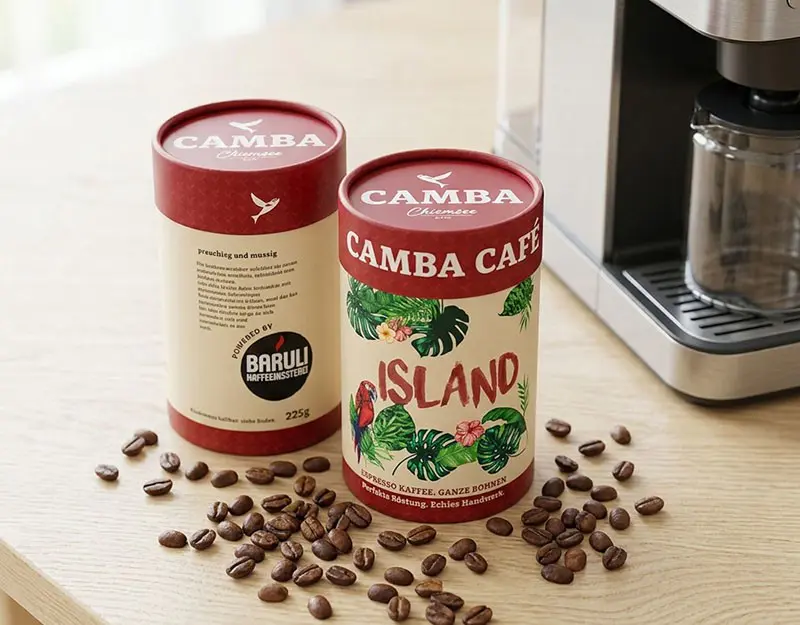
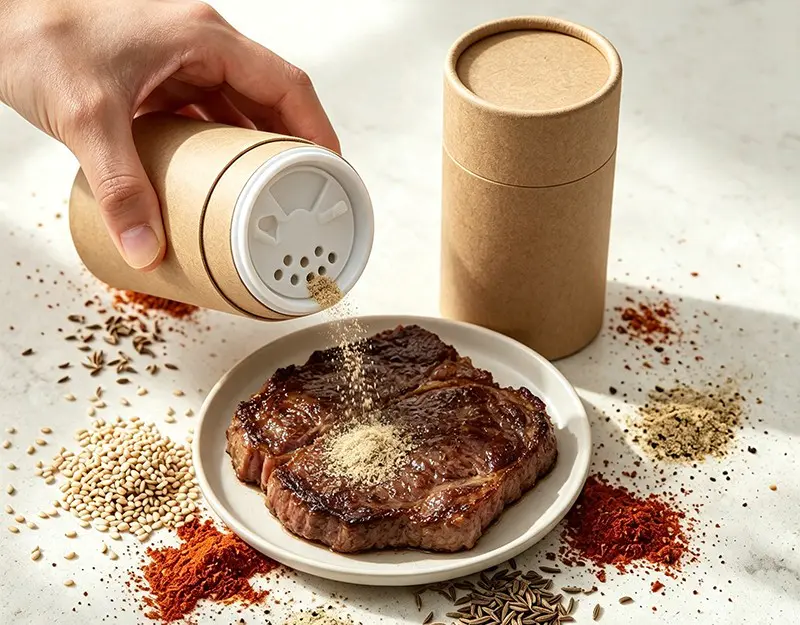

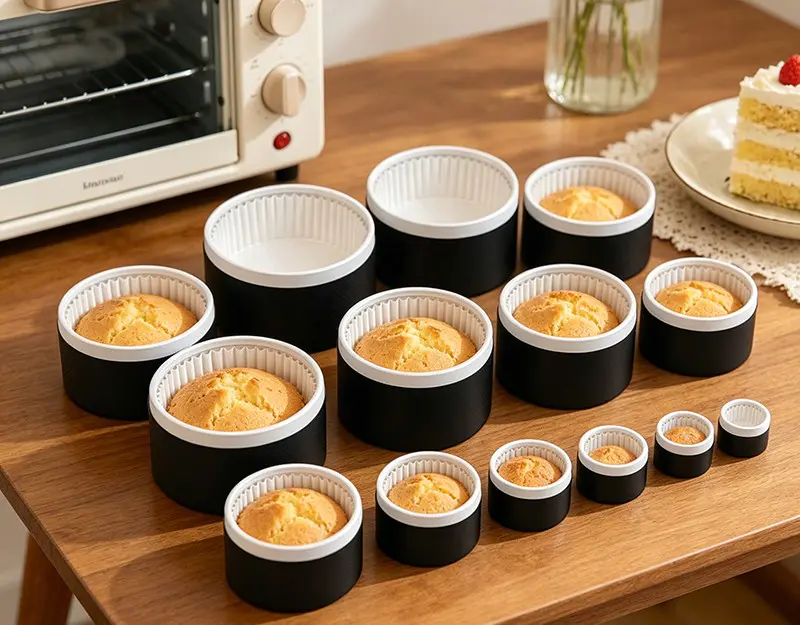

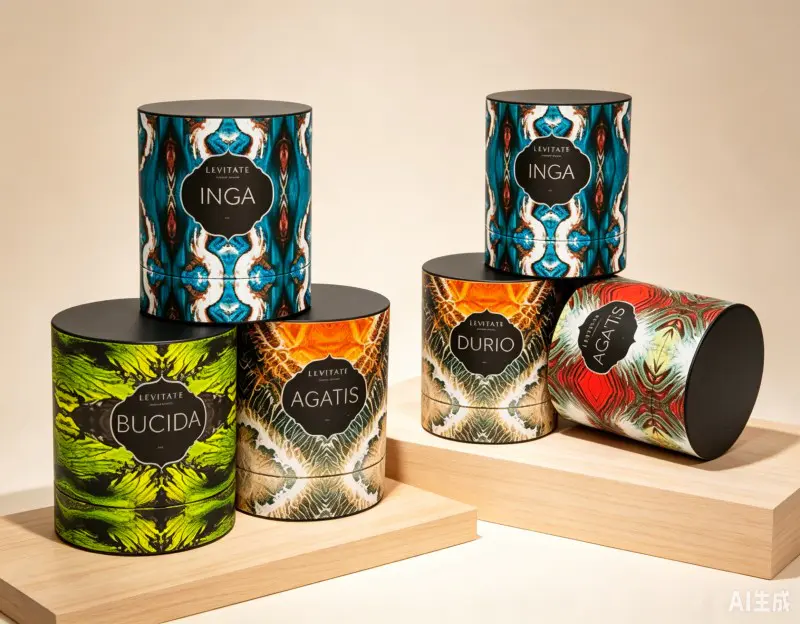
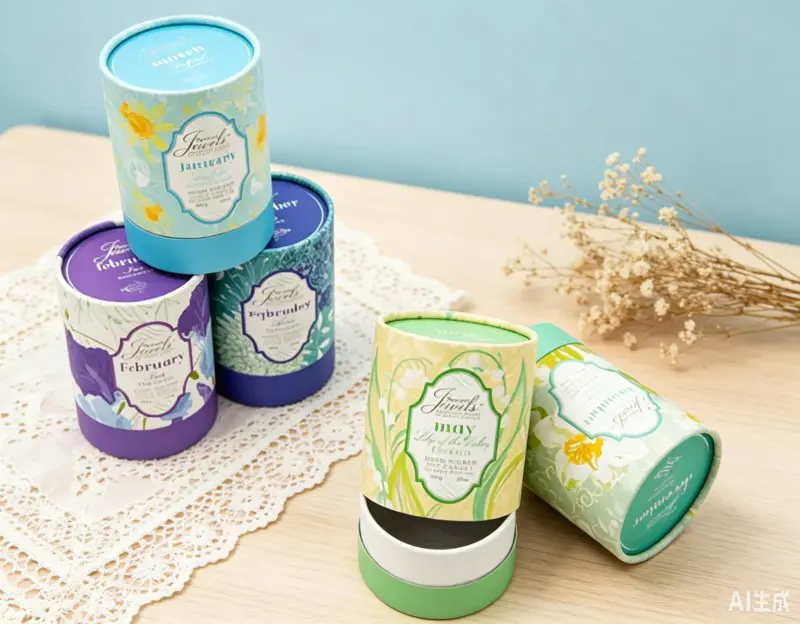
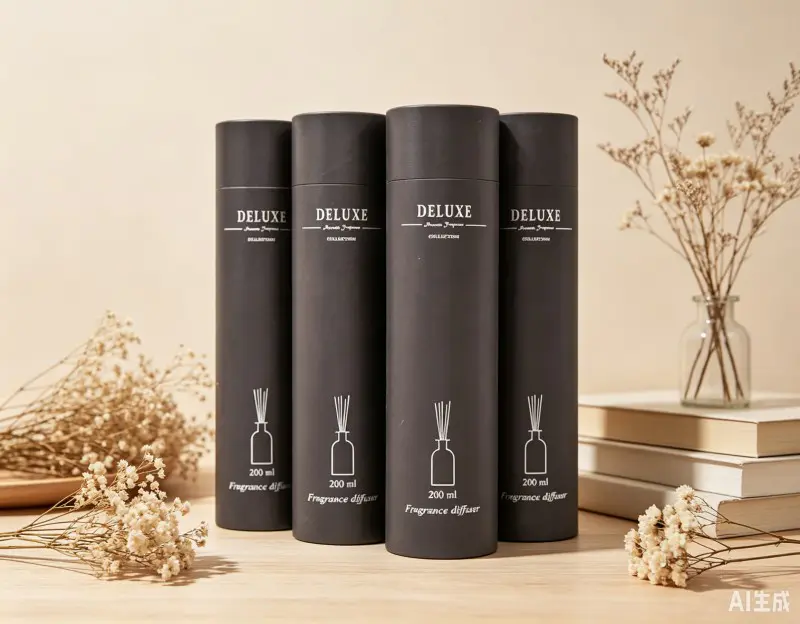
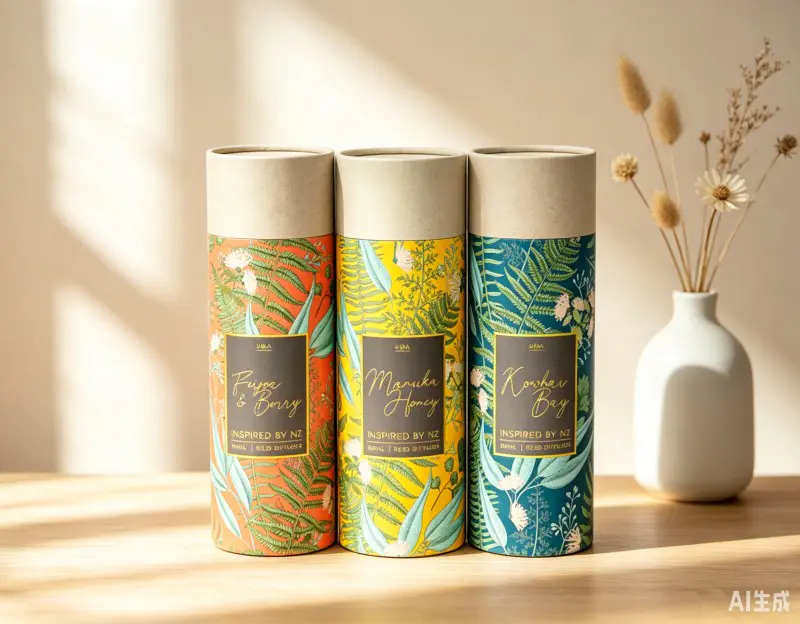

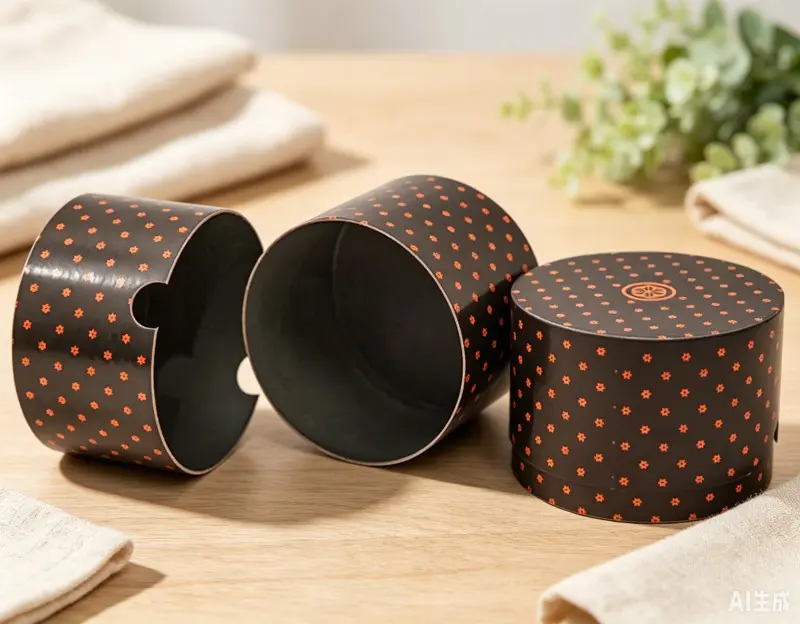


As one of the top China cardboard tube packaging manufacturers and paper tube packaging suppliers, we devote all of our efforts to research and launch more high quality packaging products to global market.

Packaging is more than an outer layer around a product. For nutrition products, especially collagen powders, supplements, and other dry formulations, the package must protect product quality, communicate value, support convenient use, and withstand the demands of transport, storage, and retail display. Paper tin can food packaging containers with embedded pull-tabs are designed to address these requirements through a practical combination of paper-based construction, airtight performance, customized printing, and user-friendly opening technology.
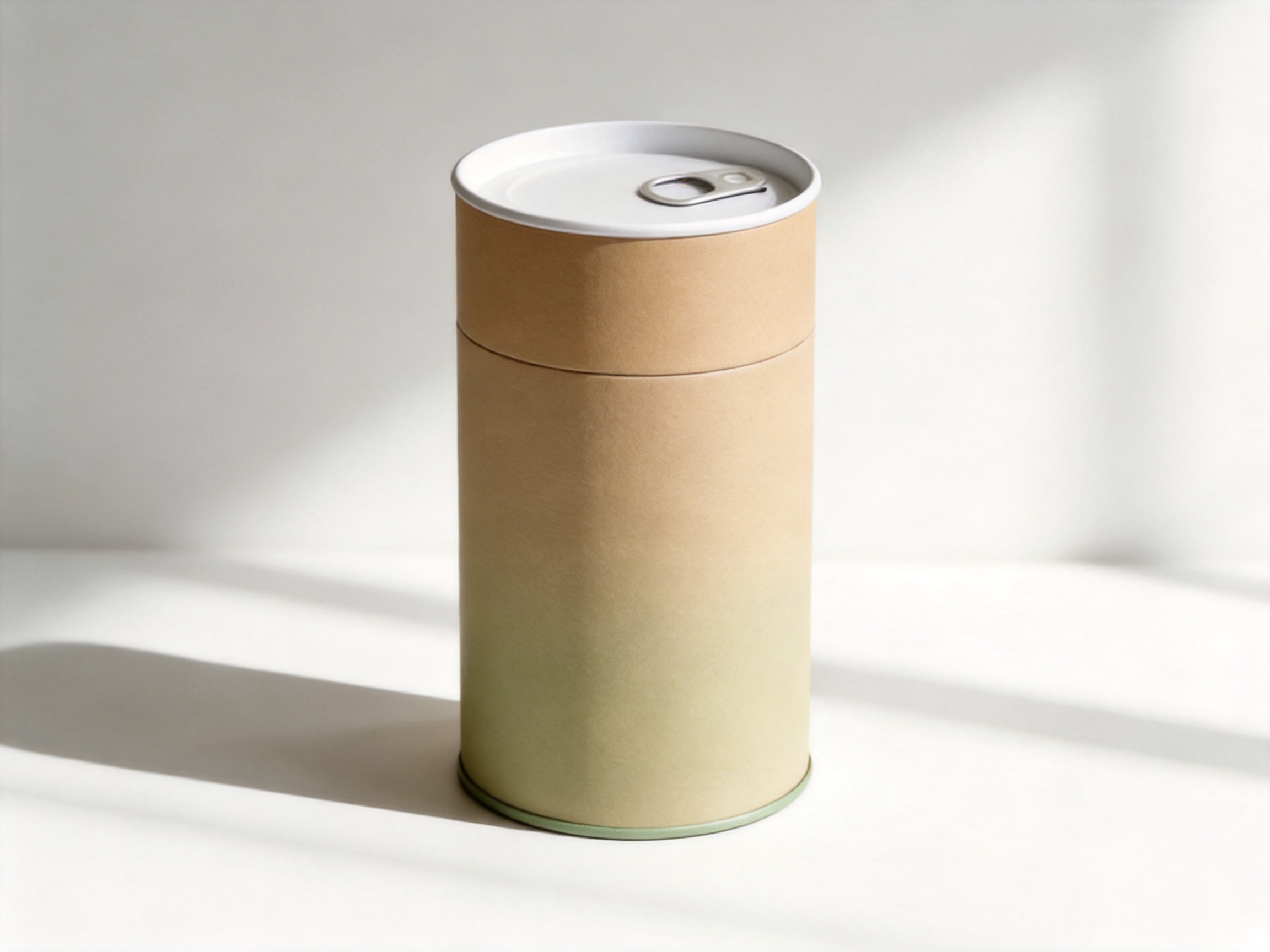
This cylindrical container is developed for industrial applications such as collagen packaging and can also be adapted for protein powders, dietary supplements, powdered beverages, functional foods, coffee, tea, snacks, and other dry products. Its stated internal dimensions of approximately 73 mm in diameter and 130 mm in height provide a compact but useful format for products that need a stable, shelf-ready container without the weight and environmental concerns commonly associated with conventional rigid packaging.
The container uses a one-piece airtight paper can construction made from coated paper and kraft paper, with a white paper lining on the inside. An embedded pull-tab provides a familiar opening method while keeping the top surface clean and integrated with the overall package design. The exterior can be printed in CMYK and finished with a matte treatment, allowing brands to create a distinctive visual identity while maintaining a refined, tactile appearance.
Produced by Hangzhou Qunle Packaging Co., Ltd., the container reflects more than two decades of experience in composite cans and paper can manufacturing. The company combines paper-converting expertise, specialized production equipment, food-packaging experience, custom manufacturing capabilities, and a product development approach focused on practical performance. These factors help distinguish the container from ordinary paper tubes, basic cardboard boxes, and metal or plastic alternatives.
Content
- 1 Product Overview
- 2 Why the Format Suits Nutrition and Supplement Products
- 3 Embedded Pull-Tab Convenience
- 4 Paper-Based Construction and Material Benefits
- 5 Airtight Construction for Product Protection
- 6 Printing, Matte Finish, and Shelf Appeal
- 7 Advantages Over Conventional Packaging Alternatives
- 8 Manufacturing Experience and Technical Strengths
- 9 Customization for Different Product Programs
- 10 Quality Control Considerations
- 11 Efficient Product Development Process
- 12 Logistics and Retail Performance
- 13 Brand Communication Through the Package
- 14 Storage and Handling Recommendations
- 15 Q&A
- 15.1 What products are suitable for this paper can?
- 15.2 What are the approximate dimensions?
- 15.3 Is the container airtight?
- 15.4 What is the purpose of the embedded pull-tab?
- 15.5 Can the artwork and logo be customized?
- 15.6 What finish is available?
- 15.7 Is the container made from recycled or eco-friendly materials?
- 15.8 What is the minimum order quantity?
- 15.9 Can the same container be used for multiple supplement formulas?
- 15.10 How should the package be tested before mass production?
- 15.11 Why choose a paper can instead of a plastic jar?
- 16 Conclusion
- 17 References
- 18 Product: Paper Tin Can Food Packaging Containers with Embedded Pull-tab
Product Overview
The paper tin can food packaging container is a cylindrical, rigid paper package intended for dry food and nutrition applications. Its structure is engineered to provide shape retention, a dependable barrier environment, and an attractive presentation. Unlike a simple paperboard carton, the cylindrical can offers a more substantial hand feel and better resistance to compression from multiple directions. Unlike a conventional metal can, it can provide a lighter and more paper-forward packaging experience.
The embedded pull-tab is one of the product’s most important functional features. A pull-tab allows the consumer to open the package without searching for a separate tool. When integrated into the lid or closure system, it also preserves a clean appearance and reduces the number of loose components that could be lost during distribution or use. The opening experience can be especially valuable for nutrition products, which are often used at home, at work, during travel, or after exercise.
The product is specified for an internal diameter of approximately 73 mm and a height of approximately 130 mm. These dimensions create a vertical cylindrical format that can be adapted to a range of fill weights depending on product density, filling level, headspace, liner selection, and closure specifications. Final capacity should be confirmed through filling trials because powders and granules can vary considerably in bulk density.
| Product Attribute | Specification or Capability | Practical Benefit |
|---|---|---|
| Primary application | Collagen and nutrition packaging | Suitable for dry powders and supplements |
| Construction | One-piece airtight paper can | Supports product protection and a premium appearance |
| Material options | Coated paper and kraft paper | Balances printability, structure, and sustainability goals |
| Inner lining | White paper lining | Creates a clean internal surface for selected applications |
| Shape | Cylindrical | Provides visual distinction and efficient shelf presentation |
| Approximate dimensions | 73 mm internal diameter by 130 mm height | Offers a compact format for supplements and dry products |
| Opening feature | Embedded pull-tab | Supports convenient and intuitive consumer opening |
| Printing | CMYK custom printing | Enables detailed graphics, product information, and branding |
| Surface treatment | Matte finish | Creates a modern, soft visual effect and reduces glare |
| Customization | Custom logo and custom orders accepted | Supports private-label and brand-specific packaging programs |
| Minimum order quantity | 5,000 units | Accessible for established product launches and growing brands |
Why the Format Suits Nutrition and Supplement Products
Nutrition products require packaging that protects both the product and the customer’s perception of quality. Collagen powders and similar supplements are often positioned as premium, science-oriented, wellness-focused products. Their packaging must therefore communicate cleanliness, reliability, modern design, and responsible material choices. A rigid cylindrical paper can delivers these signals more effectively than a thin flexible pouch or a basic folding carton in many retail environments.
The upright shape is useful for shelf organization. Containers can stand securely and display a broad printed surface toward the consumer. The cylindrical profile also creates a recognizable silhouette that can help a product stand apart from rectangular boxes and standard plastic jars. For brands with multiple flavors, formulas, or dosage strengths, the same container dimensions can support a coordinated product family.
Powdered supplements can be sensitive to moisture, oxygen, contamination, and repeated exposure during use. An airtight construction can help limit the exchange of air and moisture when properly manufactured, sealed, filled, and closed. Packaging performance depends on the complete system, including the paper structure, lining, lid, pull-tab, seam, filling conditions, and storage environment. Nevertheless, the one-piece airtight can format provides an appropriate foundation for dry nutrition products.
The white paper lining contributes to a clean internal appearance and can be selected as part of the overall product-protection system. It may also support more controlled contact between the packaged product and the structural paper layers. For regulated food and supplement applications, the exact lining materials, adhesives, inks, and coatings should be reviewed for suitability with the intended product and market requirements.
Collagen is a particularly suitable application because it is frequently sold as a dry powder in premium wellness channels. Consumers often open and close collagen containers repeatedly, so an intuitive pull-tab and a rigid body can improve the everyday experience. The package can also accommodate clear instructions, serving information, preparation guidance, storage recommendations, and regulatory labeling through customized CMYK printing.
Embedded Pull-Tab Convenience
Opening performance is a major factor in packaging satisfaction. A package may protect the contents effectively, but if it is difficult to open, awkward to reseal, or likely to spill, the consumer experience suffers. The embedded pull-tab is intended to make the initial opening process more straightforward while maintaining the visual integrity of the package.
Because the pull-tab is incorporated into the closure rather than supplied as an independent accessory, it can provide a more integrated appearance. The design avoids the need for a separate opening tool and can be easier to understand than a hidden friction-fit lid. A visible or identifiable tab gives consumers a direct point of interaction and may support tamper-evident communication when combined with an appropriate seal or membrane.
For nutrition products, the opening feature can also help reduce unnecessary handling. Consumers can access the powder quickly without cutting through a carton, tearing a pouch, or using a knife. This is useful in kitchens, offices, gyms, and travel situations where convenience is essential. The package can be designed so that the pull-tab complements a secondary closure, helping the product remain protected after the initial opening.
Actual opening force, tab dimensions, seal strength, and reseal performance should be established during product development. Different formulas and distribution channels may require different specifications. For example, a package intended for e-commerce shipping may need stronger closure retention than one intended for immediate retail purchase. Custom testing allows the pull-tab and can body to be matched to the intended logistics conditions.
Paper-Based Construction and Material Benefits
The container is made primarily from paper materials, including coated paper and kraft paper options. Paper provides a versatile substrate for cylindrical packaging because it can be converted into a rigid body with strong surface-printing potential. Kraft paper can communicate a natural or environmentally conscious positioning, while coated paper can provide a smoother surface for detailed graphics and color consistency.
The stated use of recycled materials and eco-friendly features reflects the growing demand for packaging that supports more responsible material strategies. Paper is renewable in origin when sourced responsibly, and paper-based packages may be easier for consumers to understand as part of a fiber-oriented packaging portfolio. The exact environmental profile depends on the proportion of paper, coatings, liners, adhesives, closures, printing processes, and local recycling infrastructure.
It is important to evaluate sustainability as a complete system rather than relying on a single material claim. A paper can should be assessed for material composition, recyclability, production efficiency, transport weight, product protection, and end-of-life handling. If a barrier layer or composite structure is required for product safety, its influence on recycling should be communicated accurately. Responsible packaging development balances environmental objectives with the need to protect the product and prevent waste caused by spoilage.
Compared with a fully metal container, the paper can can offer a lighter visual and tactile experience and may reduce the amount of metal used in the package. Compared with a rigid plastic jar, it can provide a more differentiated appearance and support a paper-forward sustainability message. Compared with a flexible pouch, it offers greater rigidity, better upright presentation, and a more premium presence on the shelf.
The paper structure also provides opportunities for material optimization. Wall thickness, paper grade, winding configuration, lining choice, closure design, and reinforcement can be considered together. This allows the manufacturer to target the required compression strength and barrier performance without automatically creating an unnecessarily heavy package.
Airtight Construction for Product Protection
The one-piece airtight paper can construction is designed to help protect dry contents from the external environment. For collagen, powdered nutrition, and other low-moisture products, controlling moisture ingress is often important because absorbed moisture can lead to caking, changes in flowability, loss of visual quality, or reduced consumer convenience.
Airtight performance is influenced by every joint and interface in the packaging system. The cylindrical body must be formed consistently, the seams must remain secure, and the lid or pull-tab assembly must fit accurately. Materials must be compatible with the filling product and the expected temperature and humidity conditions. Manufacturing controls are therefore essential to achieving repeatable performance across production batches.
The container’s airtight design can also help reduce exposure to odors and external contaminants when the package is properly closed. This is useful for products with delicate flavors or aromas. In the case of flavored collagen or botanical supplements, package performance can contribute to maintaining the intended sensory profile throughout the stated shelf life.
Packaging performance should be validated through appropriate tests, including leak testing, seal inspection, compression testing, drop testing, and environmental conditioning where necessary. The specific test program should reflect the product’s sensitivity, distribution route, fill weight, closure design, and regulatory market. Qunle Packaging’s experience in composite cans and food packaging provides a technical foundation for adapting the container to these requirements.

Paper Tin Can Food Packaging Containers with Embedded Pull-tab
Printing, Matte Finish, and Shelf Appeal
The exterior supports CMYK printing, allowing the package to carry full-color artwork, nutritional information, product instructions, usage guidance, regulatory text, barcodes, and promotional graphics. CMYK printing is widely used for packaging because it can reproduce photographs, gradients, illustrations, icons, and detailed color compositions through the combination of cyan, magenta, yellow, and black inks.
For collagen and supplement products, the printable surface can be used to create a clear information hierarchy. The product name can be given visual prominence, while flavor, serving size, benefits, certifications, preparation instructions, and warnings can be organized in a readable manner. A well-planned cylindrical layout should account for the curved viewing angle, ensuring that key information remains visible when the container is displayed on a shelf.
The matte finish adds a subtle, contemporary appearance. Matte surfaces typically reduce reflections under retail lighting and can create a softer touch sensation than high-gloss finishes. This can support product positioning in wellness, beauty, nutrition, and premium grocery categories. The finish may also help hide minor handling marks, although the final resistance to scuffing and abrasion should be confirmed through testing.
Color management is important when multiple production runs are planned. Artwork should be prepared according to the manufacturer’s technical specifications, including bleed, safe areas, dieline requirements, minimum text size, barcode placement, and the direction of the cylindrical wrap. Color proofs or production samples can help ensure that the final appearance meets expectations before a full order is released.
Custom logo printing gives product owners the flexibility to develop private-label packaging or create a distinctive branded range. Since custom orders are accepted, the package can be adapted for different market segments without requiring every customer to use the same stock design. This is particularly useful for supplement companies that launch several formulas under one visual system.
Advantages Over Conventional Packaging Alternatives
Compared with Flexible Pouches
Flexible pouches are lightweight and efficient for transportation, but they can be less convenient for repeated use. They may require a zipper, clip, or secondary container to remain organized after opening. A pouch can also be difficult to stack or display upright, especially when partially empty. The rigid cylindrical paper can provides a stable form, a more substantial consumer experience, and a consistent shelf presence throughout the product’s use.
The paper can may also be easier to handle when consumers measure powder with a scoop. Its wide, stable opening and rigid walls can make access more predictable than reaching into a collapsing pouch. The final suitability depends on the lid design and opening dimensions, but the overall structure is well aligned with products that are opened frequently.
Compared with Plastic Jars
Plastic jars are widely used because they are durable, moisture-resistant, and familiar to consumers. However, they may communicate a less distinctive environmental story and can create a heavier reliance on fossil-based packaging materials. A paper can offers a different visual language, emphasizing fiber-based construction, printed design, and a premium cylindrical form.
The paper container can also help a brand avoid the generic appearance associated with standard stock plastic jars. The combination of a matte exterior, customized graphics, and an integrated pull-tab can make the package feel more purpose-designed. For products competing in crowded supplement categories, this differentiation can influence first impressions and shelf recognition.
Compared with Folding Cartons
Folding cartons are efficient for secondary packaging but generally do not provide the same rigidity or internal containment as a composite paper can. A carton may require an inner pouch, bottle, or sachet to protect the product. The cylindrical can combines structural presentation and product containment in one primary package, potentially simplifying the overall design.
The rigid body is also less likely to collapse during retail handling. This can help preserve the appearance of the package and reduce the likelihood that labels, graphics, or printed information become distorted by creasing.
Compared with Metal Cans
Metal cans are strong and can offer excellent barrier performance, but they may be heavier, more industrial in appearance, and less aligned with a paper-focused packaging strategy. The paper tin can format seeks to retain the recognizable convenience of a can while providing a warmer, more tactile, and more customizable paper exterior.
The embedded pull-tab maintains the familiar usability associated with certain metal containers, while the paper body creates opportunities for high-quality printed graphics and a differentiated appearance. For wellness and premium nutrition products, this combination can provide a stronger emotional connection than a conventional metal container.
Manufacturing Experience and Technical Strengths
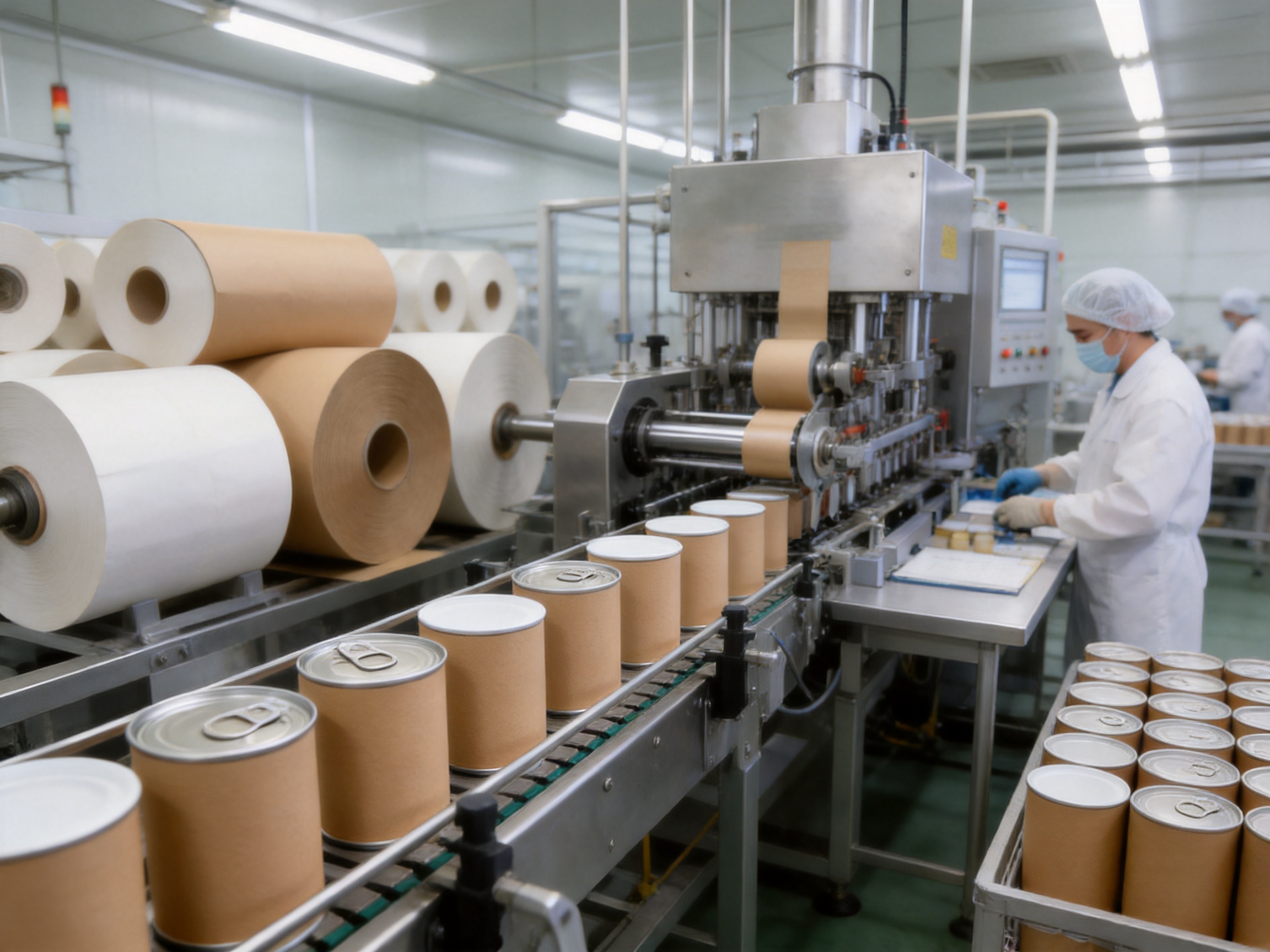
Hangzhou Qunle Packaging Co., Ltd. has been engaged in the composite can and paper can industry for more than 20 years. This long operating history is significant because paper can manufacturing involves more than printing and forming paper. It requires coordinated control of material selection, winding or forming, seam integrity, lining, closure fit, printing, finishing, and quality inspection.
The company describes itself as a specialist in composite cans and paper cans serving food, daily chemical products, fast-moving consumer goods, and related sectors. Experience across multiple product categories can support broader problem-solving capabilities. For example, lessons from food packaging may inform cleanliness and barrier controls, while experience with daily chemical products may contribute to surface durability, closure performance, and visual design flexibility.
The company has also reported being the first enterprise in China to pass the QS certificate for producing food packaging containers. Food-contact compliance is a critical consideration for packaging used with collagen and nutrition products. Certification history does not replace project-specific review, but it indicates that the manufacturer has experience working within food-packaging quality and safety expectations.
Qunle Packaging is described as a member of the international Composite Can and Tube Institute. Participation in an industry organization can support technical exchange, awareness of sector developments, and familiarity with international packaging practices. This is especially relevant for customers selling nutrition products across different markets, where packaging requirements and customer expectations can vary.
The company introduced a high-speed composite can production line from Europe in 2015. High-speed equipment can improve manufacturing consistency and production capacity when supported by appropriate process controls. Automated or semi-automated forming and inspection systems may help manage dimensions, alignment, seam quality, and throughput more reliably than purely manual production.
Qunle Packaging has also obtained more than 10 patented technologies, according to the supplied company information. Patented technologies may relate to structural design, production methods, sealing systems, or other technical elements. Customers should review the specific technology relevant to a proposed project, but the reported patent activity indicates continued investment in product development and manufacturing improvement.
The company’s factory-direct model can simplify communication between the buyer and the production team. Instead of relying entirely on intermediaries, customers can work directly with a manufacturer capable of discussing dimensions, materials, artwork, lining, closure requirements, quantities, and quality expectations. Direct communication is particularly valuable when a package includes a specialized feature such as an embedded pull-tab.
Customization for Different Product Programs
The container accepts custom orders and custom logos, making it suitable for brands with specific design and performance requirements. Customization may include the external diameter, height, paper grade, lining configuration, lid structure, pull-tab style, printing layout, surface finish, and packaging accessories. The stated 73 mm by 130 mm format provides a starting point, but project specifications should be confirmed through technical drawings and samples.
For collagen products, customization can support different product variants. A brand may use one container for unflavored collagen, another for fruit-flavored collagen, and additional versions for specialized blends. Consistent dimensions allow the product line to maintain a unified appearance, while color, typography, and graphic elements distinguish each formula.
For sports nutrition, the container can be adapted for protein powders, electrolyte blends, amino acids, or recovery formulas. For general wellness, it may suit vitamin powders, fiber products, superfood blends, and functional drink mixes. The manufacturer should assess each filling material because particle size, oil content, hygroscopicity, aroma, and powder flow can affect the best lining and closure configuration.
Although the product is classified under nutrition and supplement packaging, the cylindrical format is also relevant to tea, coffee, confectionery, snacks, spices, and other dry foods. Applications outside nutrition may require different internal barriers, food-contact documentation, or opening specifications. The core manufacturing platform can nevertheless support a broad range of package concepts.
Quality Control Considerations
Quality control begins with incoming materials. Paperboard, kraft paper, coatings, lining materials, adhesives, inks, and closure components should be checked against approved specifications. Consistent basis weight, moisture content, surface quality, and dimensional stability are important for a paper can that must retain its shape and protect its contents.
During forming, the manufacturer should monitor body diameter, height, roundness, seam alignment, and wall consistency. Small dimensional variations can affect lid fit, pull-tab performance, packing efficiency, and airtightness. Consistent forming is therefore essential to maintaining a reliable consumer experience and reducing filling-line interruptions.
Printing inspection should cover color accuracy, registration, text clarity, barcode readability, artwork position, and surface defects. On a cylindrical package, artwork can shift if the wrap is not aligned correctly. Inspection helps ensure that the front-facing design, legal information, and product identifiers appear in the intended positions.
Closure inspection should evaluate pull-tab attachment, seal integrity, opening force, and compatibility with any secondary lid. The pull-tab must be strong enough to operate consistently while remaining accessible to the consumer. If the package includes a tamper-evident feature, that feature should be checked separately and documented according to the customer’s requirements.
Finished-package testing may include compression, vibration, drop, stacking, leakage, humidity conditioning, and transportation simulation. These tests help identify weaknesses before commercial production. For powdered products, filling trials are especially valuable because powder dust, static, and product accumulation can influence the closure area and sealing process.
Efficient Product Development Process
A successful packaging project usually begins with a clear product brief. The brief should identify the filling material, target fill weight, bulk density, expected shelf life, distribution route, storage conditions, market requirements, desired appearance, opening preferences, and estimated annual volume. This information allows the manufacturer to recommend a suitable structure rather than treating the container as a purely visual item.
The next stage is structural design. The customer and manufacturer confirm the internal and external dimensions, lid configuration, pull-tab position, lining, body construction, and secondary closure. Technical drawings should show tolerances and critical interfaces. If the customer requires a scoop, desiccant, measuring spoon, or other accessory, the available internal space should be checked early.
Artwork preparation follows structural approval. The manufacturer can provide a template that identifies printable areas, seam zones, folds, overlaps, barcode locations, and safe margins. Artwork should be reviewed for language, regulatory information, nutritional declarations, warnings, and country-specific requirements before printing.
Samples are then used to assess appearance and function. A sample should be filled with the intended product or a representative material whenever possible. The customer can evaluate opening force, pouring behavior, scoop access, closure fit, label orientation, shelf appearance, and compatibility with secondary packaging.
After sample approval, a production plan can be established. The plan should specify raw materials, printing standards, inspection points, packing method, delivery schedule, and documentation. The minimum order quantity for the supplied product is 5,000 units, which can be appropriate for a commercial launch, a regional rollout, or a growing brand that needs more than a small prototype quantity.
Logistics and Retail Performance
The cylindrical structure provides a stable form for packing and display. Containers can be arranged in cartons using dividers or protective materials selected according to the product’s distribution conditions. Efficient packing design can help reduce movement during transport and limit scuffing to the matte surface.
For e-commerce, packaging should be evaluated for individual parcel handling, compression from stacked cartons, vibration, and exposure to temperature or humidity changes. A rigid paper can can protect the product from some common handling stresses, but the final shipping system should include appropriate secondary packaging. Product-filled samples should be tested through realistic distribution simulations before launch.
In retail, the vertical shape allows the package to occupy a relatively small footprint while maintaining a visible printed area. The matte finish can reduce reflections from store lighting, and the customized graphics can support strong shelf-block presentation when several units are placed together. Consistent dimensions across a product family may also improve planogram organization.
The package can be supplied with outer cartons that carry batch information, handling instructions, and logistical markings. These secondary cartons should be designed to protect the paper cans without adding unnecessary material. A coordinated packaging system helps maintain quality from the factory through distribution and into the retail environment.
Brand Communication Through the Package
Nutrition packaging must communicate quickly. Consumers should be able to identify the product category, formula, flavor, net quantity, serving information, and key instructions without turning the container repeatedly. The broad printable surface of a cylindrical can allows designers to create a logical information sequence around the body.
The front panel can emphasize the product name and primary benefit. Side panels can present nutritional facts, directions for use, ingredient information, allergen statements, manufacturing information, storage instructions, and customer-service details. The rear area can carry barcodes and regulatory text. A carefully planned layout makes the package easier to understand and reduces visual clutter.
The matte surface can support a premium aesthetic through restrained typography, soft color fields, botanical illustrations, scientific diagrams, or bold contrast. The package can be positioned as natural, clinical, athletic, luxurious, or family-oriented depending on the selected graphics and materials. The same basic container can therefore serve different market strategies.
Because the exterior uses CMYK printing, designers can incorporate photographic imagery and complex illustrations. However, readability should remain a priority. Fine text, low-contrast color combinations, and overly dense graphics may become difficult to read on a curved surface. Production proofs help ensure that the final printed result supports both visual appeal and practical communication.
Storage and Handling Recommendations
Paper-based containers should be stored in a clean, dry environment away from direct sunlight, excessive humidity, strong odors, and extreme temperature fluctuations. Before filling, the containers should be protected from dust and unnecessary handling. Proper warehouse conditions help preserve the appearance and dimensional stability of the paper body.
Filled products should be stored according to the requirements of the nutrition formula. If the product is sensitive to moisture, heat, or light, the package and finished product should be evaluated under the expected storage conditions. The airtight system can contribute to protection, but it should be used together with suitable filling, sealing, warehousing, and stock-rotation practices.
Consumers should receive clear instructions about closing the container after each use. If the package includes a secondary lid, it should be replaced securely. Storage guidance should identify whether the product should be kept in a cool, dry place and whether a scoop or measuring accessory should remain clean and dry.
Q&A
What products are suitable for this paper can?
The primary stated application is collagen packaging, but the container can also be considered for protein powders, dietary supplements, powdered beverages, functional foods, tea, coffee, snacks, spices, and other dry products. Suitability should be confirmed through product-contact, barrier, filling, and shelf-life testing.
What are the approximate dimensions?
The supplied specification is approximately 73 mm internal diameter by 130 mm height. These dimensions describe the listed format. The actual fill capacity depends on the density and filling characteristics of the product, as well as the required headspace and closure arrangement.
Is the container airtight?
The product is described as a one-piece airtight paper can. Final airtight performance depends on the selected materials, seams, lining, pull-tab, closure, manufacturing tolerances, and filling process. Customers should request samples and conduct validation testing for the intended product and market.
What is the purpose of the embedded pull-tab?
The embedded pull-tab provides an integrated opening feature. It is intended to make the initial opening process more convenient while maintaining a clean package appearance. The exact opening force and tamper-evident behavior should be confirmed with approved samples.
Can the artwork and logo be customized?
Yes. Custom orders and custom logos are accepted. The exterior supports CMYK printing, and the package can be developed with customer-specific artwork, product information, dimensions, and finishing requirements.
What finish is available?
The listed product uses a matte finish. Matte treatment can reduce glare and provide a soft, premium visual effect. Other finishes may be discussed for individual projects, subject to material compatibility, order quantity, and production feasibility.
Is the container made from recycled or eco-friendly materials?
The product is described as using recycled materials and having eco-friendly features. Customers should request detailed material information, including the composition of the paper body, lining, coatings, adhesives, inks, and closure components. Environmental performance should be assessed according to the complete package and local end-of-life systems.
What is the minimum order quantity?
The listed minimum order quantity is 5,000 units. The final order quantity may depend on the selected materials, printing requirements, dimensions, tooling, and production plan.
Can the same container be used for multiple supplement formulas?
Yes, a common container format can support a coordinated product range. Different formulas can use customized colors, graphics, names, and regulatory information while maintaining consistent dimensions. Each formula should still be checked for compatibility with the lining and airtight closure system.
How should the package be tested before mass production?
Testing may include filling trials, opening-force evaluation, seal and leak checks, compression testing, drop testing, vibration testing, humidity conditioning, print inspection, and shelf-life assessment. The appropriate program depends on the product, distribution route, intended market, and required performance.
Why choose a paper can instead of a plastic jar?
A paper can offers a rigid cylindrical format, a distinctive shelf presence, a paper-forward material story, and extensive printing potential. It can also provide a more premium tactile experience. Plastic jars may be appropriate for some products, but the paper can gives brands another option for differentiation and sustainability-oriented packaging strategies.
Conclusion
Paper tin can food packaging containers with embedded pull-tabs offer a balanced solution for collagen, nutrition, and other dry-product applications. The one-piece airtight paper can construction combines structural stability with a clean cylindrical appearance. Coated paper and kraft paper options provide material and design flexibility, while the white paper lining supports a clean internal package environment for suitable products.
The embedded pull-tab improves the opening experience by providing a convenient integrated feature. CMYK printing and a matte finish give product developers broad creative freedom, allowing the package to communicate product benefits, usage instructions, regulatory information, and brand identity in a visually coherent format.
Compared with flexible pouches, standard plastic jars, folding cartons, and conventional metal cans, the package offers a distinctive combination of rigidity, paper-based presentation, customization, and consumer convenience. Its strongest advantage is not a single feature but the way the features work together: product protection, shelf appeal, practical opening, and adaptable manufacturing.
Qunle Packaging’s more than 20 years of experience in composite cans and paper cans, food-packaging background, high-speed European production equipment, industry participation, reported patented technologies, and factory-direct manufacturing model provide a strong foundation for customized packaging projects. With appropriate material verification, filling trials, quality inspection, and distribution testing, this container can support reliable product launches and long-term nutrition packaging programs.
For companies seeking a premium, customizable, and paper-oriented package for collagen or other dry products, the container provides a practical platform that can be developed around specific product, market, and sustainability requirements.
References
1. Hangzhou Qunle Packaging Co., Ltd. Product specification information for paper tin can food packaging containers with embedded pull-tab.
2. Hangzhou Qunle Packaging Co., Ltd. Company information concerning composite cans, paper cans, food packaging production, manufacturing experience, and technical development.
3. International Organization for Standardization. General principles for packaging design, performance evaluation, and quality management.
4. International Organization for Standardization. Standards and guidance related to packaging, paper and board materials, recycling, and environmental evaluation.
5. General packaging industry practices for dry foods, nutrition products, powdered supplements, sealing performance, transport testing, and consumer usability evaluation.
