 English
 Español


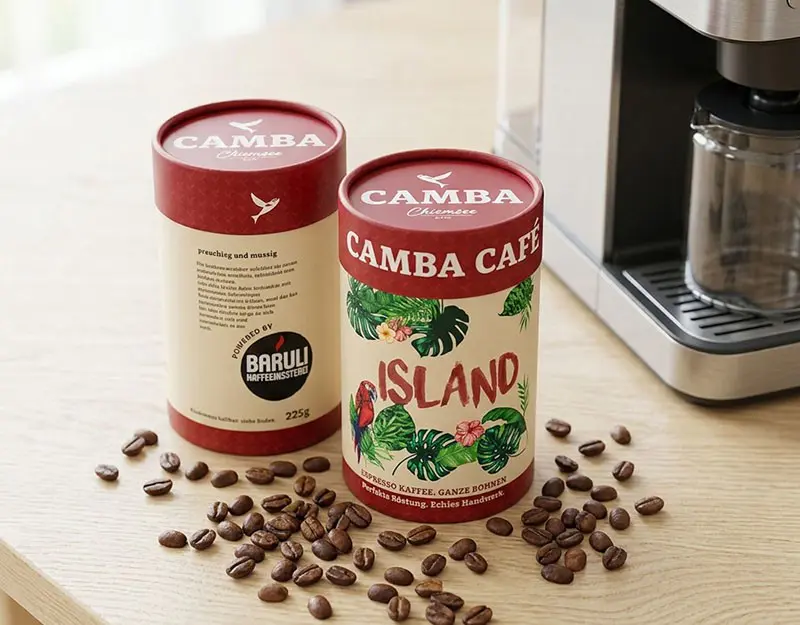
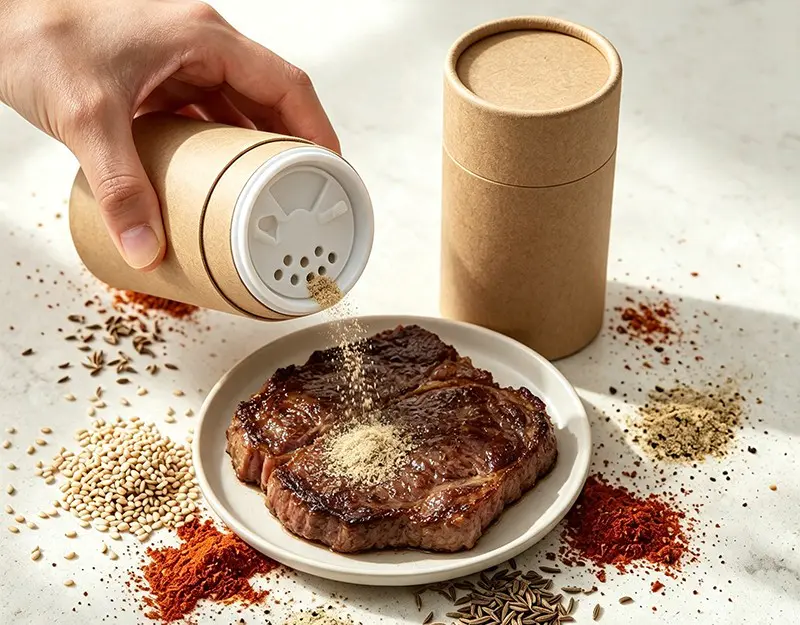
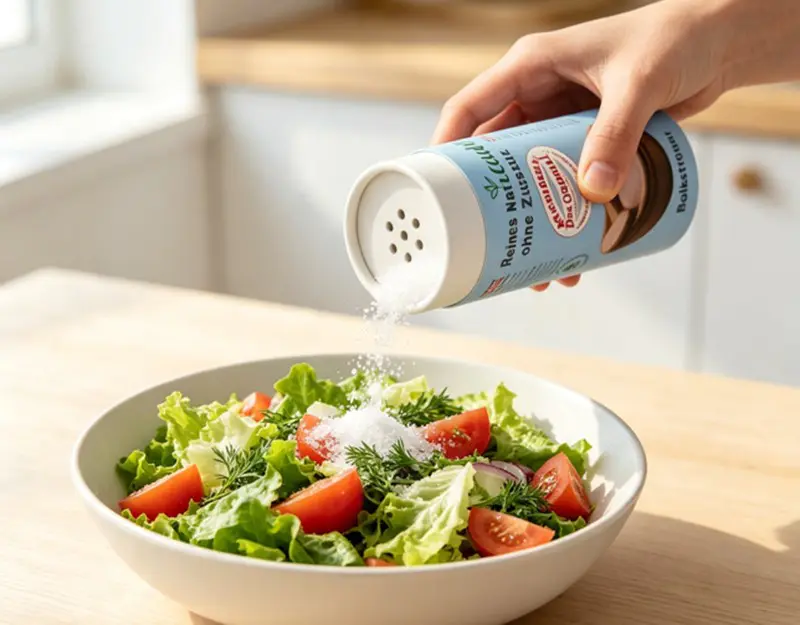
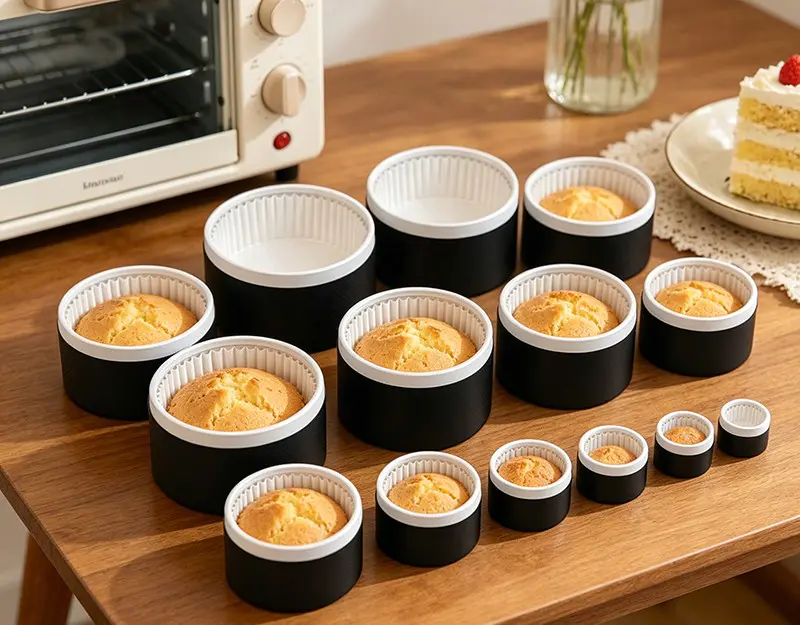

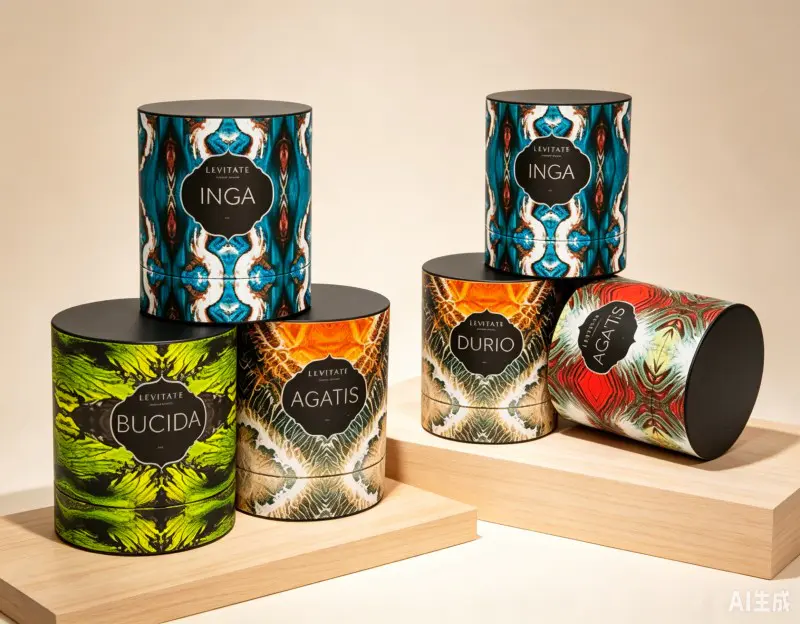
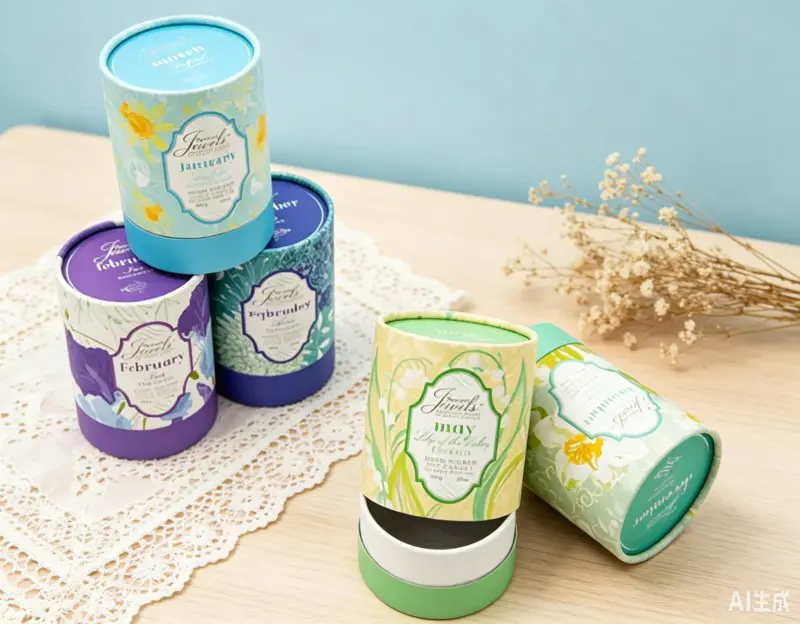
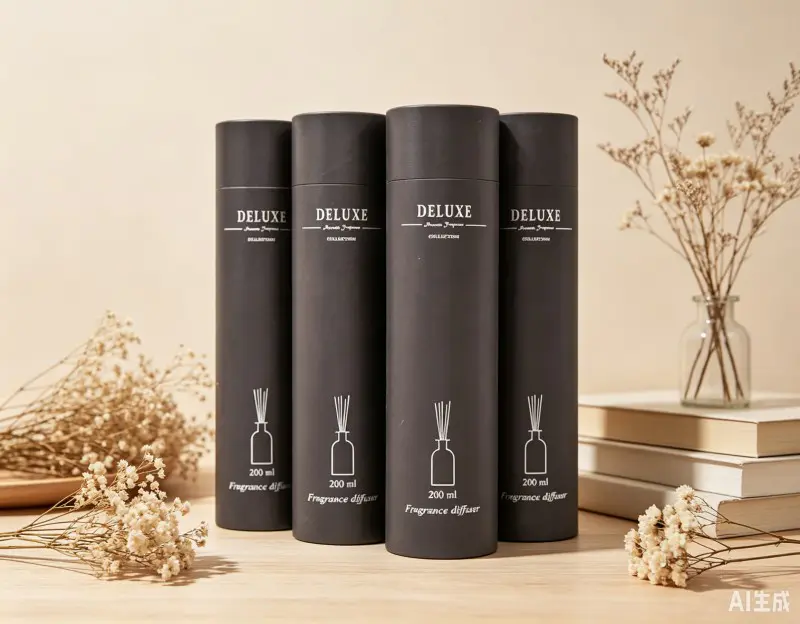
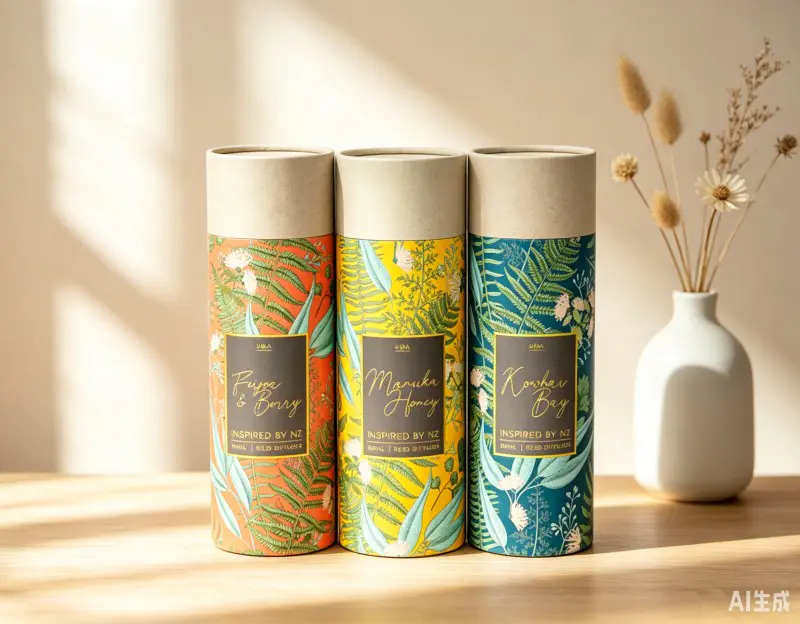


As one of the top China cardboard tube packaging manufacturers and paper tube packaging suppliers, we devote all of our efforts to research and launch more high quality packaging products to global market.
Content
- 1 Introduction
- 2 1. Understanding the Salt Pot Format
- 3 2. Main Advantages Over Competing Packaging Formats
- 4 3. Technical Construction of the Paper Canister
- 5 4. Advanced Manufacturing Process
- 6 5. Manufacturing Strengths and Industry Experience
- 7 6. Customization Possibilities
- 8 7. Applications Across the Food and Seasoning Market
- 9 8. Performance Considerations Before Ordering
- 10 9. Comparison with Alternative Packaging
- 11 10. Sustainability and Responsible Packaging Design
- 12 11. Why Choose an Experienced Paper Tube Manufacturer?
- 13 12. Recommended Development Process
- 14 13. Frequently Asked Questions
- 14.1 Q1: What products can be packed in the Salt Pot?
- 14.2 Q2: Can the Salt Pot be used for fine and coarse salt?
- 14.3 Q3: Does the paper body protect salt from humidity?
- 14.4 Q4: Can the container be customized with a brand’s artwork?
- 14.5 Q5: Is the Salt Pot suitable for premium products?
- 14.6 Q6: Can different sizes be produced?
- 14.7 Q7: Can the Salt Pot include a tamper-evident seal?
- 14.8 Q8: Is the paper canister recyclable?
- 14.9 Q9: Can the Salt Pot be used on an automated filling line?
- 14.10 Q10: What makes an experienced supplier important for this product?
- 14.11 Q11: Can the Salt Pot be used for gift collections?
- 14.12 Q12: What information should a buyer provide when requesting a quotation?
- 15 14. Conclusion
- 16 References
- 17 Product: Salt Pot
Introduction
Salt is one of the most frequently used ingredients in kitchens, restaurants, food factories, and hospitality environments. Although it is a simple product, salt packaging must perform several important functions at the same time. It should help protect the contents from humidity, preserve cleanliness, support convenient dispensing, communicate product information, and create a positive impression on the shelf or in the home. A well-designed salt pot can therefore be much more than a basic container. It can become an important part of a food brand’s product quality, usability, and visual identity.
The Salt Pot is a purpose-oriented paper tube packaging solution developed for salt, seasoning blends, spices, and other dry culinary ingredients. Its cylindrical paper-based structure combines the practical benefits of a rigid container with the visual and environmental appeal of paper packaging. Depending on the selected construction, closure, inner lining, printing method, and surface finish, the container can be adapted for table salt, sea salt, rock salt, flavored salt, pepper blends, barbecue seasonings, herbs, and many other dry products.
Manufactured by Hangzhou Qunle Packaging Co., Ltd., the Salt Pot benefits from more than two decades of experience in composite cans and paper cans. The company serves food, daily chemical, fast-moving consumer goods, and other packaging sectors. Its production capabilities, food-packaging experience, patented technologies, and international industry participation provide a strong foundation for developing dependable paper containers for seasoning products.
This article examines the Salt Pot in detail, including its structure, performance advantages, manufacturing process, customization possibilities, sustainability considerations, applications, and suitability for different brands. It also explains why a professionally produced paper canister can offer advantages over ordinary plastic jars, flexible pouches, glass containers, and low-quality paper boxes.

Salt Pot
1. Understanding the Salt Pot Format
A salt pot is a compact container designed to hold and dispense salt or other powdered and granulated seasonings. The cylindrical format is especially suitable for dry food products because it uses space efficiently, is easy to hold, and provides a large printable surface around the body. The upright form also supports stable shelf presentation and organized storage in kitchen cabinets, restaurant supply areas, and retail displays.
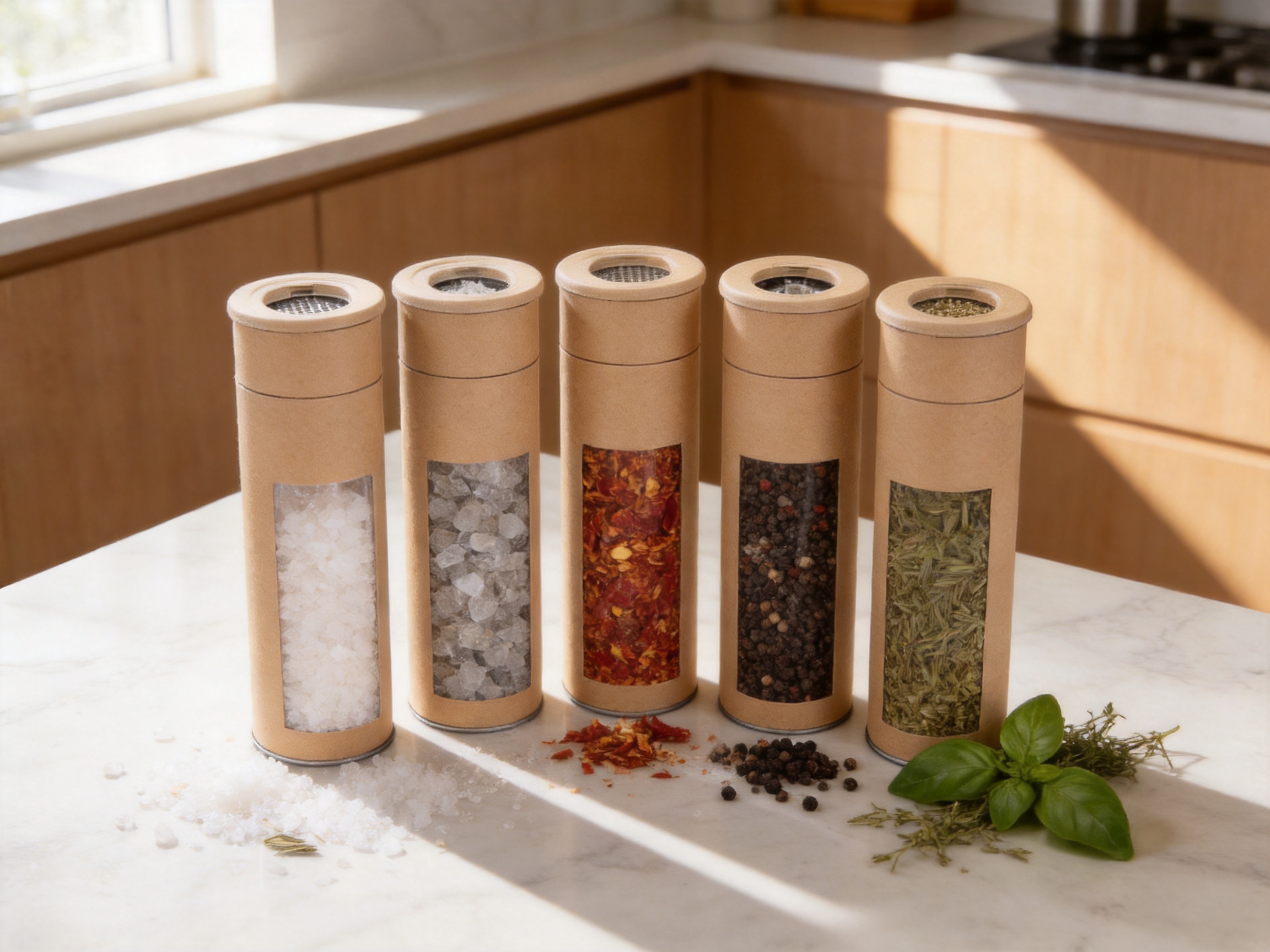
The Salt Pot uses a paper tube or composite paper can structure. The body is formed from layers of paper or paperboard that are wound and bonded to create a rigid cylindrical wall. Additional functional layers may be incorporated according to the product’s protection requirements. These layers can help improve resistance to moisture, grease, odor transfer, and mechanical handling during transportation and retail distribution.
The top and bottom closures are selected according to the intended use. A container for household table salt may require a convenient opening that supports controlled pouring or sprinkling. A larger foodservice container may use a wider opening for spoon access or easy refill. A premium seasoning product may benefit from a secure lid and an inner seal that communicates freshness and product integrity to consumers.
The shape also allows the Salt Pot to sit naturally on a kitchen counter, dining table, spice shelf, or retail display. Unlike a soft pouch, it maintains its shape after filling and during use. Unlike a conventional cardboard carton, it offers a more substantial hand feel and greater resistance to crushing. Unlike many rigid plastic containers, it can provide a warmer, more natural appearance that supports premium and environmentally conscious brand positioning.
Suitable Product Types
The Salt Pot is suitable for a broad range of dry and free-flowing products. Common examples include fine table salt, coarse sea salt, Himalayan-style mineral salt, smoked salt, garlic salt, onion salt, seasoning salt, chili salt, pepper salt, herb blends, spice mixtures, and culinary finishing salts.
It can also be considered for related products such as dried herbs, curry blends, barbecue rubs, soup seasoning, baking spices, and powdered flavoring ingredients. The exact packaging design should be matched to the physical characteristics of the contents. Products with very fine particles, high hygroscopicity, or elevated moisture sensitivity may require enhanced barrier construction, a suitable inner membrane, or an additional sealing method.
For products containing oils, natural aromas, or volatile flavor compounds, material compatibility is particularly important. The packaging structure should be reviewed to ensure that the container does not absorb aroma, allow unwanted odor migration, or lose performance during storage. A qualified packaging manufacturer can help determine the appropriate combination of paper, liner, adhesive, closure, and seal.
2. Main Advantages Over Competing Packaging Formats
The Salt Pot competes with a variety of packaging formats, including plastic jars, glass bottles, flexible stand-up pouches, paperboard cartons, and metal tins. Each format has its own strengths, but a well-engineered paper tube can provide a balanced combination of rigidity, printability, convenience, and brand appeal.
Rigid Protection with a Paper-Based Appearance
One of the key advantages of the Salt Pot is its rigid cylindrical body. The structure protects the product during normal handling, packing, transportation, and storage. It is less likely to collapse than a pouch and can provide more resistance to side pressure than a thin paper box.
The rigid body also gives the product a stable shape on retail shelves. Packaging that remains upright and orderly can improve visual presentation and make it easier for shoppers to compare products. For brands selling multiple seasoning varieties, the cylindrical format provides a consistent family appearance while allowing different colors, labels, and product names to distinguish each flavor.
At the same time, the exterior retains the visual warmth associated with paper. This can help brands communicate natural ingredients, responsible sourcing, traditional recipes, artisanal quality, or modern sustainability goals. The appearance can be enhanced through matte coatings, textured papers, selective gloss, foil effects, embossing, or other decorative treatments.
Improved Shelf Presence
A paper tube has a large continuous surface that can be printed with product information and brand graphics. The curved body creates a strong vertical form that can stand out among flat cartons and flexible bags. When arranged in a retail display, several matching Salt Pots can create a cohesive and attractive block of color.
The printable surface can be used for the product name, flavor description, ingredient statement, nutrition information, preparation suggestions, origin information, storage instructions, barcode, recycling guidance, and brand story. The available area can also support illustrations of salt crystals, herbs, spices, landscapes, cooking scenes, or serving suggestions.
For premium salt brands, design quality is especially important. Consumers often associate packaging with the perceived origin, purity, and value of the product. A carefully printed and finished paper canister can make a standard seasoning appear more distinctive while still keeping the package practical and functional.
Convenient Handling and Dispensing
The cylindrical body is comfortable to hold and easy to rotate in the hand. Its format can support different dispensing methods, including sprinkle openings, pour openings, sifter inserts, flip-top lids, removable covers, or wider access openings. The choice depends on whether the consumer needs controlled dosing, quick pouring, spoon access, or repeated resealing.
A controlled opening can help reduce unnecessary product use and improve kitchen cleanliness. This is valuable for fine salt and seasoning powders, which may otherwise spill easily from an oversized opening. A secure lid can also reduce exposure to humidity and help prevent the product from absorbing moisture between uses.
For professional kitchens and foodservice applications, the design may emphasize speed and reliability. A larger opening, robust closure, clear labeling, and stable base can make the container easier to use during busy preparation periods. For retail products, the emphasis may be placed on compactness, appearance, portion control, and resealing performance.
Potential Reduction in Plastic Usage
Paper-based packaging can help brands reduce their reliance on conventional plastic structures, depending on the selected construction and end-of-life system. The outer body is primarily paper-based, which gives it a strong renewable-material identity compared with containers made entirely from virgin plastic.
However, responsible packaging communication should be accurate. A paper tube may contain barrier layers, coatings, adhesives, metal components, or plastic closures. These components can affect recyclability and disposal requirements. The final environmental profile depends on the complete packaging structure, manufacturing energy, transportation distance, material sourcing, and local waste-management infrastructure.
Even with these considerations, a paper canister can be an effective option for brands seeking to increase paper content, create a more natural package appearance, and reduce the amount of rigid plastic used in the product presentation. Material selection and design should be discussed early so that the intended environmental claims are technically supportable.
Strong Brand Differentiation
Salt is often sold in a competitive market where many products have similar basic functions. Packaging differentiation can help a brand communicate why its product deserves attention. The Salt Pot supports differentiation through shape, graphics, texture, closure style, color, and finishing.
A brand may use a clean minimalist design for gourmet sea salt, a traditional visual style for regional mineral salt, a bold color system for flavored salts, or a natural kraft-paper appearance for organic and environmentally focused products. The same basic container can therefore support different market positions without requiring a completely different structural format.
Its cylindrical shape may also contribute to a premium unboxing experience. Consumers can remove the lid, observe the printed body, and use the container repeatedly. A package that remains useful after opening can have a longer practical life in the household, which may increase brand visibility after the initial purchase.
3. Technical Construction of the Paper Canister
The performance of a Salt Pot depends on the interaction of several components rather than on the paper body alone. A professional packaging design evaluates the body material, inner barrier, bottom construction, top closure, adhesive system, printing ink, and surface finish as one integrated package.
Paper Tube Body
The main body is generally produced by winding paper or paperboard around a forming mandrel. Multiple layers can be combined to achieve the required wall thickness, stiffness, appearance, and barrier performance. The winding direction, overlap, bonding quality, and curing conditions all influence the final strength of the tube.
A thicker wall may be appropriate for larger containers or products that require greater resistance to compression. A lighter construction may be suitable for compact retail formats where reducing material use and shipping weight are priorities. The ideal specification balances performance, appearance, cost, filling speed, and end-of-life considerations.
Inner Barrier Layer
Salt is sensitive to humidity because it can absorb water from the surrounding environment. Moisture can cause clumping, reduce flowability, damage the visual quality of the product, and make dispensing difficult. For this reason, the inner structure must be selected carefully.
Depending on the salt type and required shelf life, the container may include an inner lining or barrier layer that reduces moisture transfer. The barrier may also help protect the product from odor migration and contact with adhesives or printing materials. Food-contact suitability, material compatibility, sealing behavior, and regulatory requirements should be verified for the complete structure.
The appropriate barrier depends on the product’s moisture content, particle size, storage climate, filling conditions, distribution route, and expected shelf life. A container intended for a dry indoor market may have different requirements from one shipped through humid coastal regions or stored in warehouses with significant temperature variation.
Bottom Construction
The bottom must support the filled container and resist separation during handling. A correctly engineered base helps the Salt Pot stand securely on shelves and kitchen surfaces. It should also be compatible with automated filling, packing, and case-packing equipment when the product is produced at commercial scale.
The bottom design may be formed from paperboard, a composite structure, or another suitable component. Its appearance can be coordinated with the body to create a complete and polished package. Manufacturing accuracy is important because an uneven or poorly bonded base can affect stability, visual quality, and consumer confidence.
Top Closure and Seal
The top closure is one of the most important functional elements of the Salt Pot. It affects opening convenience, resealing, product protection, and the overall user experience. Options may include paper-based lids, composite lids, plastic caps, metal elements, sifter inserts, membrane seals, or combinations of these components.
For a fine salt product, the closure may need small dispensing holes to support controlled sprinkling. For coarse salt or seasoning blends, a larger opening may be more appropriate. If the product is intended for repeated use, the lid should close securely and remain easy to operate over the life of the package.
An inner seal can provide evidence of product integrity before the first opening. It can also contribute to moisture protection and reassure consumers that the contents have not been exposed during distribution. The seal must be compatible with the filling line and should be tested for adhesion, removal force, leakage, and storage stability.
4. Advanced Manufacturing Process
The production of a high-quality Salt Pot involves a controlled sequence of material preparation, tube forming, bonding, finishing, component assembly, inspection, and packing. Hangzhou Qunle Packaging Co., Ltd. has been engaged in the composite can and paper can industry for more than 20 years, giving it extensive experience in developing and producing paper-based containers for food and consumer products.
Material Selection and Preparation
Manufacturing begins with the selection of paper, paperboard, barrier materials, closures, adhesives, inks, and coatings. The materials must be evaluated according to the product’s intended use, appearance, technical requirements, and applicable food-packaging expectations.
Paper rolls are inspected for basis weight, thickness, surface quality, moisture, dimensional consistency, and printing suitability. Barrier materials are assessed for uniformity and compatibility with the intended filling product. Adhesives are selected according to bonding strength, curing requirements, processing speed, and contact conditions.
Material preparation is important because variation at the beginning of production can influence tube dimensions, print registration, bonding, and final assembly. Controlled storage also helps protect paper from excessive humidity or dryness, both of which may affect winding and converting performance.
Printing and Decorative Conversion
The exterior artwork may be printed before the paper is formed into the tube, depending on the selected production method. Printing quality must remain consistent across the full production run. Important considerations include color accuracy, image sharpness, text legibility, barcode readability, and registration between different design elements.
Packaging for salt and seasonings often requires a balance between attractive graphics and clear information. The product name should be easy to identify, while instructions, ingredients, net weight, date coding areas, and storage information must remain readable. A professional production process helps maintain this balance at commercial volume.
Additional finishes may include matte or gloss coating, spot varnish, embossing, debossing, metallic effects, textured paper, or protective overprint. These treatments can improve appearance and handling resistance. They should be selected with consideration for cost, sustainability objectives, food-packaging requirements, and the desired brand image.
High-Speed Composite Can Production
Composite can production uses winding and bonding techniques to build a cylindrical container from multiple layers. The paper layers are wrapped around a forming mandrel, aligned, bonded, and compacted to create a tube with consistent dimensions.
In 2015, Qunle Packaging introduced a high-speed composite can production line from Europe. The introduction of advanced production equipment strengthened the company’s ability to manufacture composite cans and paper cans with greater efficiency and consistency. High-speed equipment can support stable output while maintaining control over tube diameter, wall structure, bonding, and production repeatability.
Automation is particularly valuable when producing packaging for large food brands or retail programs. Consistent dimensions help containers move smoothly through filling and packing systems. Stable production also supports predictable lead times, reduced variation, and more reliable quality control.
Forming, Cutting, and Assembly
After the tube body is produced, it is cut to the required height. Accurate cutting is necessary to ensure that the top and bottom components fit correctly and that the finished container has a clean, uniform appearance.
The bottom is then applied and bonded. Depending on the specification, the tube may receive a top rim, lid, sifter, membrane, cap, or other closure component. Assembly must be performed with sufficient precision to prevent loose parts, crooked lids, exposed edges, or weak bonding.
For a salt container, assembly accuracy directly affects the user experience. A lid that is too tight may be inconvenient, while one that is too loose may fail to protect the product. A dispensing insert must align correctly with the opening. The package should also remain stable after repeated opening and closing.
Inspection and Quality Assurance
Quality assurance is performed throughout the manufacturing process rather than only at the final stage. Incoming materials may be checked before production, while in-process inspections monitor dimensions, printing, bonding, and assembly. Finished containers may be evaluated for appearance, closure fit, structural integrity, and functional performance.
Typical inspection points include tube diameter, height, wall thickness, bottom adhesion, lid fit, printing color, surface cleanliness, seam condition, opening performance, and packaging count. Additional tests may be applied according to the customer’s requirements and the characteristics of the filled product.
For food packaging, the manufacturing environment and material controls are especially important. Qunle Packaging was the first enterprise in China to pass the QS certificate for producing food packaging containers, according to the company’s profile. This experience reflects a long-term focus on food-packaging quality and compliance-oriented production practices.
5. Manufacturing Strengths and Industry Experience
The Salt Pot is supported by the broader capabilities of Qunle Packaging, a company based in Hangzhou, Zhejiang Province, China. The company has worked in the composite can and paper can sector for over 20 years and serves applications in food, daily chemical products, fast-moving consumer goods, and related markets.
This cross-industry experience is valuable because packaging requirements differ significantly between products. Food products may require material and hygiene controls, while cosmetics may emphasize appearance and surface finish. Fast-moving consumer goods may require high production volumes and efficient logistics. Experience across these categories can support a more complete understanding of structure, manufacturing, filling, transportation, and shelf presentation.
Qunle Packaging is also identified as the only member of the international Composite Can and Tube Institute in China’s packaging container industry. Participation in an international industry organization can support technical awareness, professional exchange, and understanding of composite can developments.
The company has obtained more than 10 patented technologies and continues to research and launch paper-based packaging products for global markets. Patented technologies do not automatically guarantee that every product is suitable for every application, but they indicate a commitment to technical development and process improvement.
Long-term partnerships with recognized companies and brands, including COFCO, STANDERS, DAVIDsTEA, Avalanche Coffee, Whittaker’s, McSteven’s, Nongfu Spring, and Beingmate, also demonstrate experience in serving established customers. Such relationships commonly require stable quality, dependable production, clear communication, and the ability to meet structured packaging specifications.
For a seasoning brand evaluating a paper canister supplier, these strengths can reduce development risk. A supplier with experience in paper cans and food packaging is better positioned to discuss moisture protection, closure selection, product compatibility, filling-line requirements, and large-scale production than a supplier focused only on decorative paper boxes.
6. Customization Possibilities
One of the most important advantages of the Salt Pot is its adaptability. The basic cylindrical structure can be adjusted to meet the product, market, and brand requirements of different customers.
Dimensions and Capacity
The height and diameter can be developed according to the desired fill weight and product density. Fine salt, coarse salt, and blended seasonings may occupy different volumes even when their net weights are similar. The package should therefore be designed around both product mass and physical volume.
A short, wide format may be convenient for countertop use and spoon access. A taller, narrower format may create a stronger shelf presence and use vertical display space efficiently. Compact containers may be suitable for gift sets, travel cooking kits, or premium sample products, while larger formats can serve restaurants, caterers, and food manufacturers.
Graphic Design and Color
The body provides a broad canvas for custom graphics. A brand can select a single-color design, full-color printing, photographic imagery, illustration, typography-focused artwork, or a combination of visual styles.
Color coding is useful for product families. For example, different colors can identify sea salt, smoked salt, garlic salt, chili salt, or herb seasoning. Consistent placement of the logo and product name can create recognition across the range, while flavor-specific graphics help consumers select the correct product quickly.
Surface Finishes
Surface finishes can change the tactile and visual character of the Salt Pot. A matte coating can create a soft, premium feel, while a gloss finish can produce stronger color intensity and visual brightness. Embossing can add texture to a logo or pattern. Kraft-style paper can emphasize natural positioning, while a smooth coated surface may support a more contemporary appearance.
Finishing choices should also account for durability. A kitchen package may be exposed to dust, oil, moisture, and repeated handling. The surface should remain legible and attractive throughout normal use. A protective coating or suitable material selection may help reduce scuffing and abrasion during transportation.
Closure and Dispensing Options
Different customers may require different opening experiences. Options can be developed for sprinkling, pouring, spoon access, or complete product removal. The chosen closure should match the product’s particle size and expected usage pattern.
For gourmet salts, a controlled opening can support careful finishing of dishes. For family-size containers, a wider access opening may make refilling or cooking more convenient. For foodservice products, a robust closure may be prioritized over decorative complexity.
Labels and Regulatory Information
The printable body can accommodate information required by the target market. This may include product identity, ingredient information, allergen statements where relevant, net contents, nutritional data, storage instructions, manufacturing details, lot coding, barcode, country of origin, and recycling guidance.
Because labeling rules differ between countries and product types, the final artwork should be reviewed by the brand’s regulatory team or an appropriate compliance professional. The packaging manufacturer can help provide suitable print areas, but the customer remains responsible for ensuring that the final information is accurate and legally appropriate for the intended market.
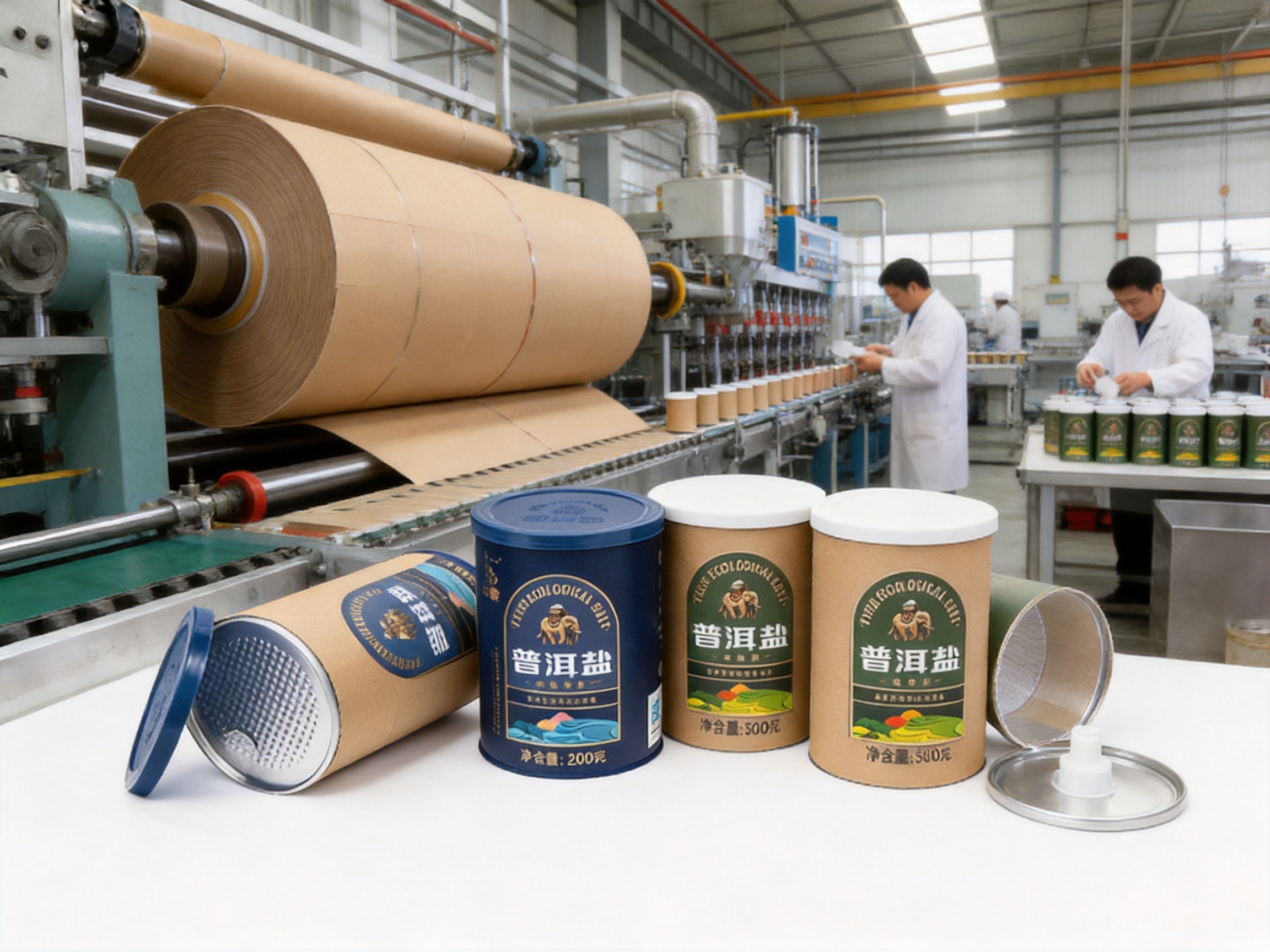
7. Applications Across the Food and Seasoning Market
Retail Table Salt
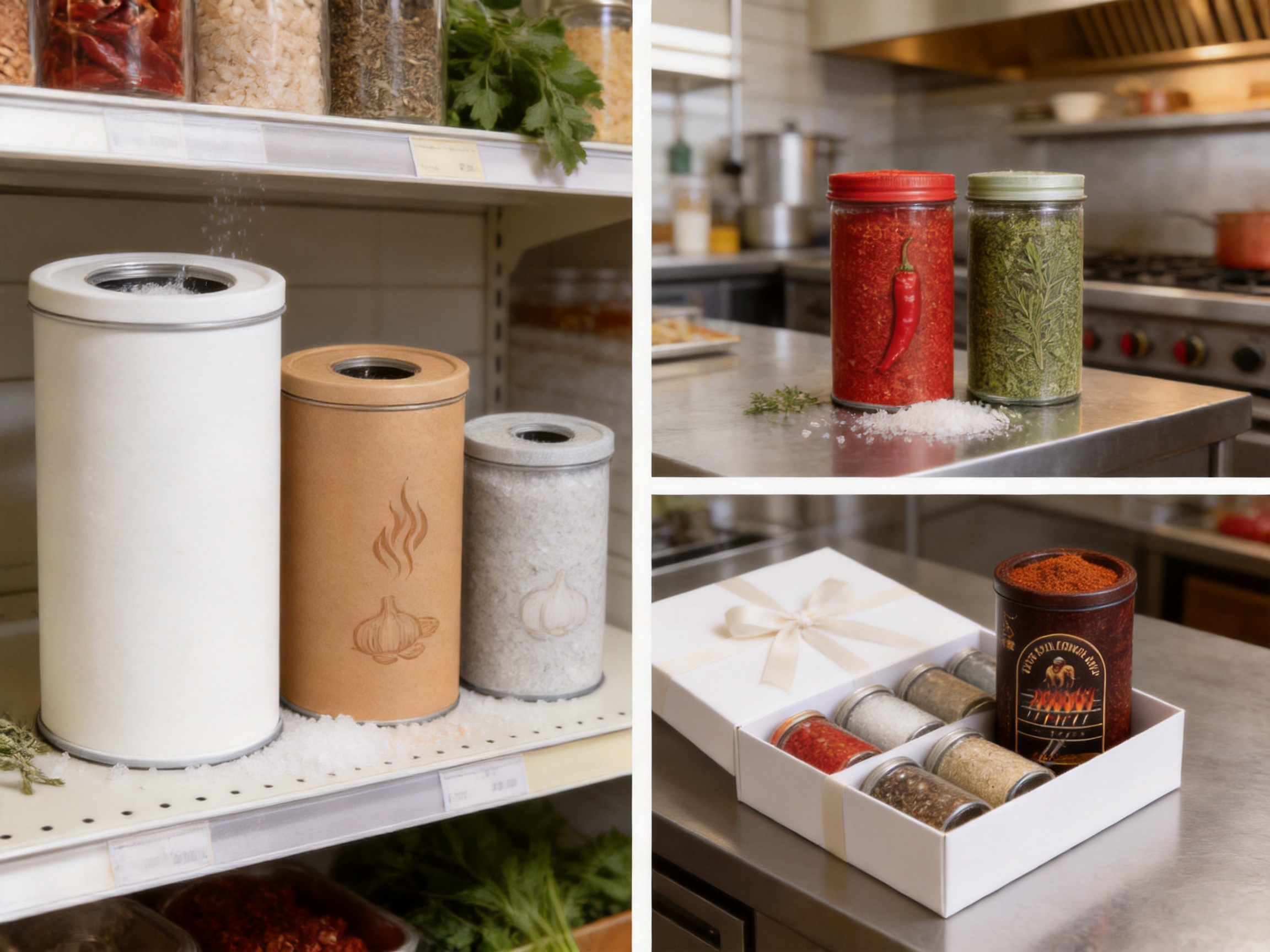
For table salt, the Salt Pot can provide an organized alternative to flexible bags and basic plastic shakers. A secure lid and controlled opening can support clean dispensing, while the rigid body remains easy to store in a kitchen cabinet or on a dining table.
Premium and Gourmet Salt
Specialty salts often depend on premium storytelling. The packaging may need to communicate geographic origin, mineral characteristics, harvesting methods, culinary use, or artisanal quality. A high-quality printed paper canister can support this positioning through refined graphics, textured materials, and an elevated hand feel.
Seasoning Blends
Seasoning blends may contain salt together with herbs, spices, garlic, onion, chili, pepper, or other dry ingredients. These products benefit from clear flavor identification and convenient dispensing. A coordinated family of Salt Pots can help a brand organize several variations under one visual system.
Foodservice and Institutional Use
Restaurants, hotels, catering companies, and institutional kitchens may require larger containers with durable construction and quick access. The Salt Pot can be designed around the practical demands of these environments, including clear labels, stable placement, secure closures, and efficient case packing.
Gift Sets and Promotional Products
Salt and seasoning collections are popular in cooking gift sets, holiday assortments, regional food programs, and promotional campaigns. Smaller paper canisters can be combined in cartons or gift boxes, creating a coordinated presentation. Custom graphics may be used to highlight a seasonal recipe, destination, event, or collaboration.
Private Label and Contract-Packed Products
Retailers and contract packers often require packaging that can be adapted for different customers while maintaining efficient production. The Salt Pot can support private-label programs through variable artwork, consistent dimensions, and a common structural platform. This approach may simplify procurement and help create a unified range across multiple product names.
8. Performance Considerations Before Ordering
Selecting a paper canister for salt requires more than choosing an attractive shape. The package should be evaluated against the complete product and supply chain.
Moisture and Humidity
The first consideration is the product’s sensitivity to moisture. Salt can cake or lose free-flowing performance when exposed to humid air. The brand should identify the expected climate, warehouse conditions, shipping route, and shelf-life target. These factors influence the required barrier and closure system.
Filling Process
The container must be compatible with the customer’s filling equipment. Important factors include opening diameter, container height, dimensional tolerance, filling speed, dust control, sealing method, and closure application. If the filling line is automated, packaging samples should be tested before mass production.
Transportation and Stacking
Salt is a relatively dense product, so the filled container may experience significant loads during palletization and case stacking. The body, base, closure, and outer shipping carton should be assessed together. Transit testing may help identify possible deformation, lid separation, scuffing, or leakage risks.
Storage and Repeated Use
The package should remain functional after it reaches the consumer. Repeated opening and closing, exposure to kitchen humidity, contact with hands, and storage near cooking equipment can all affect performance. Closure durability and surface resistance should therefore be considered during product development.
Food-Contact and Compliance Requirements
All materials that may contact the product directly or indirectly should be selected according to the regulations and standards applicable to the target market. The customer and supplier should clarify documentation, testing, declarations, and any required certifications before final approval.
9. Comparison with Alternative Packaging
| Packaging Format | Typical Strengths | Potential Limitations | Salt Pot Advantage |
|---|---|---|---|
| Flexible Pouch | Lightweight, efficient material use, compact shipping | May collapse after opening, can be less convenient to dispense, may require a separate storage container | Provides a rigid shape, stable shelf display, and reusable everyday handling format |
| Plastic Jar | Durable, familiar, and generally easy to close | May provide less paper-based visual appeal and can rely heavily on fossil-based materials | Offers a paper-forward appearance with strong printability and a distinctive cylindrical presentation |
| Glass Container | Premium appearance, strong barrier, reusable potential | Heavier, breakable, and more demanding to transport | Reduces shipping weight and breakage risk while retaining a premium design opportunity |
| Paperboard Carton | Printable, lightweight, and easy to customize | Usually less rigid and may require an inner bag or separate liner | Provides a stronger cylindrical body and a more substantial hand feel |
| Metal Tin | Strong, durable, and visually distinctive | Higher material and forming costs in some applications; may be heavier than paper formats | Can offer a paper-based alternative with broad graphic flexibility and efficient production |
This comparison does not mean that the Salt Pot is suitable for every product or market. Packaging selection should always be based on technical requirements, cost targets, filling equipment, distribution conditions, and environmental objectives. Its strength is the balanced combination of properties it can provide for dry seasonings.
10. Sustainability and Responsible Packaging Design
Sustainability is increasingly important in food packaging, but it should be addressed through a complete life-cycle perspective. A paper canister can support a reduction in rigid plastic content and provide a renewable-material message, but the full construction must be evaluated carefully.
Material efficiency is one practical approach. The wall thickness should be sufficient for protection without adding unnecessary material. The package should be sized appropriately for the product so that empty space is minimized. Efficient packing can reduce the number of transport units and improve storage utilization.
Responsible sourcing is also important. Paper and paperboard should be obtained through appropriate supply chains, and customers may request information about fiber sourcing, recycled content, or forest-management practices. The correct choice depends on the performance and certification requirements of the target market.
End-of-life communication should be accurate and easy to understand. If the package includes a liner, cap, membrane, or metal element, consumers may need to separate components or follow local disposal instructions. Claims such as recyclable, compostable, biodegradable, or plastic-free should only be used when supported by the exact final structure and relevant local requirements.
Durability can contribute to sustainability because a package that remains useful and intact during its intended life is less likely to result in product loss. Protecting the salt from humidity, contamination, and damage helps ensure that the resources used to produce the food are not wasted.
11. Why Choose an Experienced Paper Tube Manufacturer?
Developing a successful salt package requires coordination between design, materials, production, filling, logistics, and regulation. An experienced manufacturer can contribute practical knowledge at each stage.
A specialist in composite cans understands how paper layers behave during winding, how adhesives affect tube integrity, how closure components interact with the body, and how production tolerances influence filling-line performance. This knowledge can help avoid common problems such as poor lid fit, uneven bases, moisture penetration, inconsistent dimensions, or artwork distortion.
Experience also supports more efficient sampling. Instead of treating the project as a simple printed container, a professional supplier can evaluate the complete package structure and recommend appropriate trials. This may include empty-container testing, closure testing, simulated transport, humidity exposure, filling trials, and shelf-life evaluation.
Qunle Packaging’s long involvement in composite cans and paper cans, its high-speed European production line, food-packaging background, patented technologies, and relationships with established brands provide a useful foundation for this type of project. Its product range includes packaging for food and other consumer categories, allowing it to apply knowledge from multiple market segments while focusing on the specific requirements of each application.
For international customers, supplier communication is equally important. Dimensions, artwork specifications, material details, production schedules, inspection standards, packaging methods, and shipping arrangements should be confirmed in writing. Clear technical communication helps reduce misunderstandings and supports reliable delivery.
12. Recommended Development Process
A structured development process can help a brand move from concept to production efficiently.
Step One: Define the Product
Provide information about the salt or seasoning, including particle size, density, moisture sensitivity, ingredients, aroma, net weight, shelf-life target, and intended market. This information helps determine the internal volume and protection requirements.
Step Two: Define the User Experience
Decide whether the product should sprinkle, pour, or provide spoon access. Consider how often the container will be opened, whether it will remain on a table or be stored in a cabinet, and whether consumers need a tamper-evident seal.
Step Three: Select the Structural Format
Confirm the approximate diameter, height, body thickness, base construction, lid style, and inner barrier. At this stage, it is useful to compare several formats rather than selecting a size based only on visual preference.
Step Four: Develop Artwork
Prepare the graphic design around the actual printable area. Include all required product information, check text size, reserve space for batch or date coding, and confirm the barcode position. Curved-surface artwork should be reviewed carefully because images and text may appear differently when wrapped around a cylinder.
Step Five: Test Samples
Evaluate samples for appearance, dimensions, lid fit, dispensing, handling, filling compatibility, and product protection. If possible, fill the samples with the actual salt or seasoning and observe performance under representative storage conditions.
Step Six: Confirm Production Standards
Agree on approved samples, color references, dimensional tolerances, inspection points, packing quantities, and shipping marks. Written approval provides a clear reference for mass production.
Step Seven: Monitor Mass Production
During production, quality checks should confirm that the finished containers match the approved structure and artwork. Depending on the project, customers may request inspection reports, production samples, or third-party quality verification.
13. Frequently Asked Questions
Q1: What products can be packed in the Salt Pot?
The Salt Pot is designed primarily for salt, seasoning blends, spices, dry herbs, pepper products, and other free-flowing dry food ingredients. The exact suitability depends on product moisture, particle size, oil content, aroma, and shelf-life requirements.
Q2: Can the Salt Pot be used for fine and coarse salt?
Yes, but the dispensing system should be selected according to the particle size. Fine salt may require smaller sprinkle openings, while coarse salt may need a larger opening for smooth pouring or spoon access.
Q3: Does the paper body protect salt from humidity?
The paper body provides structural protection, but humidity performance depends on the complete package construction. An appropriate inner barrier, closure, and seal may be required for moisture-sensitive products. The final design should be tested under conditions representative of the intended market.
Q4: Can the container be customized with a brand’s artwork?
Yes. The cylindrical body can support customized printing, colors, patterns, product information, and decorative finishes. Artwork should be prepared according to the manufacturer’s template and reviewed for curved-surface placement.
Yes. Paper tubes can be enhanced with refined graphics, textured materials, matte or gloss finishes, embossing, and premium closure choices. These features can help communicate gourmet quality, natural sourcing, or regional identity.
Q6: Can different sizes be produced?
Yes. The height, diameter, wall thickness, and capacity can generally be developed according to the product and market requirements. The final dimensions should also be compatible with filling, labeling, case packing, and transportation systems.
Q7: Can the Salt Pot include a tamper-evident seal?
A tamper-evident solution may be incorporated depending on the selected closure and package structure. An inner membrane or other sealing component can help indicate whether the package has been opened before purchase and may also support moisture protection.
Q8: Is the paper canister recyclable?
Recyclability depends on the complete structure and local recycling facilities. Paper, barrier layers, adhesives, lids, and other components must be considered together. The manufacturer and customer should confirm the appropriate disposal guidance before making environmental claims.
Q9: Can the Salt Pot be used on an automated filling line?
It may be suitable for automated filling, but compatibility must be confirmed through testing. Dimensions, opening size, container rigidity, closure application, and production tolerances should be matched to the customer’s equipment.
Q10: What makes an experienced supplier important for this product?
An experienced supplier understands the relationship between paper construction, moisture protection, printing, closure performance, filling, and transportation. This knowledge can help improve reliability and reduce development problems during sampling and mass production.
Q11: Can the Salt Pot be used for gift collections?
Yes. Smaller containers can be produced as part of multi-flavor gift sets, seasonal collections, promotional programs, or regional food assortments. Coordinated artwork and consistent dimensions can create a unified presentation.
Q12: What information should a buyer provide when requesting a quotation?
A buyer should provide the product type, fill weight, approximate dimensions, closure preference, annual or initial quantity, artwork status, target market, required certifications, filling method, and delivery destination. More complete information allows the manufacturer to recommend a more accurate structure and quotation.
14. Conclusion
The Salt Pot is a versatile paper tube packaging solution for salt, spices, and dry seasoning products. Its rigid cylindrical body provides stable handling and shelf presentation, while its paper-based exterior creates broad opportunities for printing, storytelling, and brand differentiation. With the right inner barrier and closure system, it can also address the practical challenges associated with moisture-sensitive products.
Compared with flexible pouches, the Salt Pot offers a more stable and reusable format. Compared with many plastic jars, it provides a stronger paper-forward appearance and an alternative material identity. Compared with glass, it can reduce breakage and shipping weight. Compared with ordinary paper cartons, it offers greater rigidity and a more distinctive cylindrical form.
The performance of the package depends on professional engineering and manufacturing. Material selection, tube winding, bonding, printing, cutting, base application, closure assembly, inspection, and filling-line compatibility must all be controlled. Hangzhou Qunle Packaging Co., Ltd. brings more than 20 years of composite can and paper can experience, a high-speed European composite can production line, food-packaging qualifications, patented technologies, international industry participation, and experience serving established food and consumer brands.
For companies seeking a practical, customizable, and visually distinctive container for salt or seasonings, the Salt Pot offers a strong foundation. The most successful results will come from developing the package around the actual product, climate, distribution system, filling equipment, regulatory requirements, and consumer usage pattern. With careful design and appropriate testing, a paper canister can protect the product while strengthening shelf appeal and supporting a more responsible packaging strategy.
References
1. Composite Can and Tube Institute. General technical principles for composite cans and paper tube packaging.
2. Food and Agriculture Organization of the United Nations. General considerations for food packaging, preservation, and distribution.
3. International Organization for Standardization. Packaging and packaging waste management principles.
4. International Organization for Standardization. Quality management systems and manufacturing process control guidance.
5. Codex Alimentarius Commission. General principles for food hygiene and food-contact packaging practices.
6. Hangzhou Qunle Packaging Co., Ltd. Company information and product development materials for composite cans and paper tube packaging.
7. Industry guidance on moisture protection, barrier materials, and packaging performance for dry food products.
